
Search for Melanotan 2 peptide and several related names quickly appear: MT-2, Melanotan I, alpha-MSH, melanocortin receptors and PT-141.
These molecules share an important research history, but they should not be treated as interchangeable laboratory materials.
For researchers sourcing Melanotan 2 research peptide, molecular identity matters more than a shared peptide family name.
What Is Melanotan 2?
Melanotan 2, also known as Melanotan II or MT-2, is a synthetic cyclic peptide associated with melanocortin receptor research.
Key identifiers include:
- Product name: Melanotan 2 / Melanotan II / MT-2
- CAS: 121062-08-6
- Molecular formula: C50H69N15O9
- Molecular weight: approximately 1024.18 g/mol
- Research category: Synthetic melanocortin peptide
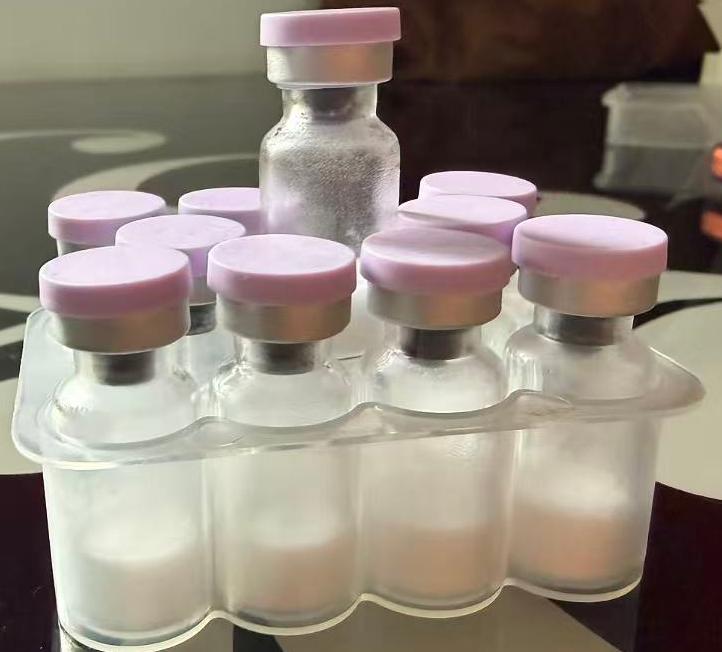
- Typical research format: Lyophilized powder
MT-2 has been investigated in experimental research involving melanocortin receptor signaling, pigmentation biology and related molecular pathways.
Why Do MC1R, MC3R and MC4R Appear in MT-2 Research?
Melanotan II is associated with the broader melanocortin receptor system.
That is why scientific searches for MT-2 frequently overlap with terms such as MC1R, MC3R, MC4R, alpha-MSH analog, melanogenesis and melanocortin receptor agonist.
These related pathways also explain why MT-2 can appear beside other melanocortin peptides in scientific literature.
But belonging to the same research family does not make the molecules identical.

Melanotan 2 vs Melanotan I
Melanotan I (MT-1) and Melanotan II (MT-2) are different peptide structures.
Although both developed from research involving alpha-melanocyte-stimulating hormone pathways, their molecular structures and pharmacological profiles differ.
A study involving MT-1 therefore should not automatically be described as evidence specifically generated with MT-2.
The same principle applies to analytical documentation: a COA or identity test for one molecule cannot establish the identity of the other.
What About PT-141?
PT-141, also known as bremelanotide, is another molecule connected to melanocortin research.
Its development history is related to Melanotan II, but PT-141 and MT-2 are not interchangeable research materials.
For laboratories, precise identification is therefore essential when reviewing literature, selecting reference materials or comparing suppliers.
Why Online Reviews Require Caution
Public Melanotan 2 reviews contain both positive and negative experiences.
Some users describe noticeable pigmentation changes. Others report nausea, flushing, fatigue or darkening of existing freckles and moles.
These testimonials may explain consumer search interest, but they cannot establish:
- molecular identity,
- HPLC purity,
- biological activity,
- batch consistency, or
- safety and efficacy.
For laboratory procurement, analytical evidence is more useful than anecdotal reviews.
What Should Researchers Check When Sourcing MT-2?
1. Exact Molecular Identity
The material should correspond specifically to Melanotan II, CAS 121062-08-6.
A product labeled only as “melanotan” does not provide enough molecular specificity for rigorous research.
2. HPLC Purity
Melanotan 2 HPLC analysis can provide information about chromatographic purity and related peptide components.
Where possible, laboratories should evaluate analytical information connected with the actual supplied batch.
3. Identity Verification
Purity and identity answer different questions.
A high HPLC percentage alone does not establish that a material is the expected MT-2 molecule. Appropriate identity testing can provide additional confirmation.
4. Batch-Specific COA
A Melanotan 2 Certificate of Analysis (COA) should connect the supplied lot with its relevant analytical specifications.
Batch traceability is particularly important when comparing results across experiments.

Sunone Melanotan 2 (MT-2) Research Peptide
Sunone (Hong Kong) Biopharmaceutical International Technology Co., Limited supplies Melanotan 2 for qualified laboratory, analytical and manufacturing applications.
Current Sunone specifications include:
- CAS 121062-08-6
- Molecular formula C50H69N15O9
- Molecular weight approximately 1024.18 g/mol
- ≥99% HPLC specification
- Lyophilized powder
- 5 mg and 10 mg research formats
- Certificate of Analysis documentation
- Safety Data Sheet
- Product specification documentation
- Storage at 2–8°C, protected from light
View the Sunone Melanotan 2 (MT-2) research peptide product page for current technical specifications and B2B sourcing information.
For biotechnology companies comparing a Melanotan 2 supplier, MT2 peptide supplier or peptide manufacturer, exact molecular identity, HPLC purity, batch documentation and traceability should be evaluated separately from consumer testimonials.
Final Perspective
Melanotan 2 provides a useful example of why peptide-family names can create confusion.
MT-2, MT-1 and PT-141 share connections to melanocortin research, but they are distinct molecules.
For reproducible laboratory research, the practical questions are straightforward:
Is the exact molecule identified? Is its purity analytically supported? Does the COA correspond to the supplied batch? And can the research material be traced consistently?
Those questions provide a stronger foundation for responsible melanocortin peptide research.
This content is provided for scientific and educational purposes only. SUNONE research peptide is for qualified labrtorynt, diagnois, druc tor mmatct or veteimant, use.research only, Not for human consumption, clinical treame. Purchasers are responsible for complying with applicable laws and regulations in their jurisdiction.
Leave a Reply