
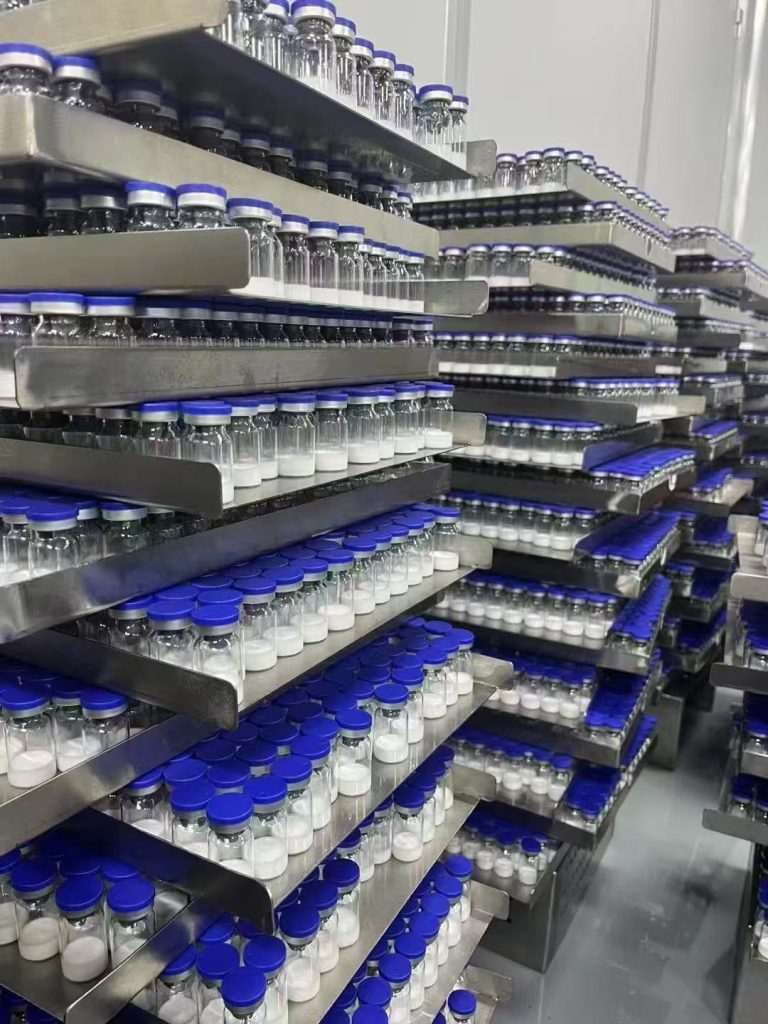
Ipamorelin and CJC-1295 frequently appear together in peptide searches.
That can create a misleading impression:
they do not belong to the same receptor pathway.
Ipamorelin is a synthetic pentapeptide growth hormone secretagogue associated with the ghrelin/GHS receptor system. CJC-1295 and Modified GRF 1-29, by contrast, are associated with the GHRH receptor pathway.
For laboratories sourcing Ipamorelin research peptide, this receptor distinction is important for both experimental design and interpretation.
What Is Ipamorelin?
Ipamorelin, also known as NNC-26-0161, is a synthetic pentapeptide.
Key molecular identifiers include:
- CAS: 170851-70-4
- Sequence: Aib-His-D-2-Nal-D-Phe-Lys-NH2
- Molecular formula: C38H49N9O5
- Molecular weight: approximately 711.87 g/mol
- Research category: Growth hormone secretagogue
- Typical research format: Lyophilized peptide
Its short sequence includes modified or non-standard amino-acid residues, making exact analytical identity particularly important.
Ipamorelin Is a Growth Hormone Secretagogue
Ipamorelin was originally characterized as a selective growth hormone secretagogue (GHS).
Experimental research showed that it stimulated GH release through a GHRP-like receptor pathway.
Today, this pathway is closely associated with the ghrelin receptor / growth hormone secretagogue receptor, often abbreviated GHS-R or GHSR.
This explains why scientific searches for Ipamorelin frequently include:
Ipamorelin GHS-R, ghrelin receptor peptide, growth hormone secretagogue and GHSR-1a agonist.
Why Ipamorelin Is Not a GHRH Analog
This distinction is particularly important when comparing Ipamorelin with CJC-1295, Modified GRF 1-29 or Sermorelin.
Those peptides are associated with the growth hormone-releasing hormone receptor pathway.
Ipamorelin belongs to a different signaling class.
Therefore:
Ipamorelin and a GHRH analog should not be treated as molecularly or pharmacologically interchangeable research materials.
A study performed with CJC-1295 does not automatically provide evidence about Ipamorelin, and vice versa.
Why Selectivity Became Important in Ipamorelin Research
Early pharmacology studies compared Ipamorelin with other growth hormone secretagogues such as GHRP-6 and GHRP-2.
Researchers observed differences in hormonal response profiles, which led to Ipamorelin being described as a relatively selective GH secretagogue in those experimental models.
That historical finding is scientifically interesting.
It should not, however, be converted into broad claims about safety, muscle growth, recovery, anti-aging or other human outcomes.
Human Research Exists—but It Has Limits
Ipamorelin has been studied in human volunteers in pharmacokinetic and pharmacodynamic research.
However, the existence of human research does not mean that every claim found online has been clinically established.
Much of the current consumer discussion focuses on:
- sleep,
- recovery,
- body composition,
- exercise performance, and
- anti-aging.
Those uses should not be assumed to have the same evidence base as the controlled pharmacology studies.
Why Online Ipamorelin Reviews Are Difficult to Interpret
Public Ipamorelin reviews contain both positive and negative experiences.
Some users report perceived improvements in sleep or recovery.
Others describe no noticeable effect or unwanted experiences such as flushing, increased heart rate, dizziness or sleep disruption.
A major confounding factor is that many reviews involve Ipamorelin combined with CJC-1295 or other peptides.
Those reports cannot establish the isolated effect of Ipamorelin.
They also cannot verify the molecular identity, purity or batch quality of the material involved.
What Should Researchers Check When Sourcing Ipamorelin?
Exact Peptide Identity
Ipamorelin should correspond to the defined pentapeptide:
Aib-His-D-2-Nal-D-Phe-Lys-NH2
This is more informative than relying only on the product name.
Free Base vs Salt Form
Researchers should identify the exact chemical form supplied.
Ipamorelin and Ipamorelin acetate should not automatically be treated as analytically identical materials.
The applicable specification should clearly state the form relevant to the batch.
HPLC Purity
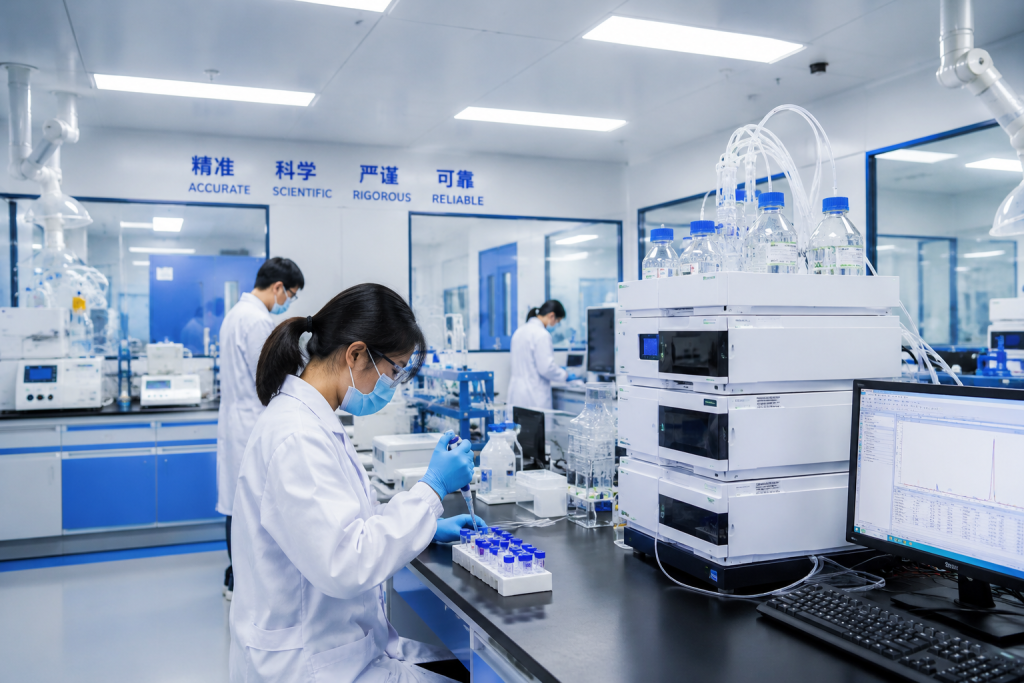
Ipamorelin HPLC analysis provides information about chromatographic purity and peptide-related components.
A high HPLC percentage, however, does not independently confirm molecular identity.
LC-MS or Mass-Spectrometry Identity
Mass spectrometry can provide additional evidence that the material corresponds to the expected Ipamorelin molecular mass.
For peptide characterization, HPLC purity and MS identity answer different analytical questions.
Batch-Specific COA
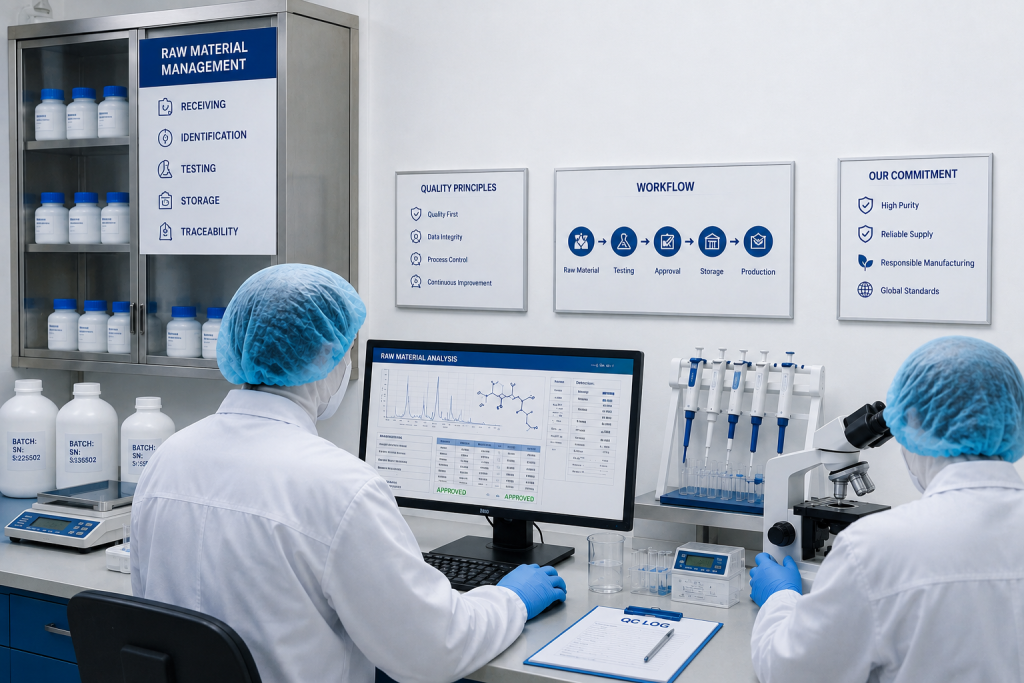
A Certificate of Analysis (COA) should connect analytical results to the actual production lot.
This provides greater traceability than a generic purity statement.
Sunone Ipamorelin Research Peptide
Sunone (Hong Kong) Biopharmaceutical International Technology Co., Limited supplies Ipamorelin for qualified laboratory, analytical and biopharmaceutical manufacturing applications.
Current Sunone product information includes:
- Ipamorelin / NNC-26-0161
- CAS 170851-70-4
- Sequence Aib-His-D-2-Nal-D-Phe-Lys-NH2
- Molecular formula C38H49N9O5
- Molecular weight approximately 711.87 g/mol
- ≥99.7% research-grade specification
- Lyophilized peptide
- 5 mg and 10 mg formats
- Certificate of Analysis
- Safety Data Sheet
- Product specification documentation
- Batch-specific analytical documentation
View the Sunone Ipamorelin research peptide product page for current specifications, analytical documentation and B2B sourcing information.
For biotechnology companies comparing an Ipamorelin supplier, growth hormone secretagogue supplier or peptide manufacturer, exact molecular form, HPLC purity, MS identity and batch traceability provide a stronger procurement framework than consumer testimonials.
Final Perspective
Ipamorelin provides a useful lesson in GH-axis peptide research:
Two compounds can influence the same endocrine system without acting through the same receptor pathway.
Ipamorelin is associated with the ghrelin/GHS receptor pathway.
CJC-1295 and other GHRH analogs belong to a different signaling class.
For reproducible laboratory research, investigators should therefore ask:
Which receptor pathway is being studied?
Is the exact molecular form identified?
Does HPLC support purity?
Does mass spectrometry support identity?
And does the COA belong to the supplied batch?
Those questions provide a stronger foundation for Ipamorelin research than relying on the phrase “GH peptide” alone.
This content is provided for scientific and educational purposes only. SUNONE research peptide is for qualified labrtorynt, diagnois, druc tor mmatct or veteimant, use.research only, Not for human consumption, clinical treame. Purchasers are responsible for complying with applicable laws and regulations in their jurisdiction.
Leave a Reply