
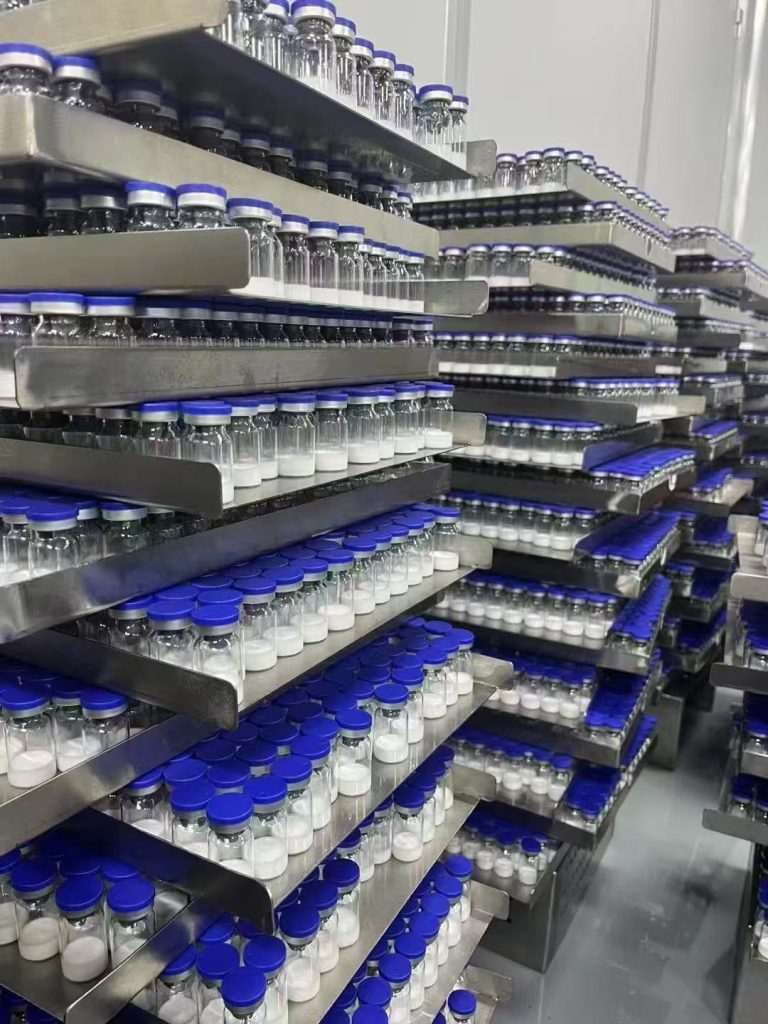
Bacteriostatic Water is sometimes treated as though it were simply “clean water for peptides.”
That description is incomplete.
BAC Water is a formulated aqueous solution, and its preservative system, sterility-related specifications, container quality and batch documentation can all matter in laboratory workflows.
For biotechnology laboratories sourcing bacteriostatic water, understanding the formulation is more useful than judging a vial only by appearance.
What Is Bacteriostatic Water?
Bacteriostatic Water, commonly called BAC Water, is an aqueous formulation containing a bacteriostatic preservative such as benzyl alcohol when specified by the applicable product formulation.
Common search terms include:
BAC Water
Bacteriostatic Water
Bacteriostatic Water with Benzyl Alcohol
Bacteriostatic laboratory solution
Peptide reconstitution water
An important analytical point is that BAC Water is a mixture, not a single molecular compound.
Therefore, the CAS number of benzyl alcohol should not be presented as though it were the CAS number of the entire BAC Water formulation.
Why Does Benzyl Alcohol Matter?
Benzyl alcohol is widely used as a preservative component in bacteriostatic formulations.
Its chemical identifiers include:
CAS 100-51-6
Formula C7H8O
Molecular weight approximately 108.14 g/mol
The preservative is what distinguishes typical bacteriostatic water formulations from preservative-free sterile water.
For research buyers, however, the exact benzyl alcohol concentration should always be verified from the applicable product specification or batch documentation rather than assumed from the product name.
BAC Water vs Sterile Water
“Bacteriostatic” and “sterile” do not mean exactly the same thing.
Sterility describes the microbiological condition of a preparation at the applicable point of manufacture or testing.
Bacteriostatic refers to the ability of a preservative system to inhibit microbial growth under specified conditions.
This distinction explains why researchers frequently search for:
BAC water vs sterile water, bacteriostatic water vs sterile water and water for injection vs bacteriostatic water.
They may look similar in a vial, but composition and intended handling can differ.
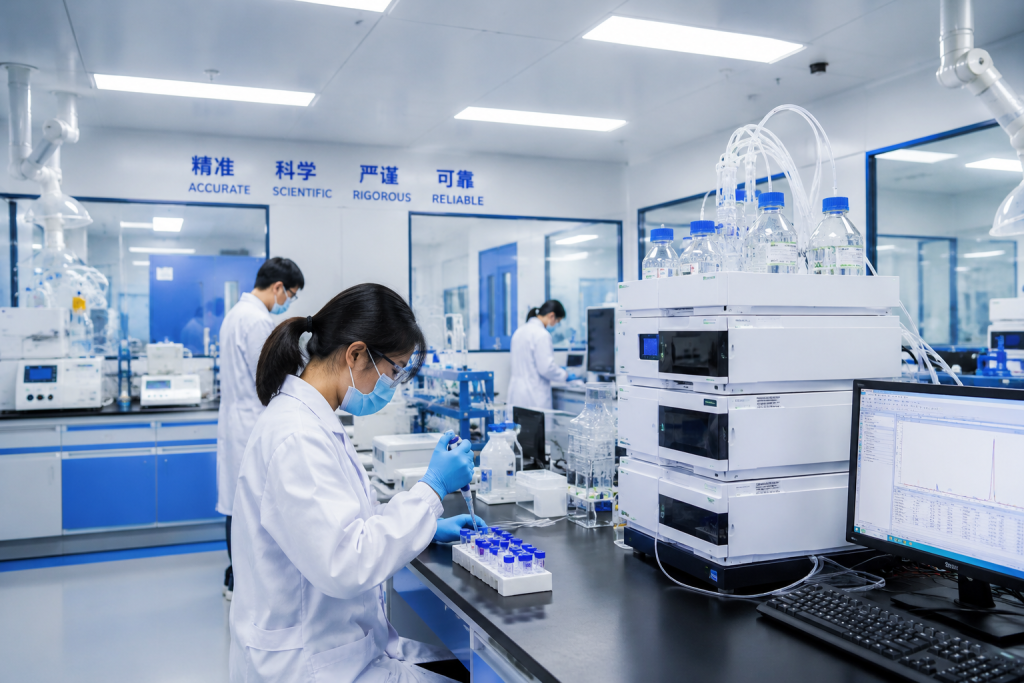
Why BAC Water Is a Quality-Control Issue
A clear solution may look simple, but laboratory quality requires more than visual inspection.
Depending on the applicable specification, relevant considerations may include:
- preservative concentration,
- solution appearance,
- pH,
- sterility-related specifications,
- endotoxin requirements,
- container integrity,
- fill volume,
- storage conditions, and
- batch traceability.
Visible particles, cloudiness or damaged container systems should never be dismissed simply because the material is “only water.”
Why Compatibility Matters
Not every research compound should automatically be combined with the same diluent.
Peptides and other research materials can differ in:
solubility, pH sensitivity, ionic requirements, preservative compatibility and stability after reconstitution.
Therefore, the presence of bacteriostatic water in a laboratory does not mean it is automatically appropriate for every lyophilized research material.
Researchers should follow the compound-specific analytical protocol and applicable formulation data.
What Do Online BAC Water Reviews Actually Tell Us?
Public feedback on bacteriostatic water tends to focus on practical quality rather than biological effects.
Positive users commonly value convenient vial formats and reproducible laboratory preparation.
Negative reports focus more often on visible particles, cloudiness, questionable fill volume, packaging problems or uncertainty about sterility.
These reports usually involve unrelated commercial suppliers.
They are not reviews of Sunone BAC Water and cannot determine the quality of a Sunone production batch.
For professional procurement, batch documentation is more meaningful than anonymous user testimonials.
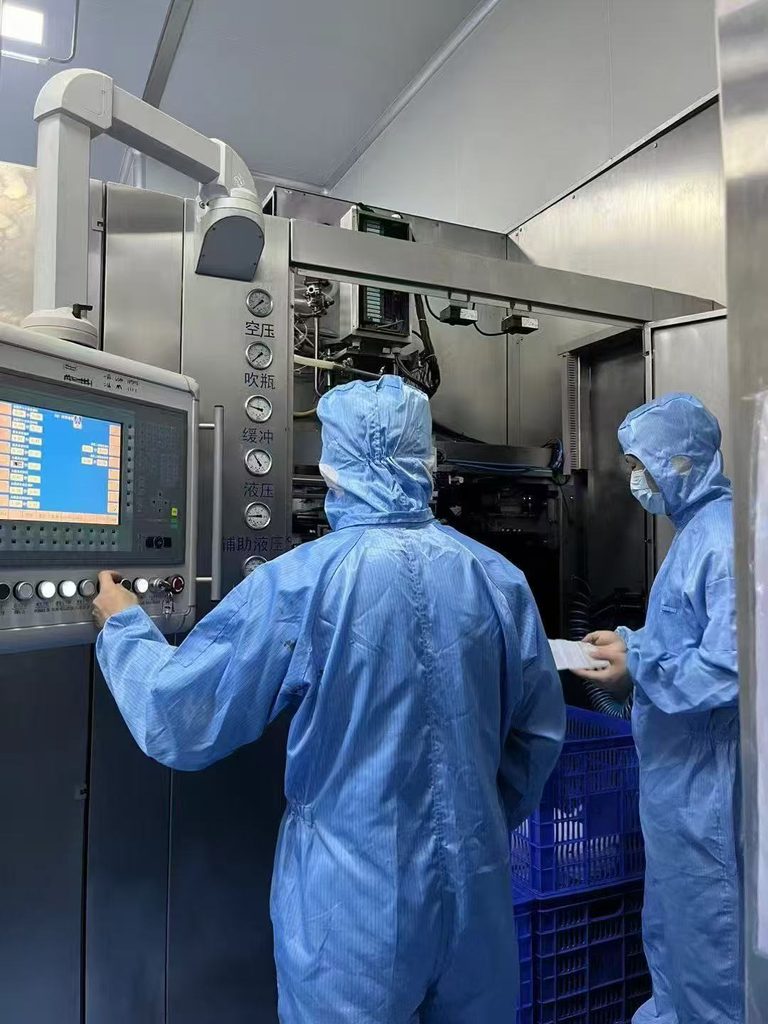
What Should Laboratories Check When Sourcing BAC Water?
Confirm the Formulation
Do not assume every product labeled “BAC Water” contains exactly the same preservative concentration.
Verify the applicable specification.
Check the Preservative Identity
Where benzyl alcohol is used, the specification should clearly identify the preservative and relevant concentration.
Review Batch Documentation
A Certificate of Analysis should correspond to the actual production lot.
Generic website specifications are not a substitute for batch-specific quality data.
Check Container and Solution Quality
Vial integrity, fill volume, visible particles and solution appearance can all be relevant quality attributes.
Confirm Research Compatibility
The diluent should be appropriate for the specific experimental material and protocol.
Sunone BAC Water for Laboratory Research
Sunone (Hong Kong) Biopharmaceutical International Technology Co., Limited supplies BAC Water for qualified laboratory, analytical, formulation and biopharmaceutical research applications.
Current Sunone product information includes:
BAC Water / Bacteriostatic Water
Liquid / solution format
Research Grade
3 mL × 10-vial configuration
10 mL × 10-vial configuration
Certificate of Analysis
Safety Data Sheet
Specification Sheet
Batch-specific composition and analytical documentation
2–8°C protected-from-light storage specification
View the Sunone BAC Water Bacteriostatic Laboratory Solution product page for current formulation specifications, documentation and B2B sourcing information.
For biotechnology companies comparing a BAC Water supplier, Bacteriostatic Water manufacturer or laboratory diluent supplier, formulation transparency, preservative specification, solution quality and lot traceability provide a stronger procurement framework than price alone.
Final Perspective
BAC Water may look simple, but good laboratory sourcing depends on details.
The most important distinction is:
Bacteriostatic Water is a formulated solution—not merely a bottle of water.
Researchers should therefore ask:
What preservative system is actually present?
What concentration does the batch specification state?
What quality attributes were tested?
Is the solution free from visible abnormalities?
Does the selected diluent suit the research material?
And does the COA correspond to the supplied production lot?
Those questions provide a stronger basis for reproducible laboratory workflows than relying on the term “BAC Water” alone.
This content is provided for scientific and educational purposes only. SUNONE research peptide is for qualified labrtorynt, diagnois, druc tor mmatct or veteimant, use.research only, Not for human consumption, clinical treame. Purchasers are responsible for complying with applicable laws and regulations in their jurisdiction.
Leave a Reply