
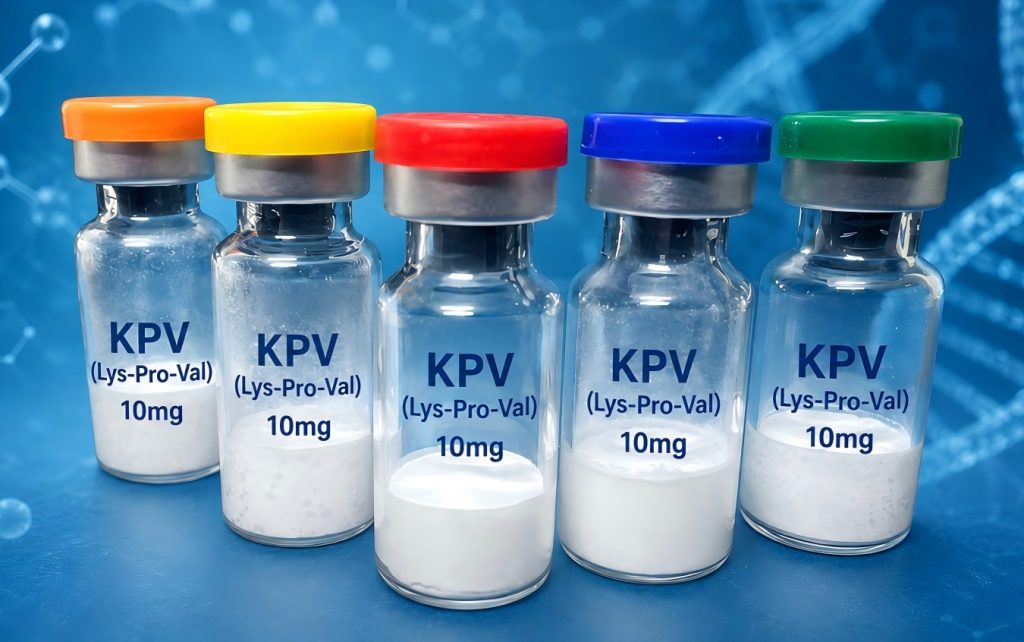
What Is KPV Peptide?
KPV peptide, short for Lys-Pro-Val (Lysine-Proline-Valine), is a tripeptide derived from the C-terminal sequence of alpha-melanocyte-stimulating hormone (α-MSH).
Despite containing only three amino acids, KPV has attracted increasing scientific interest because preclinical studies have investigated its relationship with inflammatory signaling.
Unlike many peptides discussed primarily in the context of growth or performance, KPV research focuses largely on inflammation, intestinal biology, skin-related models, and cellular signaling.
Why Is KPV Being Studied?

One of the most interesting areas of KPV peptide research involves inflammatory pathways.
Laboratory and animal research suggests that KPV may influence signaling pathways associated with inflammation, including NF-κB and related inflammatory responses. Researchers have consequently investigated KPV in areas such as:
- intestinal and colitis models;
- inflammatory signaling;
- skin and wound-related research;
- epithelial and mucosal biology.
This has led to growing online interest in terms such as KPV anti-inflammatory peptide, KPV gut health, and KPV peptide benefits.
However, an important distinction is often lost in online discussions: promising preclinical findings are not the same as demonstrated benefits in humans.
KPV Reviews: Why Online Experiences Should Be Treated Carefully
Search KPV online and you will find very different opinions.
Some peptide-community users report positive personal experiences involving gut comfort or inflammation. Others report little noticeable benefit or question whether KPV is worth the cost.
These reports are interesting, but testimonials are not controlled scientific evidence. Differences in product purity, formulation, individual biology, and other compounds being used can make online KPV reviews difficult to interpret.
For researchers, analytical documentation and peptide quality therefore matter more than anecdotal claims.
What Is Still Unknown About KPV?
This may be the most important part of the KPV story.
Although laboratory and animal findings have generated substantial interest, human clinical evidence remains extremely limited. The FDA reported in its 2026 review materials that it had not identified clinical studies or human exposure data for KPV.
Consequently, claims that KPV has been proven to treat inflammatory, gastrointestinal, dermatological, or other medical conditions should be approached cautiously.
This evidence gap also means that a definitive human KPV peptide side-effect profile has not been established.
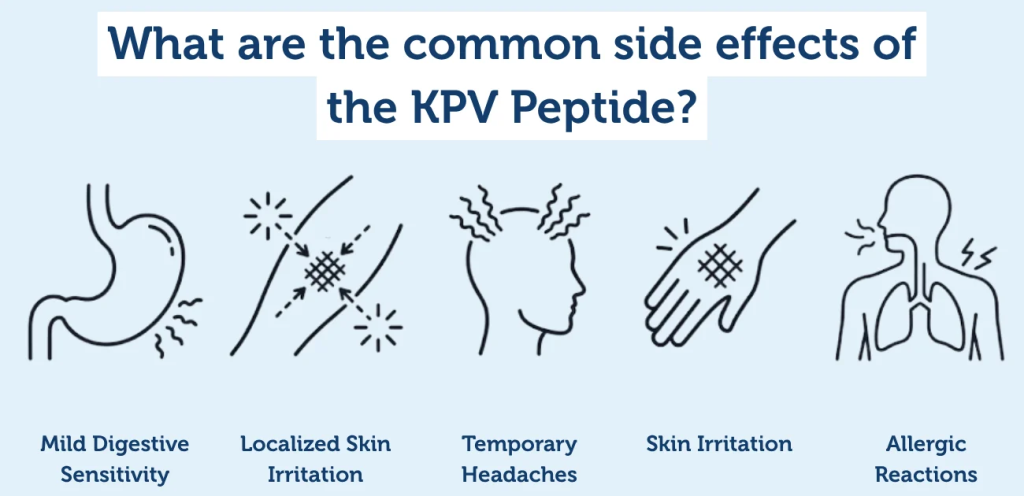
KPV Peptide for Research
For laboratories evaluating KPV peptide research, characteristics such as identity, purity, consistency, documentation, and appropriate storage are important considerations when selecting research materials.
Researchers interested in KPV can view the SUNONE KPV peptide product information here:
As scientific interest in small bioactive peptides continues to grow, KPV remains an interesting research candidate precisely because many important questions about its biological activity still need to be answered.

Final Thoughts
KPV is a remarkably small peptide with a surprisingly broad preclinical research footprint. Its association with α-MSH, inflammatory signaling, gut models, and skin-related research has made KPV peptide an increasingly searched topic.
The most useful way to understand KPV today is neither to dismiss it nor to overstate it: KPV is a promising research peptide with interesting preclinical evidence, but substantial human research is still needed.
Disclaimer
This content is provided for educational and research-information purposes only. KPV is not presented here as an approved drug or treatment for any disease or medical condition. Statements concerning KPV research should not be interpreted as medical advice or as claims of demonstrated efficacy or safety in humans. Researchers should follow applicable laws, regulations, institutional requirements, and laboratory safety procedures.
Leave a Reply