

CJC-1295 DAC vs No DAC is a common comparison in peptide research, but the difference is more significant than the names suggest.
The key distinction is a chemical modification known as DAC (Drug Affinity Complex). Its presence changes how the peptide interacts with albumin and, as a result, changes its pharmacokinetic profile.
For researchers, understanding this structural difference is essential before comparing experimental data.
What Does DAC Actually Change?
CJC-1295 was developed from a modified growth hormone-releasing hormone fragment, GRF(1-29).
In CJC-1295 with DAC, an additional reactive group enables the molecule to bind to circulating serum albumin. Albumin acts as a carrier, helping protect the peptide from rapid clearance.
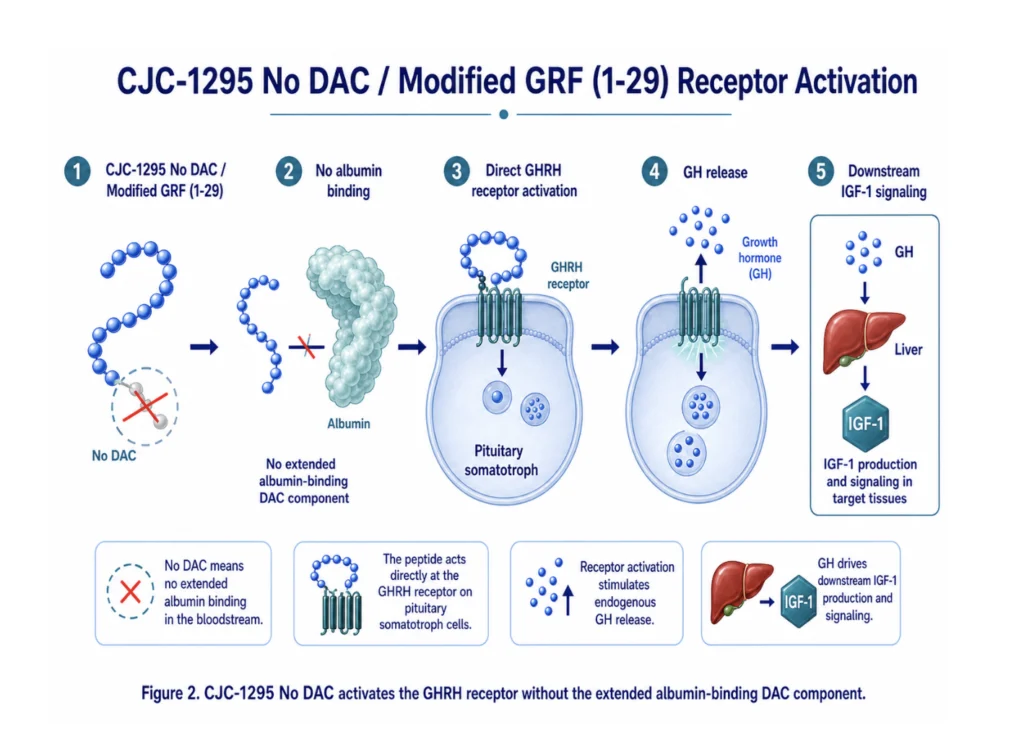
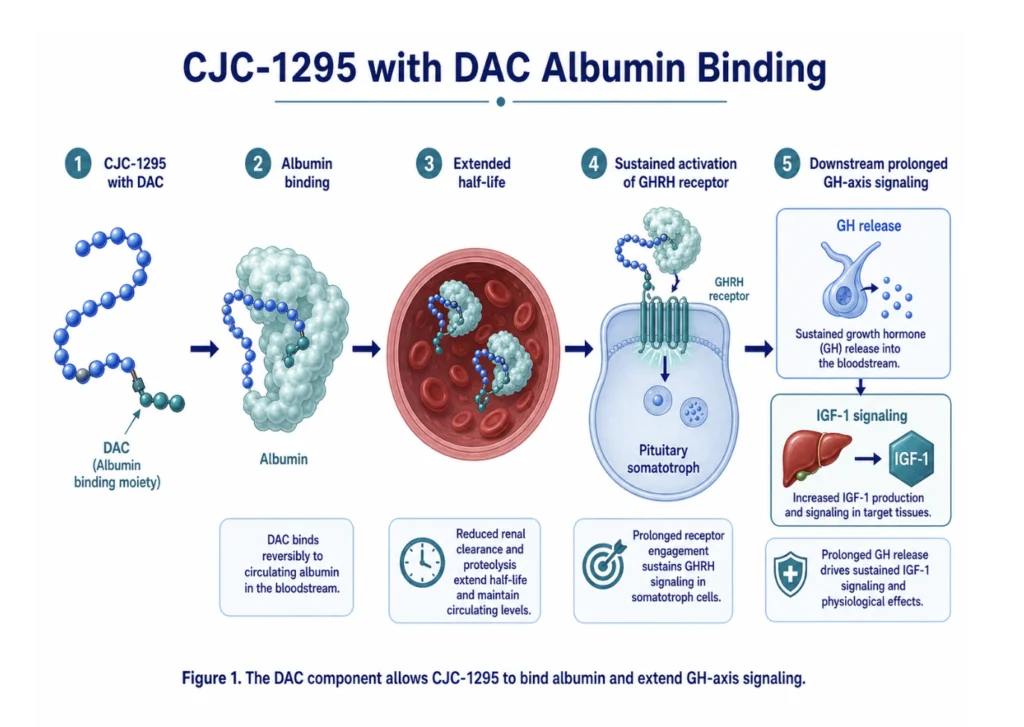
This produces a much longer exposure profile than the corresponding peptide without the albumin-binding modification.
Human pharmacokinetic research on CJC-1295 with DAC reported an estimated half-life of approximately 5.8–8.1 days, demonstrating how strongly the modification can influence peptide behavior.
Is “CJC-1295 No DAC” Really CJC-1295?
This is where peptide terminology becomes important.
The compound commonly marketed as CJC-1295 No DAC is generally referred to scientifically as Modified GRF(1-29).
It contains the modified GHRH-derived peptide sequence but lacks the albumin-binding DAC component.
Therefore, researchers should not rely only on the commercial product name when comparing studies.
Exact molecular identity matters more than the label on the vial.
CJC-1295 DAC vs No DAC: Quick Comparison
| Feature | CJC-1295 with DAC | CJC-1295 No DAC / Modified GRF(1-29) |
|---|---|---|
| DAC modification | Present | Absent |
| Albumin binding | Yes | No |
| Exposure profile | Prolonged | Shorter |
| Research consideration | Sustained exposure models | Short-duration models |
| Analytical identity | Different molecular mass | Different molecular mass |
Neither form should automatically be considered “better.” They represent different molecular tools and may answer different experimental questions.
Why This Difference Matters for Laboratory Research
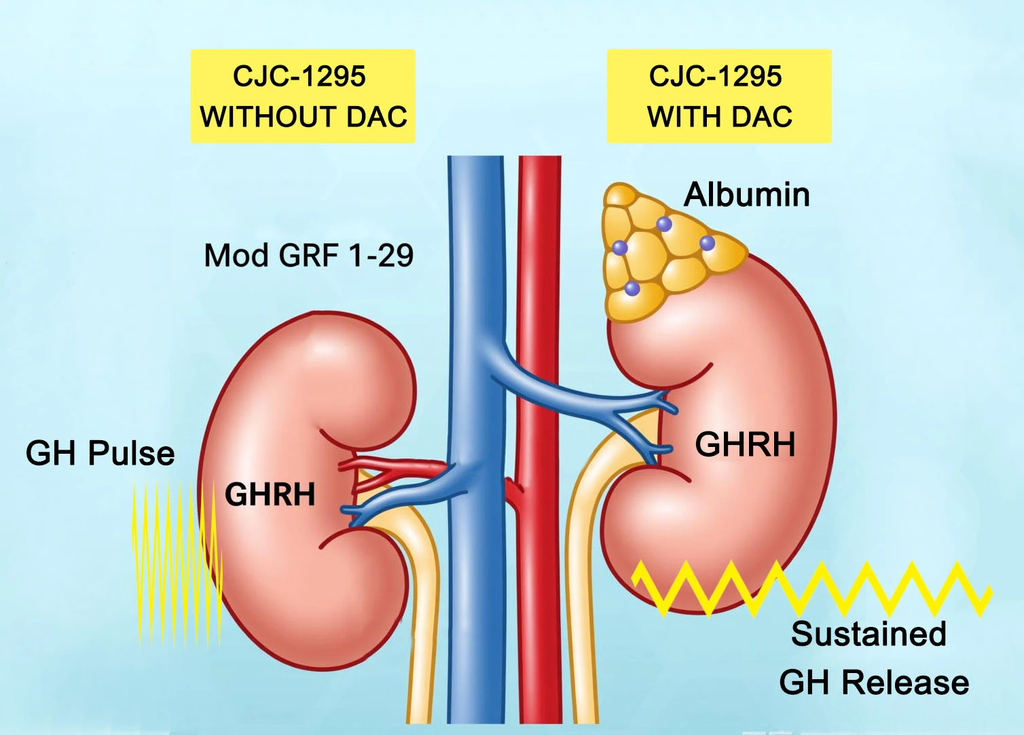
A small structural modification can create a large pharmacokinetic difference.
If researchers fail to distinguish between DAC-containing CJC-1295 and Modified GRF(1-29), experimental results may be difficult to compare with published literature.
This is why peptide research should consider:
Molecular identity → analytical verification → experimental design.
HPLC can provide information about chromatographic purity, while mass spectrometry can help confirm whether the observed molecular mass is consistent with the expected compound.
SUNONE: Peptide Identity Matters
At SUNONE, we believe peptide quality should go beyond a purity percentage.
Clear compound identification, batch traceability and appropriate analytical documentation help researchers understand exactly what material they are working with.
For CJC-1295 DAC vs No DAC, the most important takeaway is simple:
The DAC modification changes more than the name—it changes the molecule’s behavior in a research system.
Disclaimer: All compounds available from SUNONE Peptides are intended strictly for in vitro research and laboratory use only. They are not intended for human consumption, therapeutic application, or any form of bodily introduction. Researchers must comply with all applicable local regulations.
Leave a Reply