
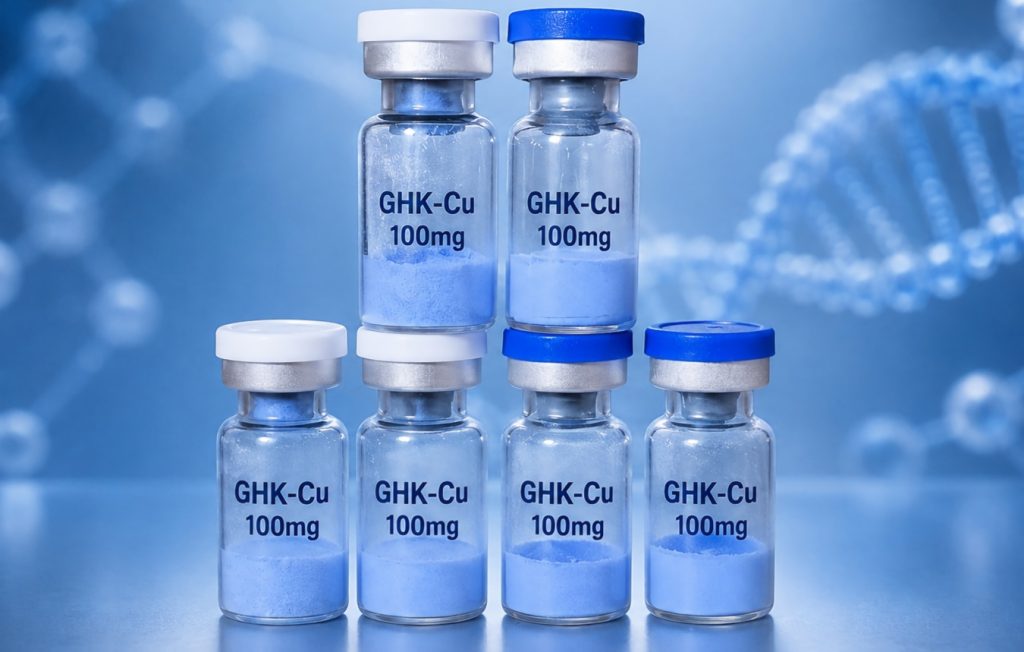
GHK-Cu (Copper Peptide) has become one of the most discussed peptides in skin, collagen and tissue-repair research. But unlike many newly popular research peptides, GHK-Cu has been investigated for decades.
So, what is GHK-Cu peptide, why does it bind copper, and which claims are actually supported by research?
This SUNONE overview separates scientific findings from online hype.
What Is GHK-Cu (Copper Peptide)?
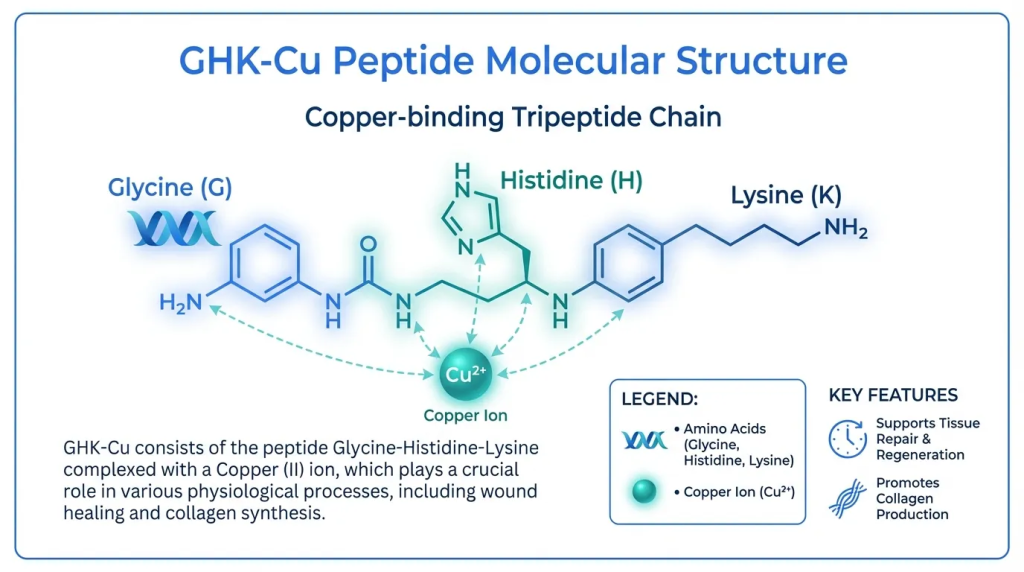
GHK-Cu is a naturally occurring copper-binding tripeptide.
GHK represents three amino acids:
Glycine (G) → Histidine (H) → Lysine (K)
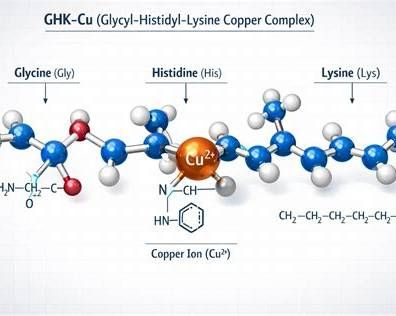
These amino acids form a small peptide capable of binding a copper ion (Cu²⁺), producing the complex commonly called GHK-Cu or Copper Peptide.
This combination of a small signaling peptide and copper-binding activity has made GHK-Cu particularly interesting for research involving extracellular matrix remodeling, skin biology and tissue repair.
Why Is GHK-Cu Studied for Collagen and Skin?
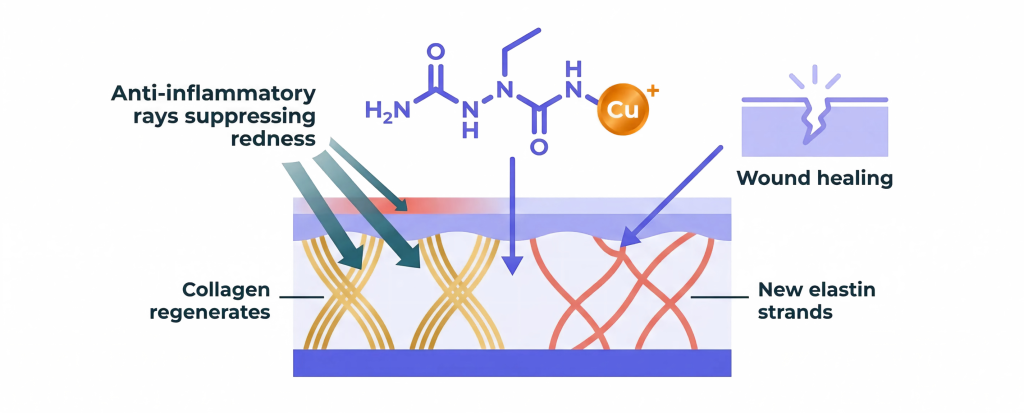
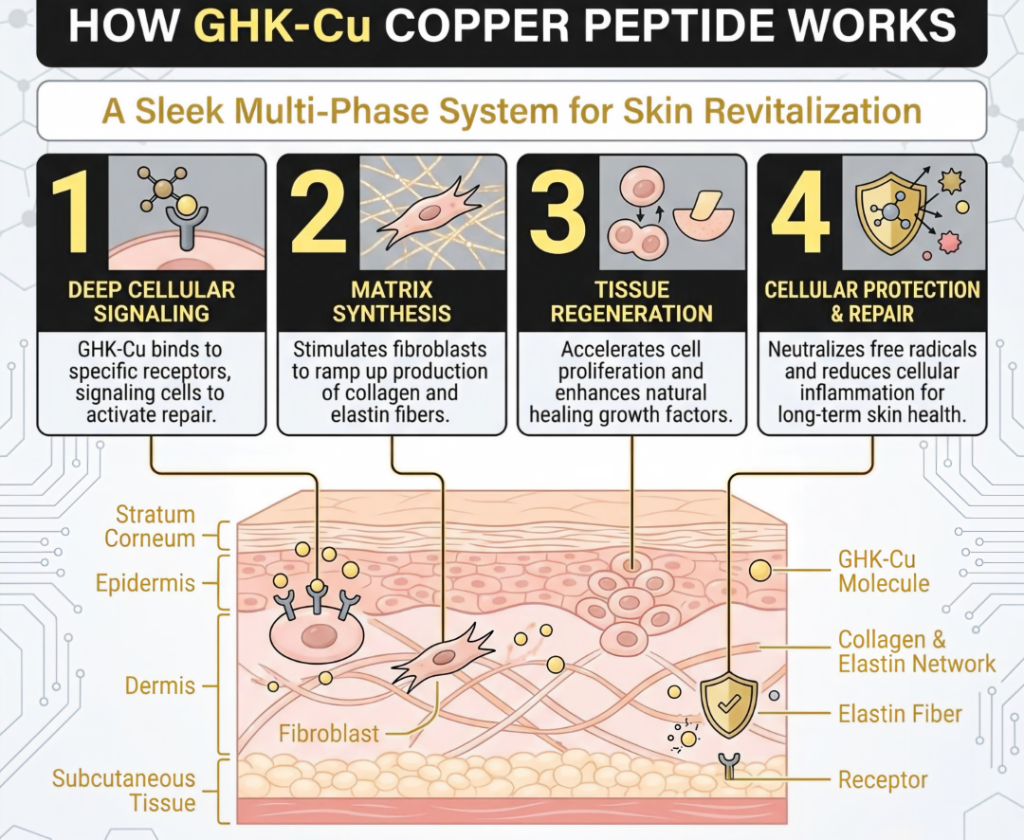
One of the most established areas of GHK-Cu research involves fibroblasts and the extracellular matrix.
A laboratory study published in FEBS Letters reported that the GHK-Cu complex stimulated collagen synthesis in fibroblast cultures.
Later research and scientific reviews expanded interest into areas including:
- Collagen and extracellular matrix remodeling
- Fibroblast activity
- Tissue-repair signaling
- Skin regeneration research
- Oxidative and inflammatory pathways
- Gene-expression responses
These findings help explain why Copper Peptide became widely associated with modern skin and cosmetic research.
However, laboratory findings should not automatically be interpreted as proof of clinical outcomes in humans.
GHK-Cu and Gene Expression
An especially interesting area of research involves the relationship between GHK and gene expression.
Research reviewed in the International Journal of Molecular Sciences describes GHK as being associated with changes in multiple gene-expression pathways related to tissue remodeling and biological repair.
This suggests that the scientific interest in GHK-Cu Copper Peptide extends beyond simply transporting copper.
Instead, researchers continue to investigate a more complex interaction involving copper homeostasis, cellular signaling and gene-expression responses.
That complexity is also a reason to be cautious about simplified claims such as “GHK-Cu rebuilds skin” or “GHK-Cu reverses aging.”
The underlying biology is considerably more nuanced.
What Do GHK-Cu Reviews Say?
Search for GHK-Cu reviews online and you will find both enthusiastic and skeptical experiences.
Positive reports
Some users describe perceived improvements involving skin appearance, texture or other cosmetic characteristics.
GHK-Cu also has a particularly strong reputation in online communities discussing Copper Peptide skincare.
Negative reports
Other users report seeing little or no noticeable change.
Online discussions also contain reports of irritation and other unwanted experiences, particularly when discussing experimental routes of administration.
This distinction is important: online testimonials are not clinical trials.
Product quality, formulation, route of exposure, other substances being used and individual biological differences can all affect an anecdotal experience.
The strongest approach is therefore to separate published GHK-Cu research from social-media claims.
What About GHK-Cu Hair Research?
Hair is another popular search topic associated with GHK-Cu peptide.
Preclinical research and scientific reviews have generated interest in GHK-Cu’s relationship with hair follicles and tissue remodeling. However, the evidence supporting many popular hair-growth claims is less established than online marketing sometimes suggests.
Researchers should therefore distinguish between an interesting biological hypothesis and a clinically established outcome.
Why GHK-Cu Remains Scientifically Interesting
GHK-Cu provides an unusual research model because it combines a naturally occurring tripeptide with copper-binding chemistry.
Rather than focusing on exaggerated “anti-aging” claims, researchers can investigate questions such as:
How does GHK-Cu interact with copper?
How does Copper Peptide affect fibroblast and extracellular matrix signaling?
Which gene-expression changes are reproducible?
How do concentration, formulation and experimental model affect observed results?
These questions make GHK-Cu (Copper Peptide) relevant to ongoing peptide, cellular and biochemical research.
GHK-Cu Research Material from SUNONE
SUNONE focuses on peptide manufacturing and biotechnology research materials.
Researchers can learn more about SUNONE GHK-Cu (Copper Peptide) and its research specifications on our product page.
When evaluating any GHK-Cu peptide, researchers should consider analytical identity, purity documentation, batch consistency, storage conditions and experimental design rather than relying solely on marketing claims or online reviews.
Frequently Asked Questions
What does GHK-Cu stand for?
GHK represents glycyl-L-histidyl-L-lysine, while Cu refers to the copper ion complexed with the peptide.
Is GHK-Cu a Copper Peptide?
Yes. GHK-Cu is commonly called a Copper Peptide because the GHK tripeptide has a strong affinity for copper ions.
Does GHK-Cu increase collagen?
Laboratory research has reported stimulation of collagen synthesis in fibroblast cultures. This should not be interpreted as a guarantee of a particular cosmetic or medical outcome in humans.
Is GHK-Cu only researched for skin?
No. Published literature discusses GHK-Cu in connection with tissue remodeling, wound biology, extracellular matrix signaling, gene expression and other areas. Evidence strength varies considerably between applications.
Conclusion
GHK-Cu (Copper Peptide) is more scientifically interesting than many of the simplified claims surrounding it online suggest.
Its copper-binding chemistry, interaction with fibroblasts, extracellular matrix research and potential influence on biological signaling have generated decades of scientific interest.
At the same time, GHK-Cu reviews and social-media experiences should never be confused with controlled evidence. Research involving topical exposure, cell cultures or animal models also cannot automatically establish the safety or effectiveness of other routes of administration.
For peptide researchers, GHK-Cu is best viewed as a fascinating copper-binding tripeptide and research tool—not a collection of internet promises.
Information presented by SUNONE is intended to discuss published research and publicly available scientific information. For qualified laboratory research only. Not for human consumption, clinical treatment, diagnosis, drug compounding or veterinary use.
Leave a Reply