
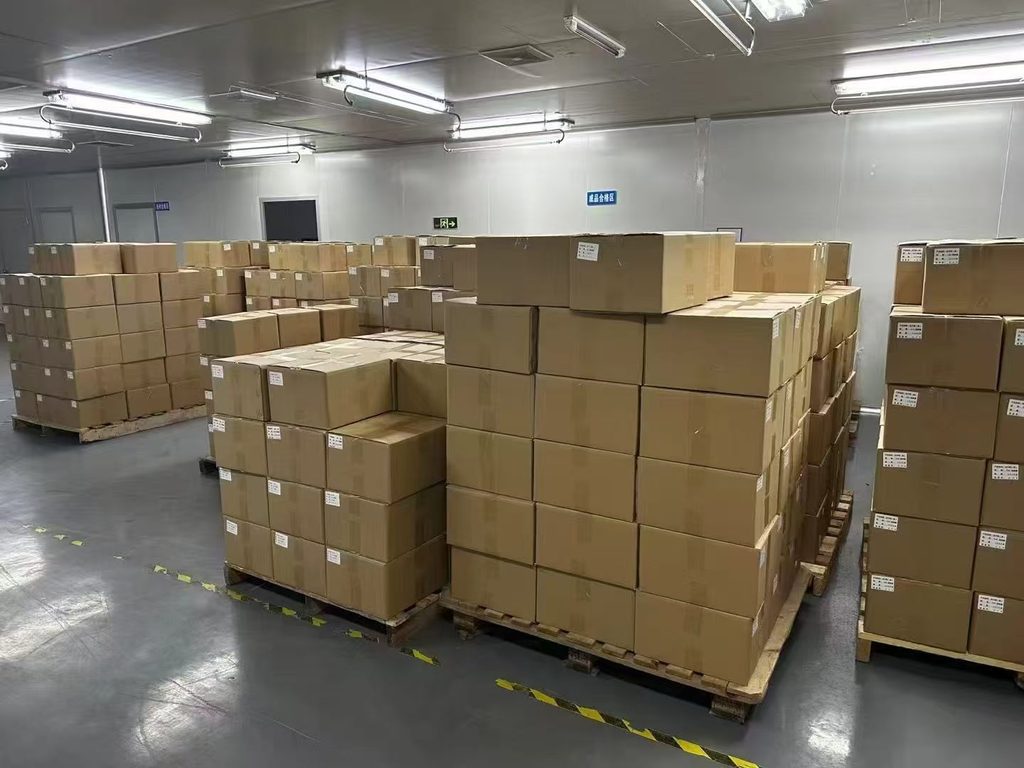
Proper research peptide storage is an important part of maintaining sample quality and generating consistent laboratory results.
Instead of thinking about storage as temperature alone, researchers should consider four major environmental factors: heat, moisture, light, and repeated handling.
1. Temperature: Keep Storage Conditions Consistent
Temperature can significantly influence peptide stability.
Lyophilized peptides are generally more stable than peptides in solution because most of the water has been removed during freeze-drying. For longer-term storage, many peptide materials require refrigerated or frozen conditions.
However, there is no universal storage temperature or shelf life for every peptide. The appropriate conditions depend on the peptide sequence, formulation, packaging, and available stability data.
SUNONE recommends following the storage conditions specified in the product documentation or Certificate of Analysis (COA).
2. Moisture: Protect Lyophilized Peptides From Humidity
Moisture is particularly important when handling freeze-dried peptides.
Opening a cold vial immediately after removing it from refrigerated or frozen storage may allow condensation to form. A useful laboratory practice is to allow the sealed vial to equilibrate to the appropriate handling temperature before opening.
Keeping lyophilized materials tightly sealed and dry can help preserve sample integrity.
3. Light: Minimize Unnecessary Exposure
Some peptide sequences may be sensitive to prolonged light exposure.
For this reason, peptide samples should generally be kept away from direct sunlight and unnecessary UV exposure. Light-protective containers may also be appropriate when specified for a particular material.
A simple rule for laboratory storage is:
Keep peptide samples cool, dry, sealed, and protected from unnecessary light.
4. Handling: Avoid Unnecessary Temperature Cycling
Storage conditions can be affected every time a peptide is removed from controlled storage.
Repeated warming and cooling may expose samples to temperature fluctuations and condensation. Good laboratory planning—such as organizing samples according to experimental requirements—can reduce unnecessary handling.
For peptide solutions, aliquoting may also be appropriate when supported by the specific experimental protocol and stability requirements.
How Long Can Research Peptides Be Stored?
There is no single shelf-life value that applies to all peptides.
Stability can depend on factors including:
- Peptide sequence and molecular characteristics
- Lyophilized or solution state
- Storage temperature
- Light and moisture exposure
- Container and formulation
- Frequency of handling
Therefore, researchers should rely on product-specific stability information rather than assuming that every peptide has the same shelf life.
SUNONE: Quality Beyond Peptide Synthesis
Peptide quality does not end after synthesis and purification. Proper packaging, documentation, transportation, and storage all contribute to maintaining material integrity.
At SUNONE, we focus on providing research peptide solutions supported by appropriate quality-control and product documentation, helping laboratories maintain consistency from receipt through experimental use.
Final Takeaway
For effective peptide storage, remember four factors:
Temperature. Moisture. Light. Handling.
Controlling these variables—and following peptide-specific storage documentation—can help maintain sample quality and support reliable, reproducible research.
Disclaimer: All compounds available from SUNONE Peptides are intended strictly for in vitro research and laboratory use only. They are not intended for human consumption, therapeutic application, or any form of bodily introduction. Researchers must comply with all applicable local regulations.
Leave a Reply