
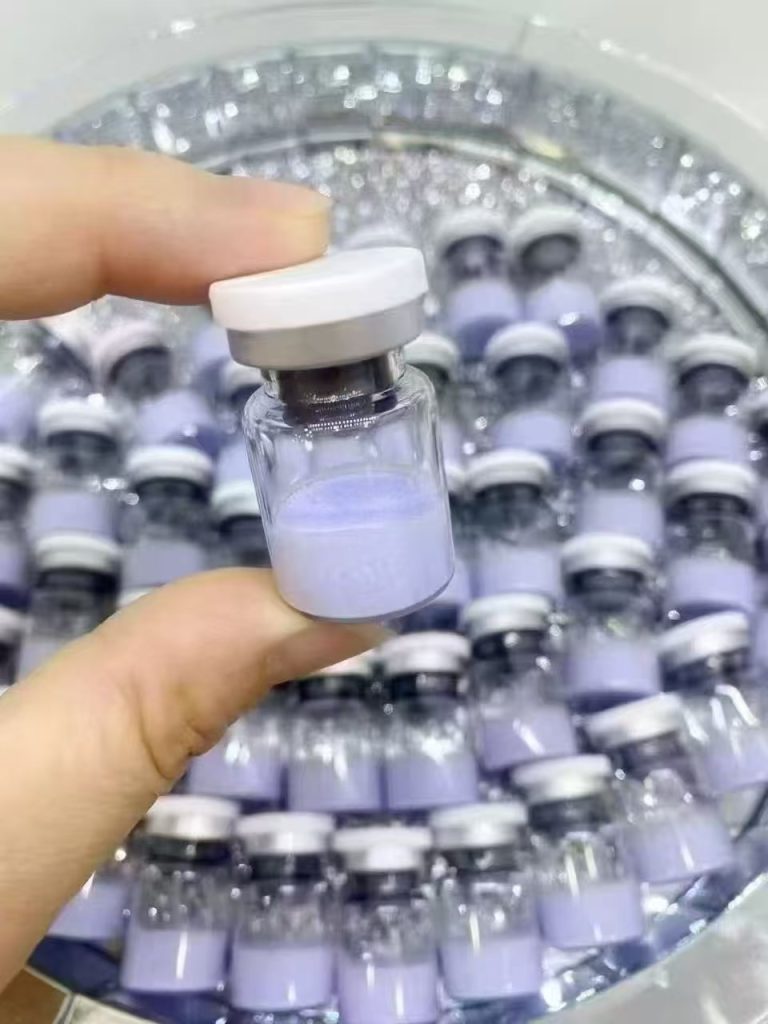
Introduction: The Reason Behind the Powder Form of Research Peptides
When researchers receive peptide products, they often notice that the material is not provided as a liquid solution but as a small amount of dry powder inside a vial. This format is not a manufacturing convenience—it is the result of a carefully controlled preservation technology known as lyophilization, or freeze-drying.
For research peptides, maintaining molecular integrity, purity, and stability throughout storage and transportation is essential. Lyophilized peptides have become the preferred format in many biotechnology and pharmaceutical research applications because removing moisture helps minimize degradation risks and supports long-term material preservation.
At SUNONE, we understand that the quality of peptide materials depends not only on synthesis and purification but also on how these molecules are preserved before they reach researchers.
What Are Lyophilized Peptides?

Lyophilized peptides are peptide compounds that have undergone a freeze-drying process to remove water while maintaining their structural characteristics.
Unlike traditional drying methods that rely on heat, lyophilization uses low-temperature processing under vacuum conditions. During this process:
- The peptide solution is frozen.
- Ice crystals are removed through sublimation under reduced pressure.
- Remaining moisture is carefully eliminated during secondary drying.
The result is a stable, dry peptide powder that can be stored and later reconstituted according to established laboratory protocols.
Because peptides are sensitive biological molecules, this gentle preservation method is widely used in research environments where consistency and stability are critical.
Why Are Research Peptides Usually Supplied as Freeze-Dried Powder?
1. Improved Peptide Stability During Storage
Water is one of the major factors that can accelerate chemical degradation processes in peptide molecules.
In liquid form, peptides may be more vulnerable to:
- Hydrolysis reactions
- Oxidation
- Structural changes caused by environmental exposure
- Reduced stability during extended storage
By removing water, lyophilization creates a dry environment that slows many degradation pathways.
This allows researchers to maintain peptide materials in a more stable condition compared with many liquid preparations.
2. Better Protection of Peptide Structure
Peptides consist of specific amino acid sequences that determine their biological characteristics. Even minor structural changes can influence research results.
Freeze-drying helps preserve the original peptide structure by avoiding high temperatures and minimizing chemical reactions caused by moisture.
For biotechnology research, maintaining consistency between production batches is especially important because experimental reliability depends on using materials with predictable characteristics.
3. Longer Storage Flexibility for Research Laboratories
Research projects often involve long experimental timelines. Scientists may need to store peptide materials for weeks, months, or longer periods before use.
Lyophilized peptides provide several practical advantages:
- Easier inventory management
- Reduced dependence on liquid storage conditions
- Greater flexibility for laboratory scheduling
- Improved preservation during transportation
Proper storage conditions remain important, and researchers should always follow supplier-specific recommendations.
4. More Reliable Transportation Compared With Liquid Peptide Solutions
Shipping biological materials can introduce challenges, including temperature fluctuations and extended transit times.
A freeze-dried peptide format offers improved handling convenience because the absence of water reduces sensitivity to some environmental changes.
For global research collaboration, lyophilization supports more reliable distribution of peptide materials between manufacturers, laboratories, and academic institutions.
The Role of Lyophilization in Peptide Manufacturing Quality
Producing high-quality peptides involves multiple critical stages:
- Peptide synthesis
- Purification
- Analytical testing
- Quality verification
- Final formulation and preservation
Lyophilization represents the final protection step before research materials are delivered to laboratories.
A well-controlled freeze-drying process helps ensure that purified peptide products maintain their intended characteristics after manufacturing.
At SUNONE, peptide quality management focuses on the complete production process—from molecular design and synthesis to final product stability.
Lyophilized Peptides vs. Liquid Peptides: What Is the Difference?
| Feature | Lyophilized Peptides | Liquid Peptides |
|---|---|---|
| Physical form | Dry powder | Solution |
| Moisture content | Extremely low | Contains solvent |
| Storage flexibility | Generally higher | Often more sensitive |
| Transportation | Easier handling | Requires more controlled conditions |
| Laboratory preparation | Requires reconstitution | Ready-to-use solution |
The choice of format depends on research requirements, application methods, and laboratory protocols.
How Should Lyophilized Peptides Be Stored?
Although freeze-drying significantly improves peptide stability, proper storage is still necessary.
General storage considerations include:
Keep Peptides Away From Moisture
Lyophilized materials can absorb moisture from the environment. Exposure to humidity may affect stability.
Maintain Appropriate Temperature Conditions
Storage temperature recommendations may vary depending on peptide characteristics and manufacturer specifications.
Minimize Repeated Exposure to Air
Opening containers frequently can introduce moisture and environmental contaminants.
Follow Product Documentation
Researchers should always refer to product-specific documentation, including quality certificates and storage instructions.
Why Peptide Quality Documentation Matters
For research applications, the physical appearance of a peptide powder is only one aspect of quality evaluation.
Professional research organizations typically consider:
- Purity analysis
- Identity confirmation
- Batch traceability
- Analytical documentation
- Manufacturing consistency
A reliable peptide supplier should provide transparent quality information to support reproducible scientific research.
Frequently Asked Questions About Lyophilized Peptides
Why do peptides come as a powder?
Peptides are commonly supplied as powder because freeze-drying removes moisture and improves stability during storage and transportation.
Is freeze-drying the same as lyophilization?
Yes. Lyophilization is the scientific term for the freeze-drying process used to preserve sensitive biological materials.
Are freeze-dried peptides more stable than liquid peptides?
In many cases, dry peptide formulations offer improved stability compared with solutions because reduced moisture limits degradation pathways.
Can lyophilized peptides be stored long term?
Storage duration depends on peptide properties, packaging, and environmental conditions. Researchers should follow supplier recommendations.
Conclusion: Why Lyophilized Peptides Are the Preferred Research Format
The reason peptides are supplied as freeze-dried powder is rooted in scientific preservation principles.
Lyophilization helps protect peptide integrity, improves storage flexibility, supports transportation, and enables researchers to work with consistent materials throughout their studies.
For biotechnology companies and research laboratories, choosing a reliable peptide supplier with strong manufacturing controls and quality standards is essential.
At SUNONE, we are committed to supporting scientific research by providing high-quality peptide products and professional biotechnology solutions designed around reliability, consistency, and innovation.
SUNONE — Advancing Peptide Science Through Quality and Innovation.
Disclaimer: All compounds available from SUNONE Peptides are intended strictly for in vitro research and laboratory use only. They are not intended for human consumption, therapeutic application, or any form of bodily introduction. Researchers must comply with all applicable local regulations.
Leave a Reply