
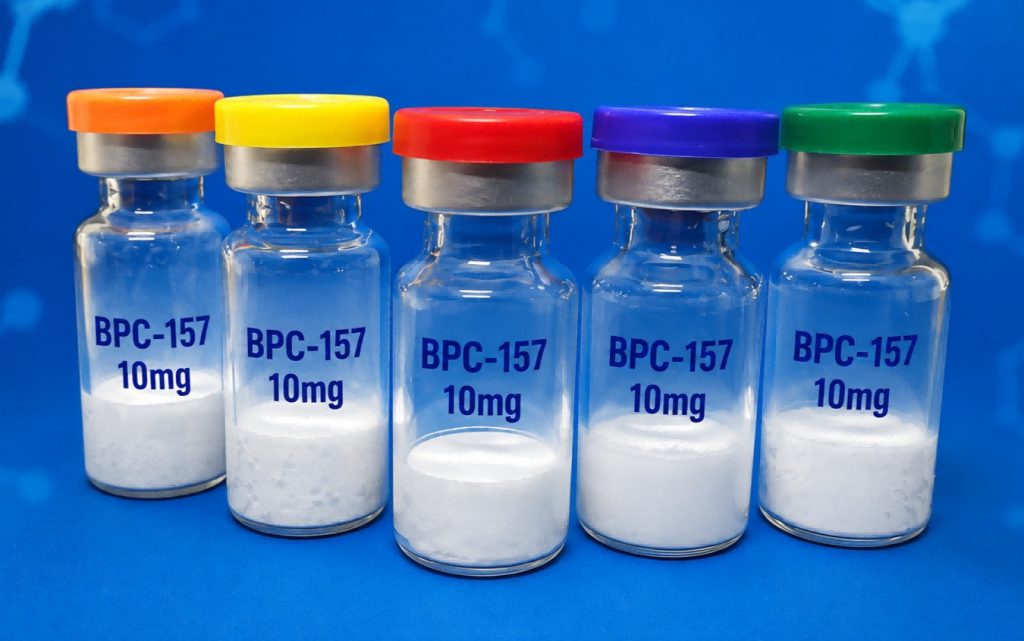
BPC-157 has become a frequently discussed compound in peptide research, particularly in studies investigating cellular protection, tissue response and signaling pathways.
But what exactly makes this relatively small peptide scientifically interesting?
The answer begins with its structure—and with understanding the limits of the available evidence.
What Is BPC-157?
BPC-157 is a synthetic 15-amino-acid peptide, also known as a pentadecapeptide.
Its sequence is:
Gly-Glu-Pro-Pro-Pro-Gly-Lys-Pro-Ala-Asp-Asp-Ala-Gly-Leu-Val
Unlike some synthetic peptides designed primarily around receptor selectivity, BPC-157 has been investigated across several biological systems, making its potential mechanisms an ongoing area of laboratory research.
Why Is BPC-157 Studied?
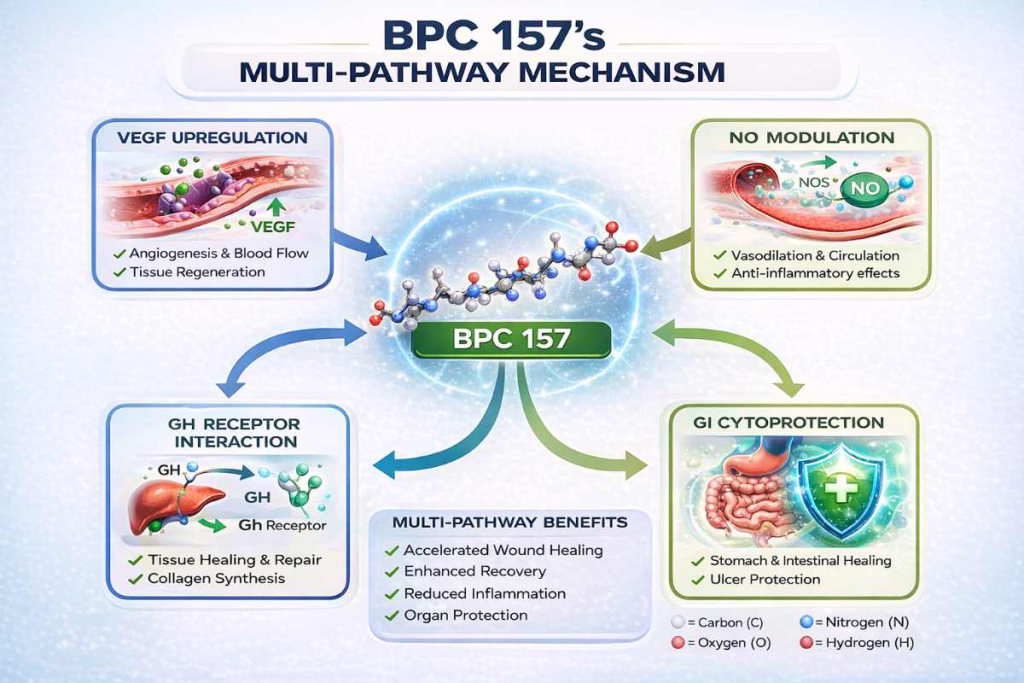
Preclinical studies have explored BPC-157 in areas involving:
- Cellular and tissue responses
- Angiogenesis-related signaling
- Nitric oxide pathways
- Gastrointestinal models
- Growth-factor-associated pathways
This broad research profile makes BPC-157 interesting from a mechanistic perspective.
However, it is important to distinguish experimental findings from established clinical evidence.
Much of the available BPC-157 literature comes from laboratory and animal models, and these findings should not automatically be interpreted as demonstrated effects in humans.
BPC-157 Research: What Do We Still Not Know?
One of the most scientifically useful questions is not what researchers already know—but what remains uncertain.
For BPC-157, important questions remain around its precise molecular targets, pharmacokinetics, formulation behavior and translation of preclinical findings into human research.
This uncertainty is exactly why careful experimental design and well-characterized research materials matter.
Why Peptide Identity and Purity Matter
When studying a research peptide such as BPC-157, the product name alone is not enough to establish material quality.
Researchers should consider:
Sequence identity → Purity → Batch traceability → Analytical documentation
Methods such as HPLC can provide information about chromatographic purity, while mass spectrometry can support confirmation of molecular identity.
At SUNONE, we believe reliable peptide research begins with knowing exactly what material is being studied.
Final Takeaway
BPC-157 is an interesting research peptide not because its scientific questions have already been completely answered, but because many of them remain open.
Understanding its 15-amino-acid structure, experimental research landscape and current evidence limitations provides a more responsible foundation for future peptide research.
SUNONE — Supporting peptide research through quality, analytical transparency and reliable scientific materials.
For laboratory and scientific research purposes only. Not intended for human or veterinary use.
Leave a Reply