
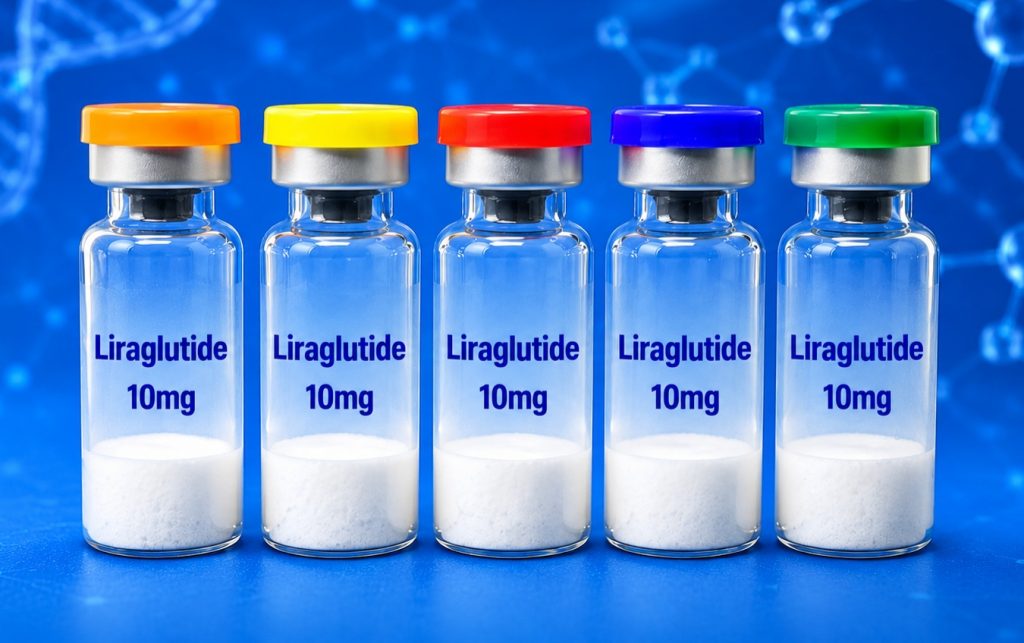
Liraglutide is one of the best-known molecules in the GLP-1 research field. But from a peptide-science perspective, one question is particularly interesting:
How was a naturally short-lived GLP-1 signal transformed into a long-acting peptide analog?
The answer lies in molecular design.
Liraglutide Is More Than a GLP-1 Copy
Liraglutide, also known as NN2211, is an acylated GLP-1 analog designed to retain GLP-1 receptor activity while extending molecular exposure.
Native GLP-1 is rapidly degraded in biological systems, which limits its duration.
Liraglutide addresses this challenge through structural modification—including attachment of a fatty-acid side chain.
This modification promotes interaction with albumin and contributes to slower absorption and reduced susceptibility to rapid degradation.
For peptide researchers, Liraglutide therefore provides an important example of:
Sequence design → molecular modification → altered pharmacokinetics.
Why Albumin Interaction Matters
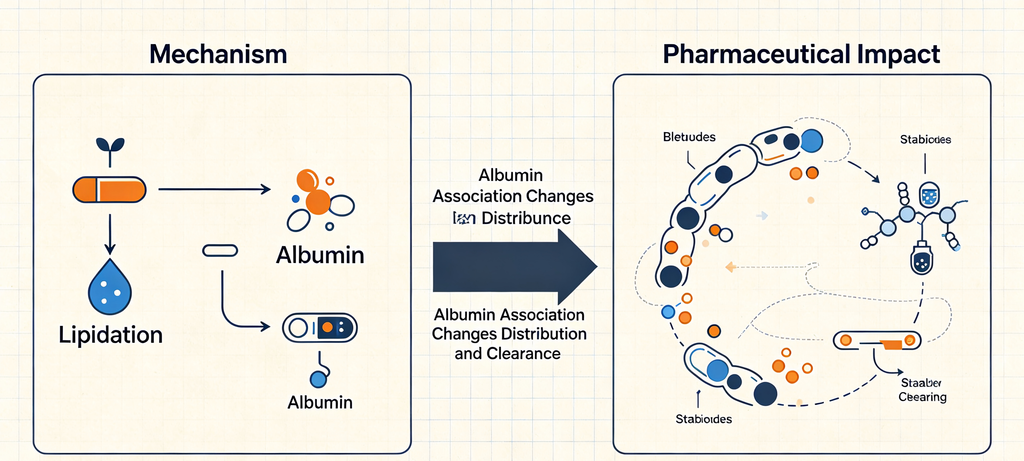
Albumin is abundant in circulation and can act as a molecular carrier.
By increasing albumin association, peptide acylation can substantially change how quickly a molecule is distributed and cleared.
This principle extends beyond Liraglutide itself. Lipidation and albumin-binding strategies have become important tools in the development of longer-acting peptide molecules.
That makes Liraglutide research relevant not only to GLP-1 receptor biology, but also to pharmaceutical peptide design.
What Do Online Liraglutide Reviews Tell Us?
Search results contain both highly positive and negative Liraglutide experiences.
Some users describe reduced appetite, increased satiety and meaningful weight changes. Others report little perceived response or experiences involving nausea, constipation, heartburn and fatigue.
This variability highlights an important distinction:
Individual reviews describe experiences—not controlled scientific evidence.
For laboratory and pharmaceutical research, conclusions should instead be based on controlled studies, defined molecular materials and appropriate analytical methods.
What Should Researchers Check When Sourcing Liraglutide?

For Liraglutide peptide research, product quality involves more than simply finding a vial carrying the correct name.
Researchers should consider:
Identity → Purity → Molecular specification → Batch traceability → Analytical documentation
SUNONE supplies Liraglutide (NN2211) research peptide as lyophilized material for laboratory research, analytical development and biopharmaceutical manufacturing applications.
For specifications, packaging and available analytical documentation, visit the SUNONE Liraglutide Product Page.
Final Takeaway
Liraglutide offers an important lesson in modern peptide engineering.
Its scientific significance is not simply that it belongs to the GLP-1 analog family. Its molecular design demonstrates how structural modification can transform the pharmacokinetic behavior of a peptide.
For researchers, understanding that relationship between structure, albumin interaction and molecular duration provides a more useful perspective than simply asking:
“What are the benefits of Liraglutide?”
SUNONE — Supporting peptide research through defined molecular identity, analytical quality and reliable batch documentation.
Disclaimer
This article is provided for scientific and educational purposes only. SUNONE Liraglutide is supplied for laboratory research, analytical development and manufacturing use only. It is not intended for personal consumption, human or veterinary use, diagnosis, treatment, prevention or other therapeutic applications unless appropriately registered and authorized. Third-party experiences and research findings discussed in this article should not be interpreted as product-specific claims of clinical efficacy or safety.
Leave a Reply