
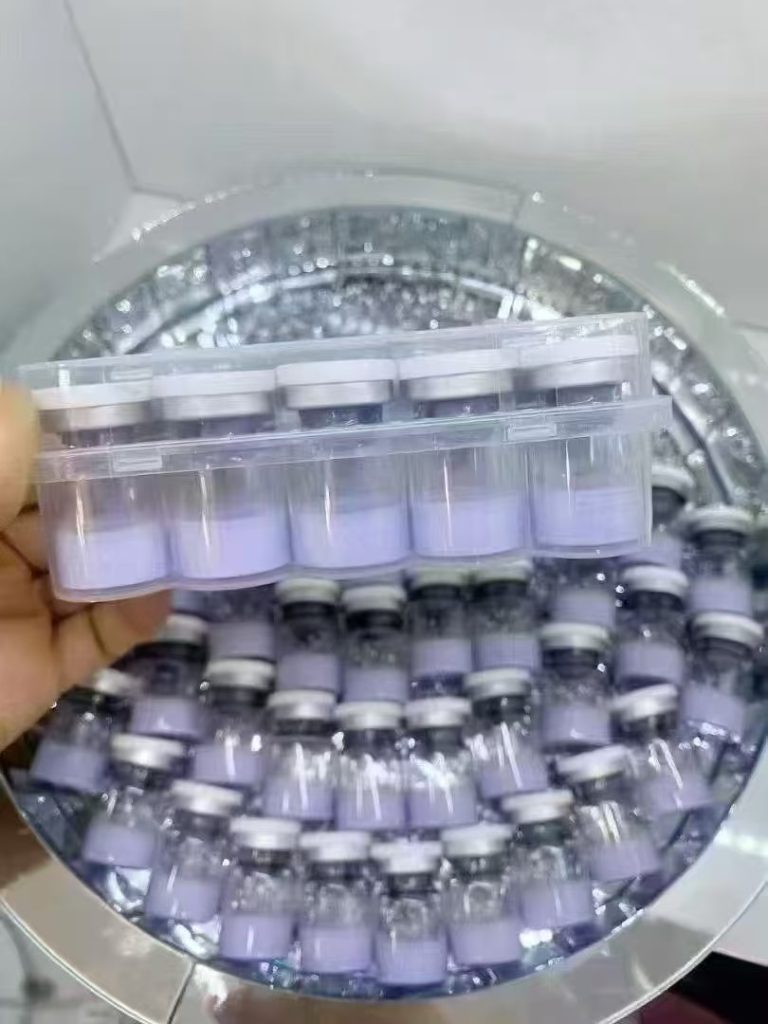
KLOW peptide, also known as a GHK-Cu + BPC-157 + TB-500 + KPV blend, brings four widely discussed research compounds into a single formulation.
At first glance, interpreting the blend seems simple:
Research each peptide individually, combine the findings, and describe what the blend might do.
Scientifically, however, it is not that simple.
Evidence for four individual compounds is not automatically evidence for a four-component blend.
What Is the KLOW Peptide Blend?
KLOW is commonly used to describe a research blend containing:
- GHK-Cu
- BPC-157
- TB-500
- KPV
Each component has a different molecular identity and research background.
GHK-Cu is a copper-binding peptide studied in areas including extracellular-matrix and tissue-remodeling biology.
BPC-157 has primarily been investigated in preclinical tissue-repair and gastrointestinal models.
TB-500-related research is associated with thymosin-beta-4 biology, including cellular migration and cytoskeletal processes.
KPV is a short α-MSH-derived tripeptide investigated primarily in inflammatory-signaling models.
This diversity is exactly what makes the KLOW peptide blend scientifically interesting.
The Most Important KLOW Research Question
Searching for GHK-Cu, BPC-157, TB-500 and KPV research produces studies involving the individual components.
But that creates an important evidence problem.
If Compound A produces one response and Compound B produces another when studied independently, researchers cannot automatically conclude that:
A + B = both effects simultaneously.
Combining multiple research compounds can introduce variables involving molecular stability, relative concentration, interactions and experimental exposure.
That means researchers should distinguish between:
Component-level evidence
and
Blend-level evidence
For KLOW, that distinction matters.
Why the Four Components Should Not Be Treated as One Molecule
KLOW is a formulation—not a new peptide sequence.
The four components differ substantially in molecular structure and biological research context.
This means a statement supported by a GHK-Cu study should be identified as GHK-Cu evidence, rather than automatically becoming a “KLOW benefit.”
The same principle applies to BPC-157, TB-500 and KPV.
This evidence-first approach makes interpretation more transparent and prevents individual peptide findings from being overstated as combination-specific results.
What Do Positive and Negative KLOW Reviews Show?
Online discussion of KLOW is growing.
Some users report perceived changes involving skin appearance, redness or recovery. Other discussions describe no noticeable changes or unwanted experiences such as nausea, anxiety, skin reactions or sleep changes.
These anecdotes have substantial limitations.
Product composition may vary between suppliers, multiple compounds are present simultaneously, and uncontrolled experiences cannot determine which component—if any—produced an observed effect.
For researchers:
A four-component anecdote cannot identify a one-component cause.
How Should Researchers Evaluate a KLOW Blend?
For a multi-component research formulation, a single headline purity number may not answer every analytical question.
Researchers should consider:
Component identity → Component ratio → Purity → Analytical verification → Batch consistency
This becomes particularly important when four chemically different research materials are supplied within one formulation.
SUNONE supplies KLOWGLOW Plus (GHK-Cu + BPC-157 + TB-500 + KPV) as a research-grade multi-component formulation for qualified laboratory and manufacturing research.
Explore the SUNONE KLOWGLOW Plus Product Page for current specifications and product information.
Final Takeaway
KLOW creates an interesting research problem precisely because it contains four components.
The scientifically responsible question is not simply:
“What does each peptide do?”
It is:
“Which conclusions are supported by individual-component studies, and which conclusions have actually been demonstrated for the complete blend?”
Keeping those two evidence levels separate can lead to better experimental interpretation and more defensible research conclusions.
SUNONE — Supporting peptide research through defined composition, analytical quality and reliable batch documentation.
Disclaimer
This article is provided for scientific and educational purposes only. SUNONE KLOWGLOW Plus is supplied strictly for qualified laboratory research and manufacturing use. It is not intended for human or veterinary use, personal consumption, diagnosis, prevention, treatment or therapeutic application. Findings involving individual components should not be interpreted as demonstrating the efficacy or safety of the complete KLOW formulation.Researchers must comply with all applicable local regulations.
Leave a Reply