
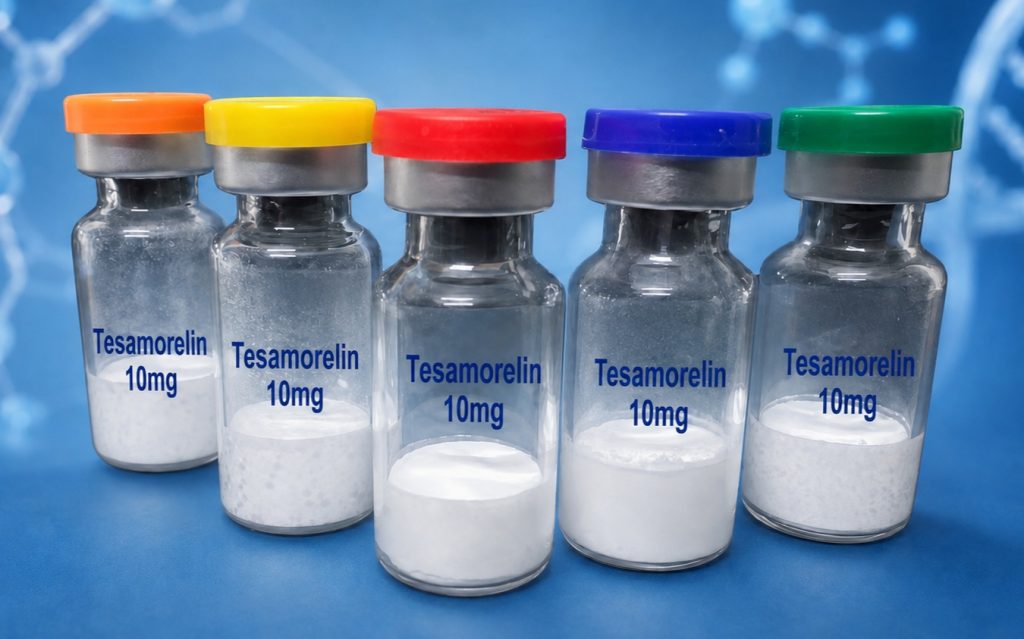
What Makes Tesamorelin Different?
Not every peptide associated with the growth hormone axis is growth hormone itself.
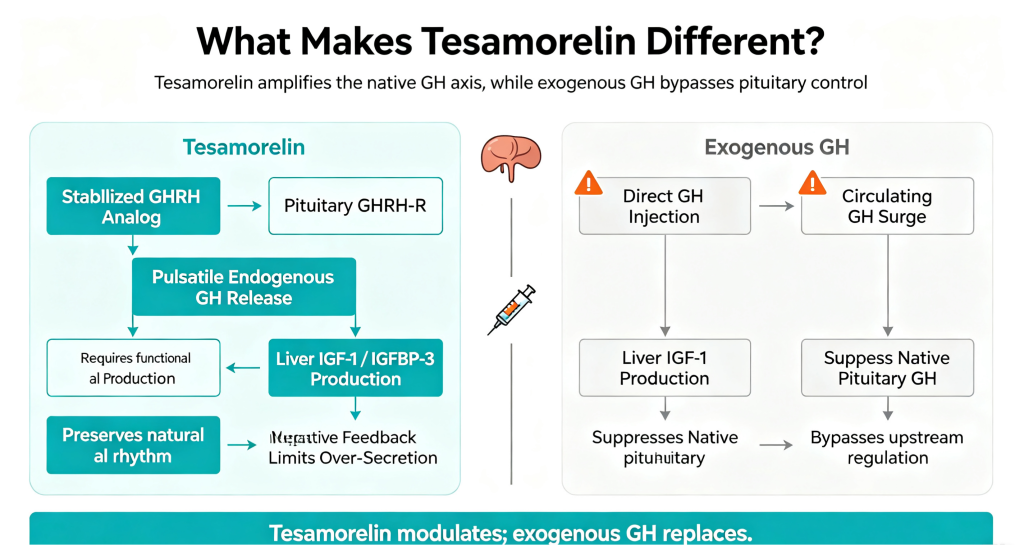
Tesamorelin (TH9507) is a synthetic analogue of growth hormone-releasing hormone (GHRH). Instead of functioning as exogenous growth hormone, Tesamorelin interacts with the signaling pathway responsible for stimulating endogenous GH secretion.
This distinction makes Tesamorelin peptide an interesting research material for laboratories studying the GHRH–GH–IGF-1 axis.
It also raises an important laboratory question: when sourcing a complex research peptide, how can researchers verify what is actually inside the vial?
Tesamorelin Molecular Profile
Tesamorelin is a modified 44-amino-acid GHRH analogue.
Common reference information includes:
- Product Name: Tesamorelin
- Research Codes: TH9507, TH-9507
- CAS Number: 218949-48-5
- Molecular Formula: C221H366N72O67S
- Molecular Weight: approximately 5135.9 g/mol
- Classification: GHRH analogue
- Typical Research Form: Lyophilized powder
The molecular modification of Tesamorelin differentiates it from native GHRH while retaining activity at the growth hormone-releasing factor receptor.
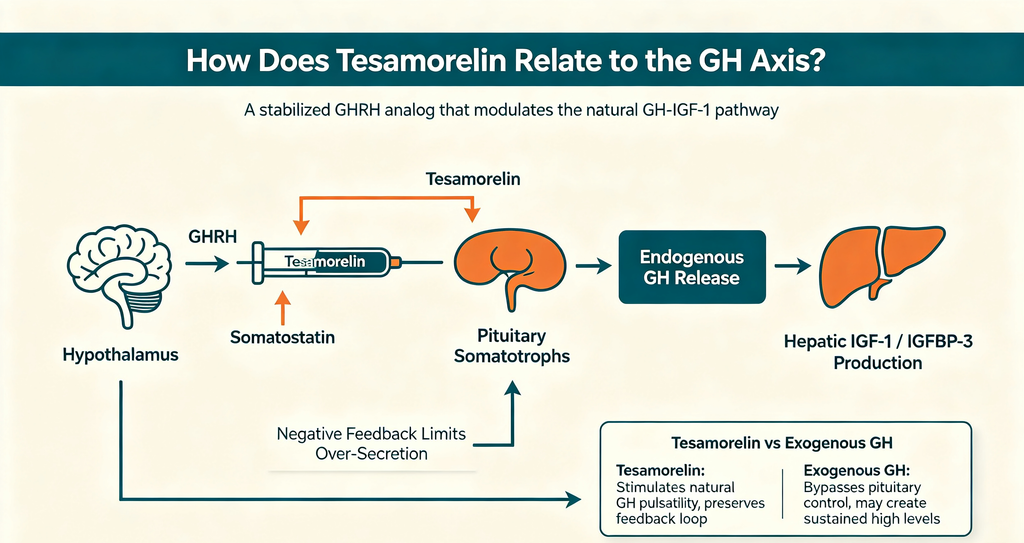
How Does Tesamorelin Relate to the GH Axis?
The biological pathway is relatively straightforward:
GHRH signaling → pituitary GH secretion → downstream GH/IGF-1 activity
Tesamorelin binds to and stimulates human GHRH/GRF receptors. Research has shown that this can increase endogenous growth hormone secretion and subsequently influence IGF-1 and IGFBP-3 levels.
This is why terms such as Tesamorelin GHRH analog, TH9507 peptide and GH-axis research peptide frequently appear in scientific literature.
Importantly, research into this pathway should not be interpreted as evidence for every health or body-composition claim found online.
What Do Tesamorelin Reviews Actually Tell Researchers?
Searches for Tesamorelin reviews produce mixed results.
Some online users describe positive experiences involving perceived body-composition changes. Other reports mention limited effects or negative experiences such as headaches, fatigue, fluid retention, joint discomfort and injection-site reactions.
Controlled clinical research has also documented adverse reactions associated with pharmaceutical Tesamorelin, including injection-site reactions, arthralgia, myalgia and peripheral edema.
But online reviews and controlled evidence are not interchangeable.
Materials discussed in online communities may come from different sources with unknown identity, purity or storage history. Users may also be taking multiple compounds simultaneously.
For researchers, the useful lesson is simple:
Anecdotal experience can generate questions, but analytical data and controlled studies are required to answer them.
Is 99% HPLC Enough to Verify Tesamorelin?
Not by itself.
This is one of the most important distinctions when comparing research grade Tesamorelin.
An HPLC purity result describes the chromatographic composition observed under a particular analytical method. A high main-peak percentage can be valuable information, but it does not independently prove every aspect of molecular identity, quantity, sterility or overall suitability for a particular experiment.
Researchers should therefore look beyond a single “99% purity” statement.
Useful documentation may include:
HPLC Analysis
Provides information about chromatographic purity and detectable related components.
Identity Analysis
Techniques such as mass spectrometry can provide supporting evidence that the material corresponds to the expected molecular identity.
Batch-Specific COA
A Tesamorelin COA is most useful when it corresponds to the actual manufacturing lot supplied.
Lot Traceability
A clear connection between the vial, lot number and analytical documentation supports experimental reproducibility.
Storage Documentation
Storage conditions should correspond to the applicable product specification and batch documentation.
SUNONE Tesamorelin Research Peptide
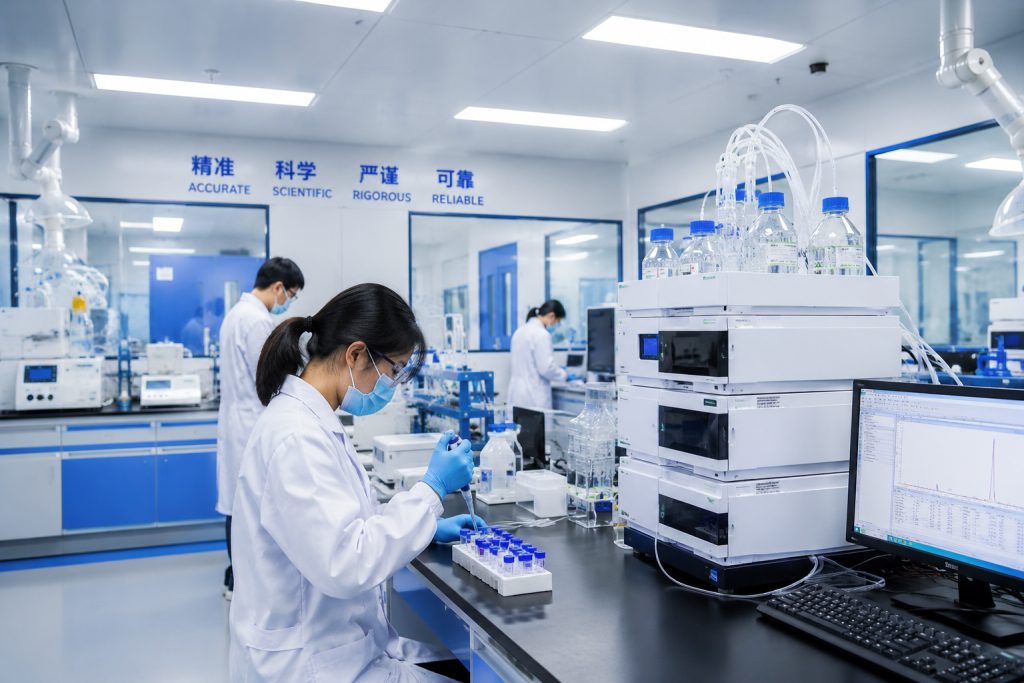
SUNONE supplies Tesamorelin research peptide (TH9507) for qualified laboratory research and biopharmaceutical manufacturing applications.
SUNONE Tesamorelin is supplied as lyophilized research material with ≥99% HPLC specification, with applicable COA, SDS and product documentation available for laboratory review.
Researchers, biotechnology companies, distributors and qualified B2B customers can review specifications here:
View SUNONE Tesamorelin Research Peptide
When evaluating a Tesamorelin supplier or Tesamorelin manufacturer, researchers should consider peptide identity, analytical purity, batch documentation, traceability and manufacturing consistency together rather than relying on a purity percentage alone.
Final Thoughts
Tesamorelin offers an interesting model for studying the GHRH–GH–IGF-1 signaling axis.
Its relationship to native GHRH, modified peptide structure and established scientific literature make TH9507 relevant to multiple areas of peptide and endocrine research.
At the same time, increasing online discussion makes careful evidence interpretation more important.
For laboratories sourcing Tesamorelin peptide, the question should therefore extend beyond:
“Is it 99% pure?”
A more useful question is:
“Can the identity, purity and batch history of this specific Tesamorelin research material be documented?”
For reproducible peptide research, that distinction matters.
For more information, please click here.
Disclaimer
This article is provided solely for scientific, educational and laboratory research information. It does not constitute medical advice and should not be interpreted as a recommendation regarding the diagnosis, prevention or treatment of any disease.
SUNONE Tesamorelin research products are intended for qualified laboratory research and manufacturing applications only. They are not intended for personal use, self-administration, human or veterinary consumption, diagnosis or therapeutic use unless separately registered and authorized under applicable laws and regulations.
Leave a Reply