
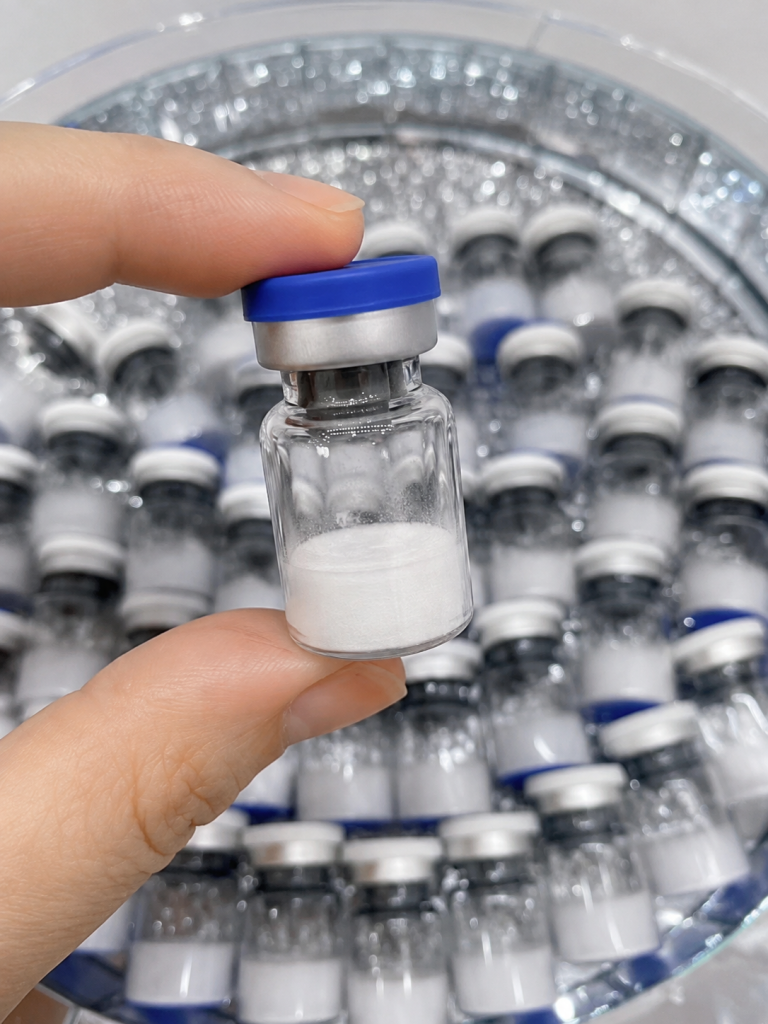
Why Is a Two-Peptide Blend Harder to Verify?
A single research peptide already raises two fundamental analytical questions:
Is it the correct molecule?
How pure is the material?
A BPC-157 + TB-500 research blend adds another:
Are both peptides present in the intended proportion?
That distinction is often missing from discussions of peptide blends.
BPC-157 and TB-500 are chemically distinct research compounds. Combining them in one vial does not create a new peptide molecule—it creates a multi-component research material.
For laboratories, that makes blend characterization more important, not less.
BPC-157 + TB-500 at a Glance
The BPC-157 TB-500 blend combines two research peptides frequently discussed in tissue-repair research:
BPC-157
A 15-amino-acid peptide with the sequence GEPPPGKPADDAGLV. Preclinical research has investigated BPC-157 in models involving tissue remodeling, vascular signaling and related pathways.
TB-500
A synthetic research peptide associated with the actin-binding region of thymosin beta-4 research. Its experimental context includes cytoskeletal dynamics and cell-migration-related processes.
Although the two compounds are frequently discussed together, they remain separate molecular entities.
That matters when interpreting both scientific evidence and analytical results.

Does Combining BPC-157 and TB-500 Prove Synergy?
No.
This is one of the most important distinctions researchers should make when reading about BPC-157 + TB-500 online.
The two compounds have been investigated individually in different preclinical research models, and their proposed biological pathways provide a rationale for studying them together.
But:
Mechanistic compatibility is not the same as experimentally demonstrated synergy.
A true synergy claim requires experiments designed to compare the combination against each component individually under controlled conditions.
The popularity of a combination does not substitute for that evidence.
For this reason, describing BPC-157 + TB-500 as a multi-peptide research blend is scientifically more appropriate than presenting enhanced biological effects as an established fact.
TB-500 and Thymosin Beta-4: Why the Name Matters
Another source of confusion is the relationship between TB-500 and thymosin beta-4 (Tβ4).
Full-length thymosin beta-4 is a 43-amino-acid peptide with its own research literature.
Products and discussions using the name TB-500 may instead refer to a synthetic fragment or derivative associated with the active region of thymosin beta-4.
Researchers should therefore avoid automatically attributing every finding involving full-length thymosin beta-4 to a material labeled TB-500.
Correct molecular identification matters before biological conclusions can be compared.
What Do Online BPC-157 + TB-500 Reviews Show?
Searches for BPC-157 TB-500 reviews produce strongly mixed experiences.
Positive anecdotal reports often mention perceived changes involving exercise recovery, injury-related discomfort or general physical recovery.
Negative discussions include reports of fatigue, dizziness, brain fog, gastrointestinal discomfort, anxiety and other unwanted experiences.
These reports have an important limitation:
The research material itself is often impossible to verify.
Online reviews rarely provide sufficient information about:
- Peptide identity
- Individual component purity
- Blend ratio
- Batch documentation
- Storage history
- Other compounds being used
- Relevant individual variables
For this reason, online reviews cannot establish the efficacy, safety or synergy of a BPC-157 + TB-500 blend.
Anecdotes can generate hypotheses. Controlled research is required to test them.
Three Questions Researchers Should Ask About a Peptide Blend
This is where evaluating a research peptide blend becomes different from evaluating a single compound.
1. Identity: Are Both Peptides Actually Present?
The first question is molecular identity.
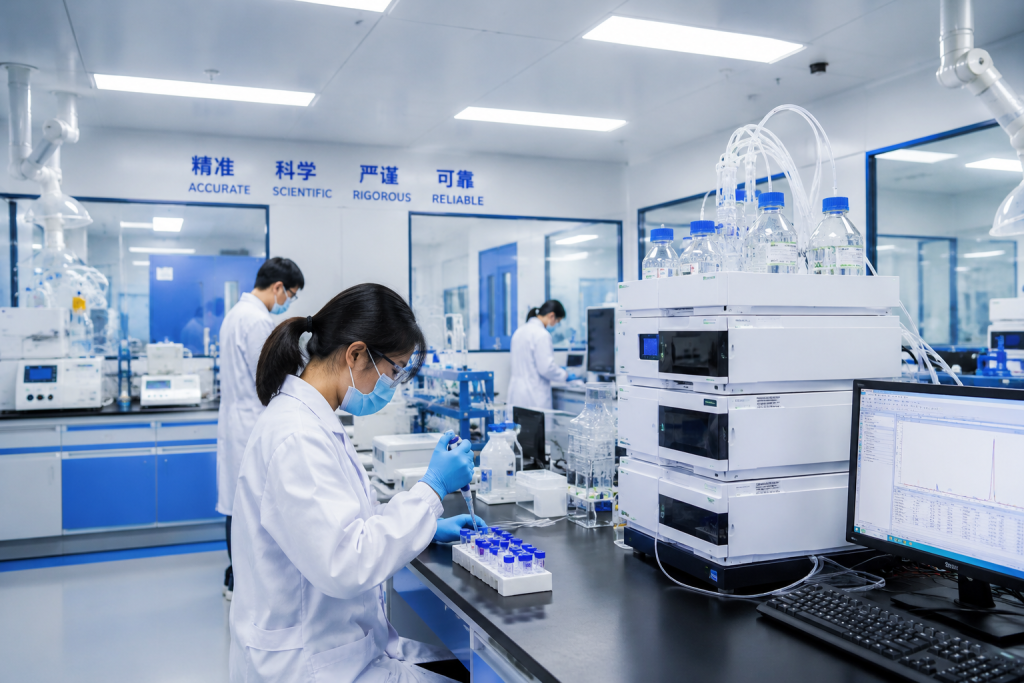
Analytical methods such as mass spectrometry can provide evidence supporting the identity of the expected peptide components.
For a two-component material, simply confirming that “a peptide” is present is not enough.
Both intended components matter.
2. Purity: What Else Is Present?
HPLC can provide information about chromatographic purity and detectable related components.
However, a headline statement such as “99% purity” should be interpreted carefully with multi-component materials.
Researchers should understand what was measured, which component the result refers to and how the analytical method was applied.
3. Ratio: How Much of Each Peptide Is Present?
This is the additional question created by a blend.
Imagine that both BPC-157 and TB-500 are correctly identified and individually meet a stated purity specification.
That still does not automatically establish that the vial contains the intended BPC-157:TB-500 ratio.
For experimental reproducibility, component quantity and blend composition may matter just as much as chromatographic purity.
This is why a useful BPC-157 TB-500 COA should be interpreted as more than a single purity percentage.
Why Batch Documentation Matters
Multi-peptide research makes traceability especially valuable.
Researchers should ideally be able to connect:
Vial → Lot Number → Component Identity → Analytical Results → Blend Specification
This chain helps laboratories determine exactly which material was used in an experiment.
If experimental results change between lots, batch-specific documentation also provides a starting point for investigating whether material variation contributed to the difference.
For reproducible research, traceability is part of the experimental record.
SUNONE BPC-157 + TB-500 Research Blend
SUNONE supplies BPC-157 + TB-500 research blend for qualified laboratory, analytical and biopharmaceutical research applications.
Available configurations include research blend formats with applicable batch documentation, COA, SDS and product specifications.
Researchers, biotechnology companies, distributors and qualified B2B customers can review product information here:
View SUNONE BPC-157 + TB-500 Research Blend
When comparing a BPC-157 TB-500 supplier, laboratories should evaluate component identity, analytical purity, blend composition, batch documentation and manufacturing traceability together.
With multi-component research materials, one purity number rarely tells the entire story.
For more information, please click here.
Final Thoughts
BPC-157 + TB-500 illustrates an important principle in peptide research:
Adding another peptide also adds another analytical variable.
For a single peptide, researchers may focus primarily on identity and purity.
For a blend, three questions become central:
Identity — are the intended peptides present?
Purity — what else is present?
Ratio — are the components present in the intended proportion?
The scientific evidence surrounding BPC-157 and TB-500 should also be distinguished from claims made about their combination. Two individually interesting research compounds do not automatically create a proven synergistic system.
For laboratories studying BPC-157 + TB-500, good research therefore begins before the biological experiment starts.
It begins by understanding exactly what is in the vial.
SUNONE BPC-157 + TB-500 research peptide is for qualified labrtorynt, diagnois, druc tor mmatct or veteimant, use.research only, Not for human consumption, clinical treame.
Leave a Reply