
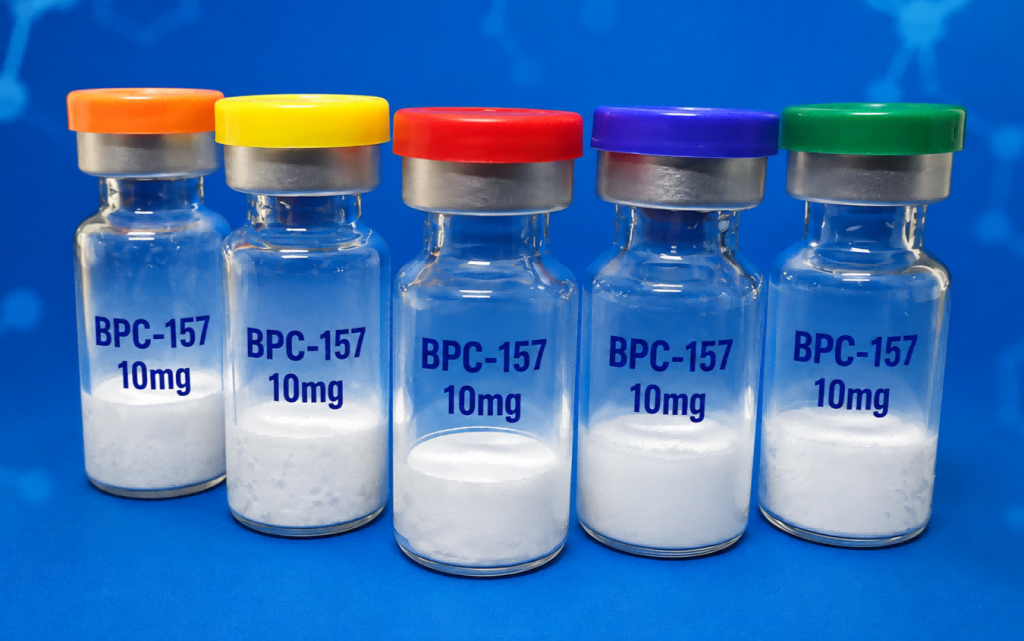
What Is BPC-157?
BPC-157 is a synthetic 15-amino-acid peptide studied primarily in preclinical models involving tissue remodeling, cellular migration, inflammatory signaling and regenerative biology.
SUNONE supplies BPC-157, CAS 137525-51-0, as ≥99.6% Research Grade lyophilized peptide for qualified laboratory, analytical and manufacturing applications.
SUNONE BPC-157 Product Page:
Why Is BPC-157 Still of Interest to Researchers?
BPC-157 has generated a substantial preclinical literature involving experimental models of:
- tendon and ligament biology;
- fibroblast migration;
- angiogenesis-related signaling;
- inflammatory pathways;
- gastrointestinal tissue models;
- muscle and connective-tissue remodeling.
A 2025 systematic review identified 36 relevant studies, but 35 were preclinical and only one was classified as clinical.
That evidence profile is important.
BPC-157 may be scientifically interesting, but the amount of laboratory research should not be confused with strong human clinical evidence.
BPC-157 Free Base vs BPC-157 Acetate: Why the Difference Matters
One of the most overlooked questions in BPC-157 research is:
What chemical form is actually being supplied?
The name “BPC-157” is commonly used commercially for more than one form.
For example, BPC-157 free base and BPC-157 acetate are related but chemically distinct bulk substances.
SUNONE identifies its current BPC-157 product using:
CAS 137525-51-0
This CAS corresponds to the BPC-157 free-base identity listed in current regulatory characterization.
For laboratories, this distinction matters because different salt forms can have different:
- molecular weights;
- physicochemical properties;
- solubility characteristics;
- stability profiles;
- analytical signatures.
Therefore, simply seeing “BPC-157” on a vial or supplier page is not enough for rigorous research.
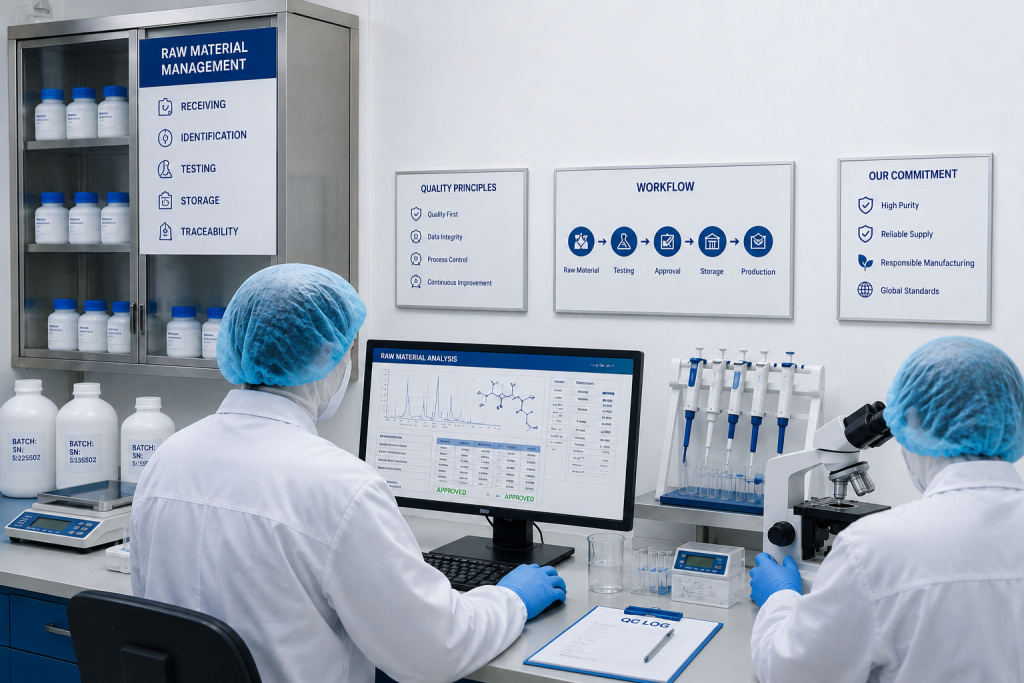
Why “99% Pure BPC-157” Does Not Tell the Whole Story
Google contains many advertisements for 99% BPC-157 or high-purity BPC-157 peptide.
Purity is important—but purity without correct identity can be misleading.
A professional research specification should answer several questions:
What molecular form is present?
Is the material BPC-157 free base, acetate or another derivative?
Does the CAS number match the intended material?
CAS information should correspond to the chemical form represented by the analytical documentation.
How was identity confirmed?
Purity by HPLC and molecular identity are related but different analytical questions.
Is the COA batch-specific?
A generic Certificate of Analysis does not provide the same traceability as documentation tied to the actual manufacturing lot.
For reproducible BPC-157 research, identity should come before the headline purity percentage.
What Does Current BPC-157 Research Actually Show?
Animal and cell studies have investigated BPC-157 across multiple tissue-repair pathways.
Preclinical research has reported effects involving fibroblast activity, vascular signaling, collagen-associated processes and inflammatory pathways.
However, translation to humans remains uncertain.
Recent systematic reviews emphasize that nearly all published evidence is still preclinical and that robust controlled human safety and efficacy data are lacking.
This evidence gap should remain visible in any responsible discussion of BPC-157 peptide research.

What Do BPC-157 Reviews Say?
Online BPC-157 reviews are often strongly positive—but also highly inconsistent.
Positive anecdotal reports frequently mention:
- perceived injury recovery;
- reduced musculoskeletal discomfort;
- improved gastrointestinal symptoms;
- improved mobility or recovery experience.
Negative reviews and discussions include reports of:
- fatigue;
- dizziness;
- anxiety or mood changes;
- aches or discomfort;
- no meaningful benefit.
The problem is that online reviews rarely confirm product identity, salt form, purity or laboratory analysis.
Some users also combine BPC-157 with TB-500 or other compounds.
For this reason, online testimonials cannot determine whether an observed experience came from BPC-157 itself, another compound, an impurity or an incorrectly identified material.
What Should Researchers Check When Choosing a BPC-157 Supplier?
A professional BPC-157 supplier should provide more than a purity claim.
Researchers should consider:
Molecular Identity
Verify the intended BPC-157 chemical form.
CAS Number
Confirm whether the CAS corresponds to free-base or another specified form.
HPLC Purity
Review batch-specific chromatographic data where applicable.
Identity Characterization
Analytical documentation should support the expected peptide identity rather than relying solely on labeling.
Certificate of Analysis
A batch-specific BPC-157 COA improves experimental traceability.
Storage and Documentation
Review applicable SDS, specification sheets and storage requirements.
SUNONE supplies BPC-157, CAS 137525-51-0, as Research Grade lyophilized peptide with batch-related documentation according to product specification.
BPC-157 Research: Identity Before Claims
The most common online question is:
“Does BPC-157 work?”
For laboratory researchers, there is an even more fundamental question:
“What BPC-157 material is actually being tested?”
If two laboratories use substances marketed under the same common name but with different chemical forms, identities or impurity profiles, their experimental results may not be directly comparable.
For serious BPC-157 research, the foundation should therefore be:
identity → chemical form → analytical characterization → purity → batch traceability → experimental interpretation.
That approach is more scientifically useful than treating every material labeled “BPC-157” as identical.
SUNONE BPC-157 research peptide is for qualified labrtorynt, diagnois, druc tor mmatct or veteimant, use.research only, Not for human consumption, clinical treame.
Leave a Reply