
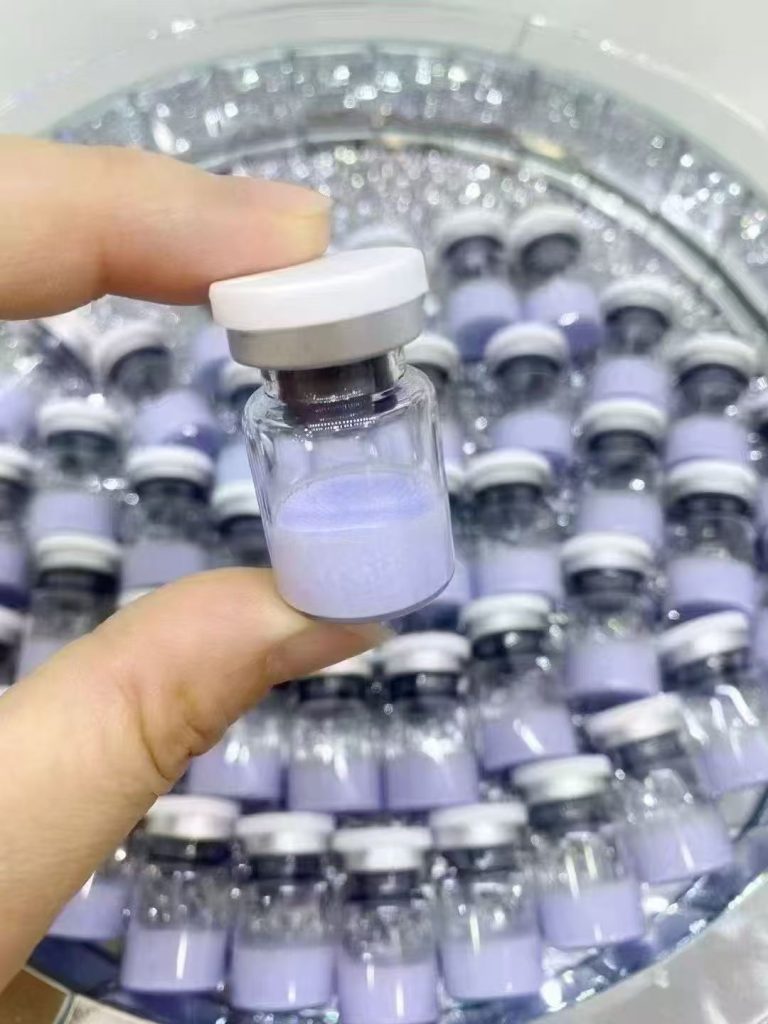
What Is GHK-Cu Peptide?
GHK-Cu, also known as Copper Tripeptide-1, is a copper-binding complex formed from the naturally occurring tripeptide Gly-His-Lys and copper ions.
Because of its relationship with copper-dependent cellular processes, GHK-Cu has become an established research compound in studies involving skin biology, extracellular matrix signaling, collagen-related pathways and cellular remodeling.
For laboratory and formulation research, SUNONE supplies research-grade GHK-Cu with supporting analytical documentation.
View SUNONE GHK-Cu:
Why Is GHK-Cu Studied in Skin and Matrix Biology?
Much of the scientific interest surrounding GHK-Cu peptide research comes from its interaction with fibroblasts and extracellular matrix components.
Published studies have investigated GHK-Cu in areas including:
- collagen synthesis;
- fibroblast activity;
- extracellular matrix remodeling;
- elastin-related pathways;
- cellular migration;
- tissue-repair models;
- copper-dependent signaling;
- cosmetic peptide research.
Early laboratory research demonstrated that the GHK-Cu complex can influence collagen synthesis in fibroblast cultures. Additional animal and laboratory studies have explored its role in tissue remodeling and repair-related biological processes.
These findings make Copper Tripeptide-1 scientifically interesting, but preclinical results should not automatically be interpreted as proven clinical effects in humans.
What Do GHK-Cu Reviews Say?

Searches for GHK-Cu reviews show a wide range of user experiences.
Positive online discussions often mention perceived improvements in skin smoothness, texture or overall appearance. Some users also report changes in hair appearance or skin firmness.
However, negative reviews are also common.
Reported experiences include:
- skin redness;
- sensitivity or irritation;
- temporary stinging;
- breakouts;
- dull or uneven-looking skin;
- little or no noticeable improvement.
These reports are anecdotal and often involve different formulations, concentrations and other skincare products.
For professional research, peer-reviewed evidence and analytical material quality should carry more weight than individual online testimonials.
What Should Researchers Check When Sourcing GHK-Cu?
When evaluating a GHK-Cu supplier, researchers should consider both peptide identity and copper-complex characterization.
Important factors include:
Identity verification
Analytical information should support the expected Gly-His-Lys copper complex.
HPLC purity
Batch-specific HPLC data helps laboratories review the quality of the supplied material.
Certificate of Analysis
A lot-specific GHK-Cu COA improves traceability and supports analytical review.
Copper-complex specification
Because GHK-Cu is a peptide-metal complex, researchers should verify the exact chemical form and batch specification.
Storage and documentation
Professional material should be supplied with appropriate SDS, specification and storage information.
SUNONE supplies GHK-Cu / Copper Tripeptide-1, CAS 300801-03-0, as research-grade lyophilized material with batch documentation available for qualified B2B customers.
Final Thoughts
GHK-Cu is scientifically distinctive because it combines a small tripeptide with copper-dependent biological signaling.
Its relationship with collagen biology, fibroblasts and extracellular matrix remodeling continues to make it relevant in skin, cosmetic and tissue research.
For laboratories conducting GHK-Cu research, verified identity, HPLC purity, copper-complex characterization and batch-specific COA documentation should remain key purchasing considerations.
SUNONE GHK-Cu research peptide is for qualified labrtorynt, diagnois, druc tor mmatct or veteimant, use.research only, Not for human consumption, clinical treame.
Leave a Reply