
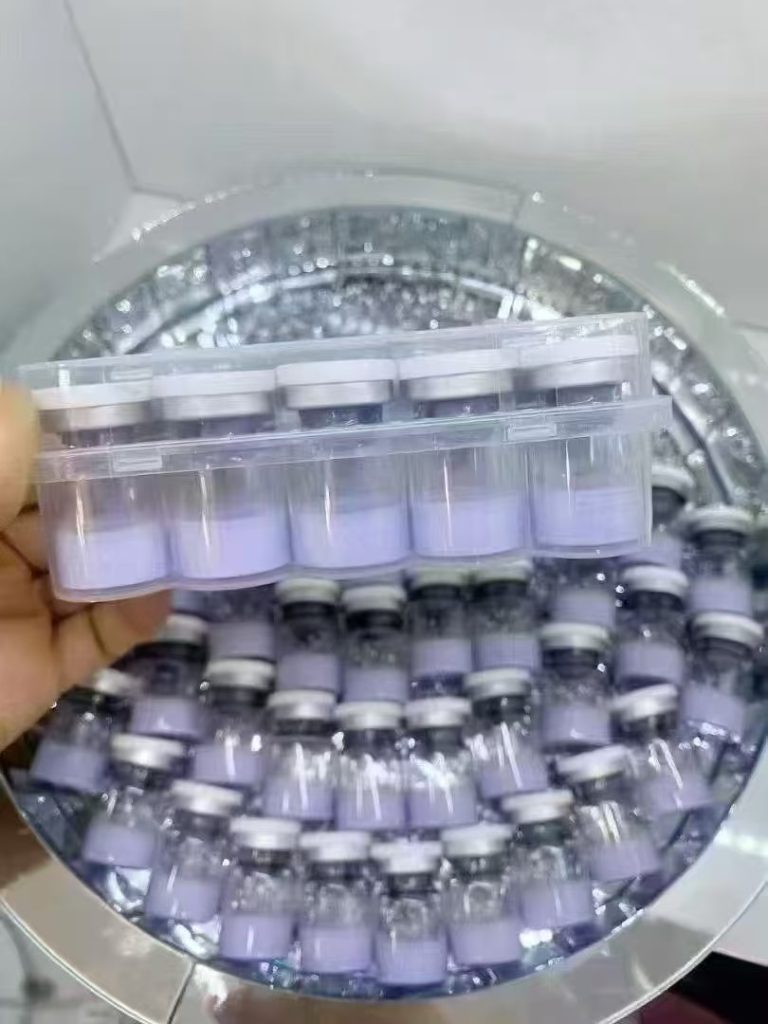
What Is GHK-Cu?
GHK-Cu, also known as Copper Tripeptide-1, is a copper-binding complex formed by the tripeptide Gly-His-Lys and a copper ion.
This distinction is important.
GHK-Cu is not simply “a peptide with copper added.” Its scientific identity depends on the interaction between the peptide ligand and the coordinated copper ion.
That coordination chemistry makes GHK-Cu particularly relevant to research involving copper-dependent cellular signaling, extracellular matrix biology and tissue remodeling.
SUNONE GHK-Cu Product Page:
Why Is GHK-Cu Studied?
GHK-Cu has been investigated for decades in laboratory models involving:
- fibroblast biology;
- collagen synthesis;
- extracellular matrix remodeling;
- elastin-related pathways;
- tissue-repair signaling;
- copper-dependent cellular processes;
- skin-associated molecular biology.
One of the best-known research themes is the relationship between GHK-Cu and collagen.
Experimental studies have reported increased collagen-related activity in fibroblast systems, helping explain why Copper Tripeptide-1 became widely studied in cosmetic and tissue-remodeling research.
However, strong laboratory mechanisms should not automatically be interpreted as proof of broad clinical effects.
What Do GHK-Cu Reviews Say?
Online GHK-Cu reviews are generally positive but far from uniform.
Positive topical-product discussions frequently mention perceived improvements in:
- skin smoothness;
- texture;
- fine-line appearance;
- firmness;
- overall skin quality.
Negative or uncertain experiences include:
- redness;
- irritation;
- sensitivity;
- products feeling too harsh;
- little or no clearly noticeable improvement.
These reviews typically involve finished cosmetic products containing multiple ingredients rather than isolated SUNONE GHK-Cu research material.
They should therefore be treated as consumer sentiment rather than scientific evidence.
The Missing Question: Is the Copper Complex Correct?
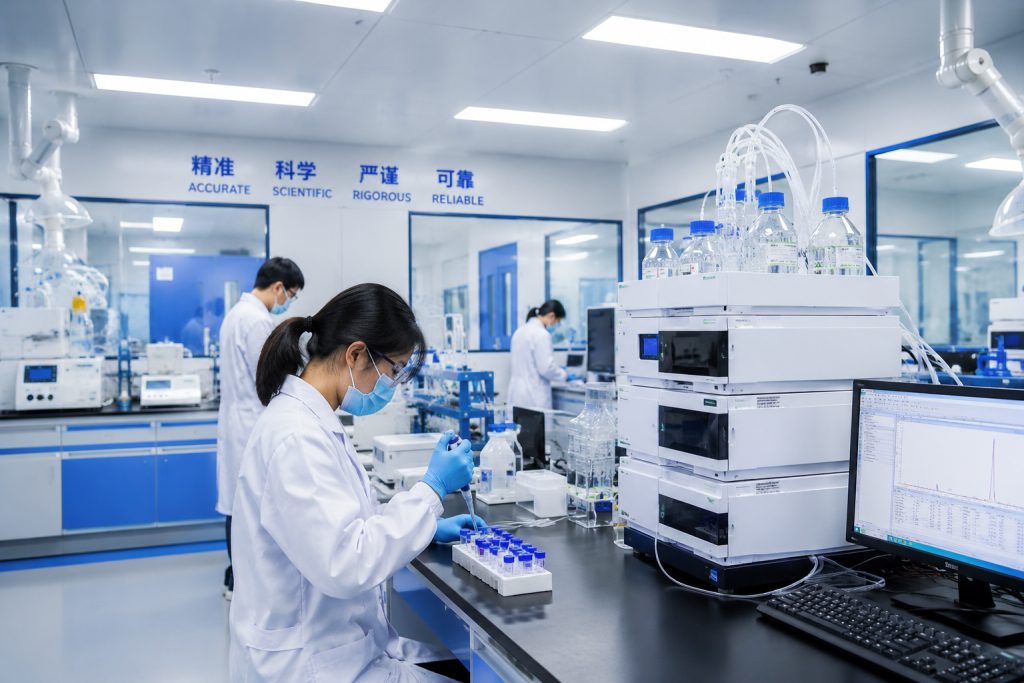
Most GHK-Cu supplier pages focus almost entirely on HPLC purity.
Purity matters, but it is not the only relevant analytical question.
GHK-Cu is a coordination complex. Researchers may also need to consider:
- peptide identity;
- copper-complex form;
- copper-to-peptide relationship;
- related peptide impurities;
- free or differently coordinated copper species;
- batch consistency;
- analytical method suitability.
A material can have a strong headline purity number while still requiring additional characterization to confirm that the expected copper-peptide complex is present.
For professional laboratories, GHK-Cu identity and complex characterization therefore matter alongside HPLC purity.
Why Human Evidence Should Be Interpreted Carefully
GHK-Cu has an extensive history of cellular, biochemical and animal research.
However, recent reviews continue to note that large, well-controlled human clinical studies remain limited.
This evidence gap is especially important because Google search results increasingly mix three very different categories:
laboratory GHK-Cu research, topical cosmetic Copper Tripeptide-1 products, and experimental injectable use.
These categories should not be treated as scientifically interchangeable.
Route of administration, formulation, purity and regulatory status can substantially change the relevance of available evidence.
What Should Researchers Check When Choosing a GHK-Cu Supplier?
When evaluating a GHK-Cu supplier, laboratories should look beyond marketing claims such as “anti-aging peptide.”
Molecular Identity
Documentation should support the expected GHK-Cu / Copper Tripeptide-1 identity.
HPLC Purity
Batch-specific HPLC data can help characterize peptide purity and related components.
Copper-Complex Form
Because GHK-Cu is a metal-peptide complex, the expected copper coordination form should be verified against applicable batch documentation.
Certificate of Analysis
A lot-specific GHK-Cu COA improves traceability and allows researchers to review identity, purity and other analytical specifications.
Storage and Handling Documentation
Relevant SDS, storage requirements and specification sheets should accompany research material.
SUNONE supplies GHK-Cu, CAS 300801-03-0, as ≥99.4% HPLC Research Grade lyophilized material for qualified laboratory, analytical and manufacturing customers.
GHK-Cu Research: Look Beyond the “Anti-Aging Peptide” Label
Google frequently describes GHK-Cu simply as an “anti-aging copper peptide.”
For biotechnology research, that description is incomplete.
GHK-Cu is also an interesting model for studying metal-peptide coordination, extracellular matrix signaling, fibroblast biology and copper-dependent molecular pathways.
For professional research, the most useful question is therefore not only whether GHK-Cu has a high purity percentage, but whether its molecular identity, copper-complex form, purity and batch documentation are properly characterized.
That distinction is critical for reproducible GHK-Cu research.
SUNONE GHK-Cu research peptide is for qualified labrtorynt, diagnois, druc tor mmatct or veteimant, use.research only, Not for human consumption, clinical treame.
Leave a Reply