
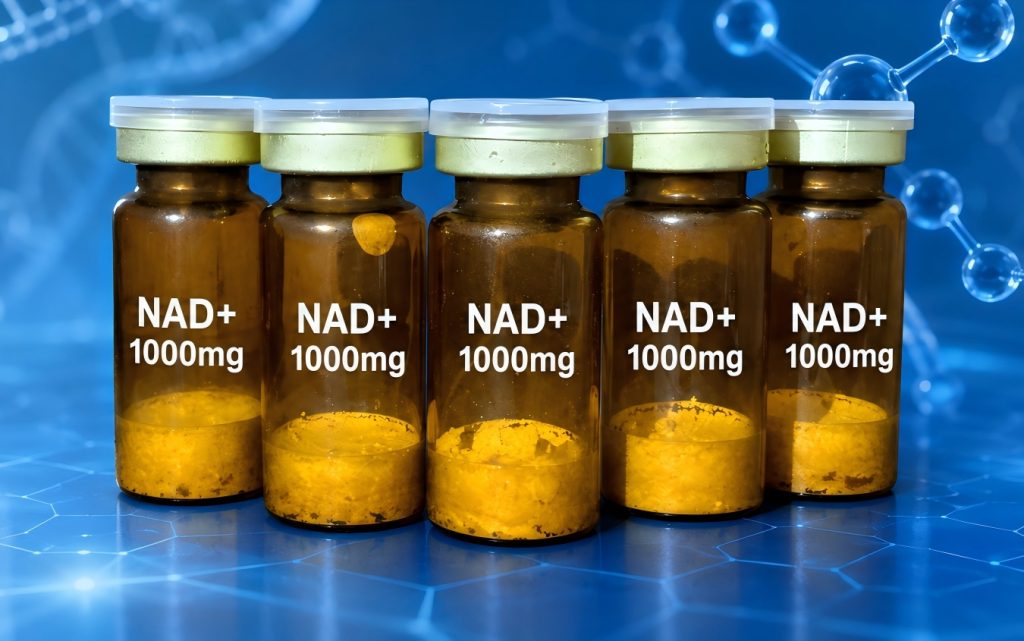
What Is NAD+?
NAD+ (Nicotinamide Adenine Dinucleotide) is an essential biochemical cofactor involved in cellular metabolism and oxidation-reduction reactions.
Unlike many research peptides, NAD+ is a naturally occurring coenzyme found throughout biological systems. It plays an important role in transferring electrons during metabolic reactions and also serves as a substrate for several NAD-dependent enzymes.
For laboratories studying cellular metabolism and mitochondrial biology, SUNONE supplies research-grade NAD+ with supporting analytical documentation.
Why Is NAD+ Important in Cellular Research?
NAD+ participates in a broad range of biochemical processes, making it useful in many laboratory research models.
Common areas of NAD+ research include:
- cellular energy metabolism;
- mitochondrial function;
- oxidation-reduction reactions;
- NAD-dependent enzyme activity;
- sirtuin-related signaling;
- DNA-repair pathways;
- metabolic regulation;
- cellular aging research.
Because NAD+ is involved in both energy transfer and cellular signaling, changes in NAD metabolism have attracted considerable interest in metabolism and healthy-aging research.
However, increased scientific interest should not be confused with proof that NAD+ itself produces broad anti-aging or wellness benefits in humans.
What Do NAD+ Reviews Say?
Online searches for NAD+ reviews produce highly mixed experiences.
Some users report perceived increases in energy, exercise capacity or general well-being.
Other users report little or no noticeable effect, while some question whether popular claims about NAD+ are supported by enough human research.
Negative discussions also include reports of temporary discomfort, fatigue or worsening subjective symptoms in some individuals.
These experiences are anecdotal and may involve different products, precursors, formulations or routes of administration.
For professional research, online testimonials should never replace controlled scientific studies or analytical material characterization.

What Should Researchers Check When Sourcing NAD+?
When choosing a NAD+ supplier, laboratories should evaluate the exact chemical material and its batch documentation.
Chemical Identity
The supplied material should correspond to the expected Nicotinamide Adenine Dinucleotide specification.
Purity
Batch-specific analytical testing provides more useful information than a generic purity claim.
Certificate of Analysis
A lot-specific NAD+ COA helps researchers verify identity, purity and material traceability.
Chemical Form
NAD+ may exist in different protonation, salt or hydration states, so the exact supplied form should be checked against the batch-specific specification.
Storage Documentation
Storage and handling requirements should be verified using the applicable COA and SDS.
SUNONE supplies NAD+, CAS 53-84-9, as ≥99.7% research-grade material with supporting analytical documentation for qualified B2B research and manufacturing customers.
NAD+ Research: Focus on Biology, Not Hype
NAD+ remains scientifically important because of its central role in cellular energy metabolism, redox biology and mitochondrial function.
Recent research continues to investigate NAD metabolism in aging and metabolic biology, but human outcomes are more complex than many online “longevity” claims suggest.
For professional laboratories, verified chemical identity, purity, batch-specific COA and transparent documentation remain the most important considerations when sourcing research-grade NAD+.
SUNONE KPV research peptide is for qualified labrtorynt, diagnois, druc tor mmatct or veteimant, use.research only, Not for human consumption, clinical treame.
Leave a Reply