
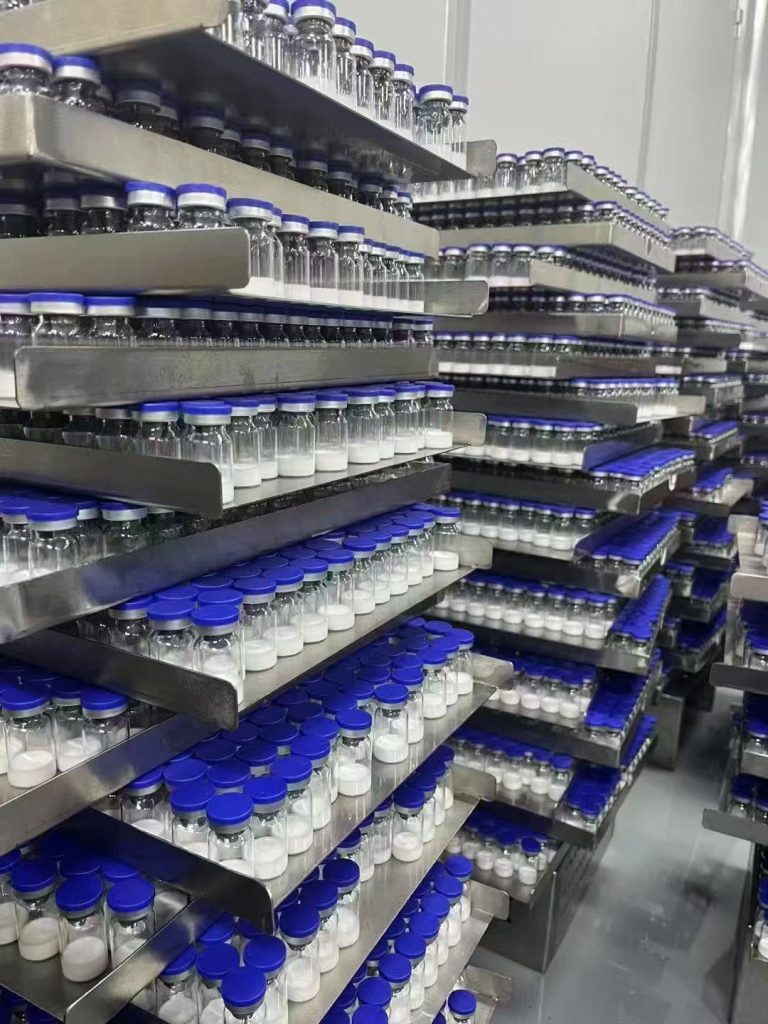
What Is Retatrutide?
Retatrutide, also known as LY3437943, is an investigational peptide designed to activate three metabolic receptor systems: the GIP receptor, GLP-1 receptor and glucagon receptor.
This triple-receptor profile distinguishes Retatrutide from single- and dual-receptor incretin compounds and has made it an important research molecule for studying metabolic signaling and peptide engineering.
SUNONE supplies research-grade Retatrutide for qualified laboratory and manufacturing applications.
Why Is Retatrutide Important in Metabolic Research?
Retatrutide research is particularly interesting because three signaling pathways are incorporated into one molecular design.
Current research areas include:
- GIP receptor signaling;
- GLP-1 receptor signaling;
- glucagon receptor signaling;
- multi-receptor incretin biology;
- glucose and lipid metabolism;
- energy homeostasis;
- peptide-receptor interactions;
- long-acting metabolic peptide design.
Recent Phase 3 studies have reported substantial changes in body weight and metabolic endpoints in clinical trial populations.
However, Retatrutide remains investigational. Clinical-trial results should not be interpreted as evidence that unapproved or research-grade Retatrutide products are suitable for personal use.
What Do Retatrutide Reviews Say?

Online Retatrutide reviews are strongly mixed.
Positive anecdotal reports commonly describe reduced appetite, less “food noise” and noticeable body-weight changes.
Negative or cautious discussions include reports or concerns involving:
- nausea;
- diarrhea;
- vomiting;
- gastrointestinal discomfort;
- altered skin sensations or dysesthesia;
- uncertain long-term safety;
- little or slower-than-expected response.
Controlled clinical studies have also reported gastrointestinal adverse events, particularly during treatment escalation.
Online experiences should be interpreted carefully because many discussions involve products obtained outside regulated clinical trials, where identity, purity and concentration may not be independently verified.
Why Research-Grade Retatrutide Is Different From an Approved Medicine
This distinction is especially important for Retatrutide.
As of 2026, Retatrutide remains an investigational molecule rather than an approved pharmaceutical product.
A research-grade Retatrutide peptide is intended for laboratory, analytical or manufacturing research. It should not be presented as an approved weight-management medication or as clinically equivalent to material used in sponsored clinical trials.
For professional laboratories, the relevant questions are therefore about:
- molecular identity;
- peptide purity;
- batch consistency;
- impurity characterization;
- analytical documentation;
- material traceability.
What Should Researchers Check When Choosing a Retatrutide Supplier?
When evaluating a Retatrutide supplier, analytical transparency is more meaningful than promotional claims.
Correct Molecular Identity
Testing should support the expected LY3437943 / Retatrutide molecular identity.
HPLC Purity
Batch-specific chromatography helps characterize peptide purity and related impurities.
Mass Characterization
Mass-spectrometry data can provide additional confirmation of expected molecular properties.
Certificate of Analysis
A batch-specific Retatrutide COA supports traceability and allows researchers to review analytical specifications.
Chemical Form
Researchers should verify the exact salt state, molecular form and related specifications against the batch-specific documentation.
SUNONE supplies Retatrutide, CAS 2381089-83-2, as ≥99.6% HPLC research-grade lyophilized material with supporting documentation for qualified B2B customers.
Retatrutide Research: Beyond the “Next Weight-Loss Drug” Headline
Much of today’s online content describes Retatrutide simply as the “next weight-loss drug.”
For biotechnology research, the more interesting question is how a single engineered peptide can coordinate GIP, GLP-1 and glucagon receptor signaling.
This triple-agonist architecture makes Retatrutide valuable for research into multi-receptor pharmacology, metabolic pathway interactions and next-generation peptide design.
For laboratories, verified identity, purity, batch-specific COA and transparent analytical documentation should remain more important than consumer testimonials or promotional claims.
SUNONE Retatrutide research peptide is for qualified labrtorynt, diagnois, druc tor mmatct or veteimant, use.research only, Not for human consumption, clinical treame.
Leave a Reply