
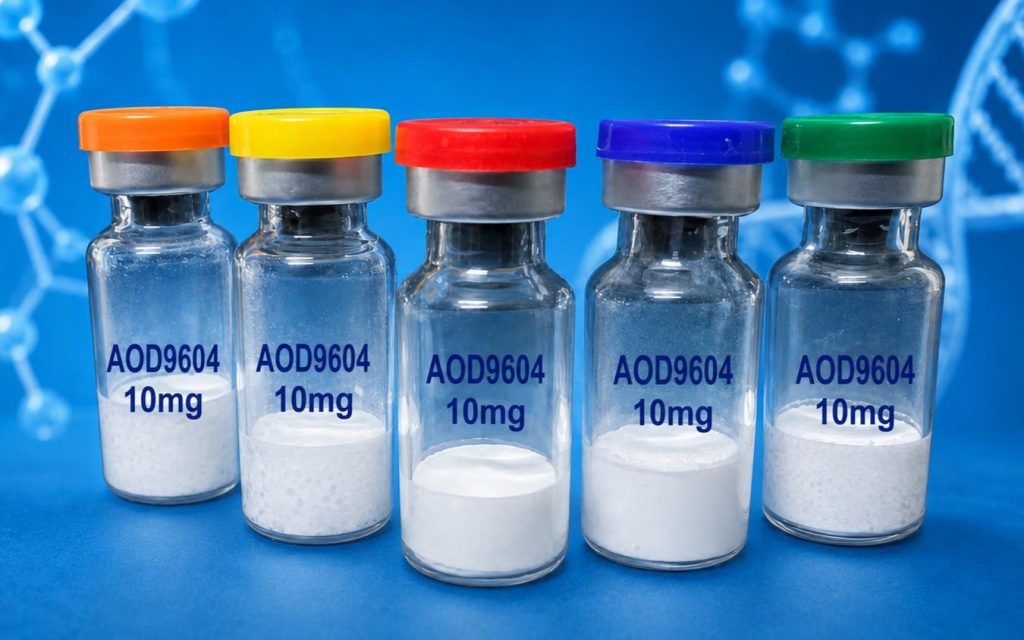
What Is AOD-9604?
AOD-9604 is a synthetic peptide derived from the C-terminal region of human growth hormone.
SUNONE currently identifies AOD-9604 as a 16-amino-acid peptide with the sequence:
YLRIVQCRSVEGSCGF
It is supplied as ≥99% HPLC, lyophilized Research Grade material for qualified laboratory, analytical and manufacturing research.
SUNONE AOD-9604 Product Page:
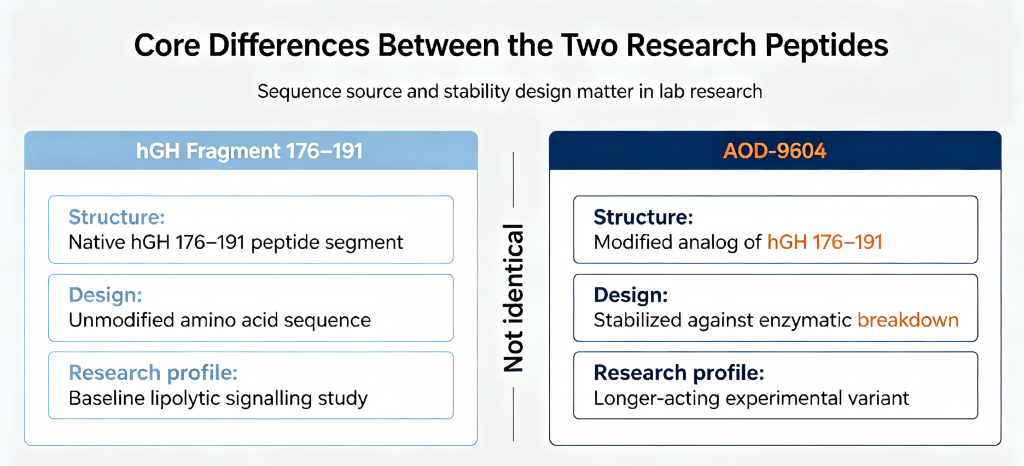
Is AOD-9604 the Same as HGH Fragment 176-191?
Not exactly.
This is one of the most common naming problems in current AOD-9604 search results.
AOD-9604 is structurally related to the C-terminal region of human growth hormone and is commonly described as an N-tyrosyl analogue of the hGH 177–191 fragment.
In practical research terminology, AOD-9604 and an unmodified HGH Fragment 176-191 should not automatically be treated as identical materials.
For laboratories, even a small sequence modification can matter when comparing:
- molecular identity;
- molecular weight;
- chromatographic behavior;
- peptide stability;
- published experimental evidence.
This is why peptide naming should never replace analytical characterization.
What Does Human AOD-9604 Research Actually Show?
AOD-9604 was originally investigated as a potential obesity-related pharmaceutical candidate.
However, the human evidence is much less convincing than many commercial pages imply.
An FDA review concluded that most identified studies failed to demonstrate a meaningful weight-reduction benefit compared with placebo.
Importantly, a study involving 536 participants with obesity did not show a significant difference in weight loss at the primary endpoint, and commercial development for obesity was subsequently terminated.
Therefore, describing AOD-9604 as a “clinically proven fat-loss peptide” would not accurately represent the available evidence.
Why Is AOD-9604 Still Studied?
Negative clinical efficacy results do not make a molecule scientifically irrelevant.
AOD-9604 remains useful in research involving:
- growth-hormone-derived peptide fragments;
- peptide structure–activity relationships;
- adipocyte and lipid-metabolism models;
- fragment versus full-length protein biology;
- analytical peptide characterization.
A particularly useful research question is whether biological properties attributed to a full-length hormone can be separated into shorter sequence-defined fragments.
That is a much stronger scientific positioning than simply marketing AOD-9604 as a weight-management compound.
What Do AOD-9604 Reviews Say?
Online AOD-9604 reviews are inconsistent.
Positive anecdotal discussions sometimes report:
- perceived body-fat changes;
- improved body-composition appearance;
- increased perceived energy.
Negative or neutral reviews often report:
- little or no noticeable effect;
- no meaningful weight change after several weeks;
- disappointment compared with expectations;
- concerns about product consistency.
Some community discussions also describe AOD-9604 solutions becoming cloudy or gel-like, with experiences varying by supplier.
These reports are not controlled scientific evidence.
They also highlight a separate issue: researchers cannot interpret biological results confidently if the identity and quality of the material are uncertain.
Why “99% AOD-9604” Is Not Enough
Purity is important, but a headline percentage does not answer every analytical question.
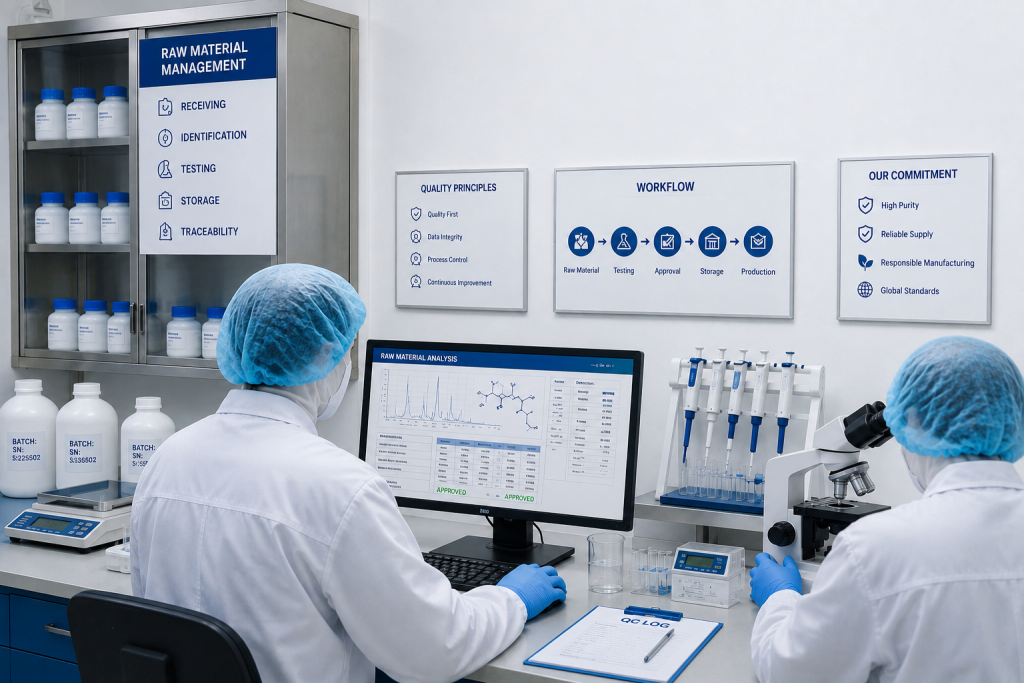
For professional AOD-9604 research, laboratories should evaluate:
Molecular Identity
The material should correspond to the intended AOD-9604 sequence and molecular specification.
HPLC Purity
Chromatographic analysis can characterize the principal peptide and related impurities.
Structural Form
Researchers should verify whether documentation refers to the intended free-base, salt or other specified form where applicable.
Batch-Specific COA
A Certificate of Analysis tied to the actual production lot supports experimental traceability.
Supporting Documentation
SDS and specification documentation should correspond to the material supplied.
SUNONE currently supplies AOD-9604, CAS 221231-10-3, as ≥99% HPLC Research Grade lyophilized peptide, with analytical information provided according to the applicable production batch.
AOD-9604 Research: Identity Before the “Fat-Loss Peptide” Keyword
The most common consumer question is:
“Does AOD-9604 cause weight loss?”
The existing human evidence does not support a strong clinical claim.
For biotechnology researchers, a better question is:
“What molecular fragment is being studied, how does it differ from HGH Fragment 176-191, and has its identity been analytically verified?”
That approach puts the emphasis where it belongs:
sequence → molecular identity → structural relationship → analytical purity → batch COA → evidence quality.
For professional research, those factors are more useful than online before-and-after claims.
SUNONE AOD-9604 research peptide is for qualified labrtorynt, diagnois, druc tor mmatct or veteimant, use.research only, Not for human consumption, clinical treame.
Leave a Reply