
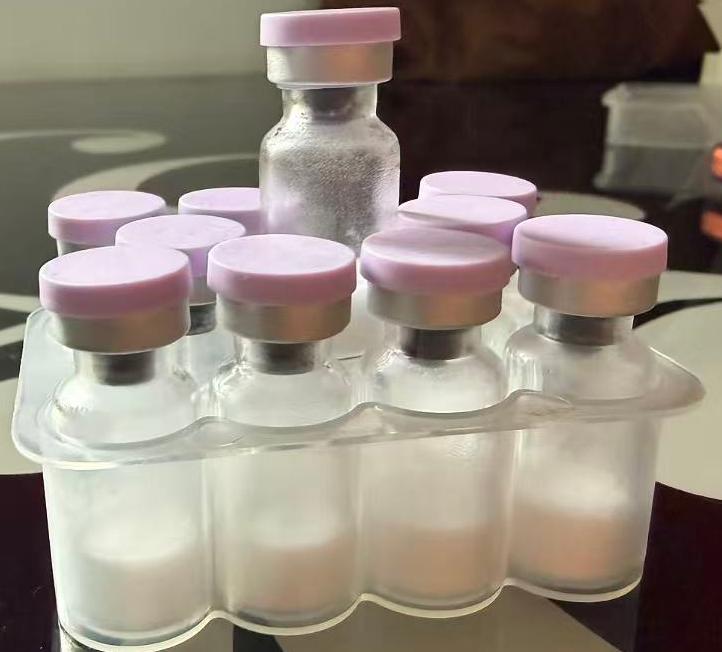
What Is Semaglutide?
Semaglutide is a synthetic GLP-1 analogue designed to activate the GLP-1 receptor while remaining biologically persistent for substantially longer than native GLP-1.
SUNONE supplies Semaglutide, CAS 910463-68-2, as ≥99.2% HPLC Certified Research Grade lyophilized peptide for qualified laboratory, analytical and manufacturing research.
SUNONE Semaglutide Product Page:
Why Is Semaglutide More Than a Standard GLP-1 Peptide?
Semaglutide contains several structural modifications that influence its pharmacological behavior.
Its peptide backbone has high similarity to human GLP-1, but specific molecular changes were introduced to improve stability and extend biological persistence.
Key design features include:
- modification that increases resistance to DPP-4 degradation;
- a fatty di-acid side chain attached through a spacer;
- enhanced albumin binding;
- structural modification that controls the fatty-acid attachment site.
These features make Semaglutide valuable not only for GLP-1 receptor research but also for studying long-acting peptide engineering and peptide–protein interactions.
Semaglutide Base vs Salt Forms: Why Identity Matters
One of the most important issues in current Semaglutide research and sourcing is molecular form.
FDA has specifically warned that products described as semaglutide sodium or semaglutide acetate are different active ingredients from the form used in approved Semaglutide medicines.
This means the word “Semaglutide” alone is not enough for rigorous research procurement.
Researchers should verify:
- exact molecular form;
- salt or counterion state;
- peptide identity;
- molecular mass;
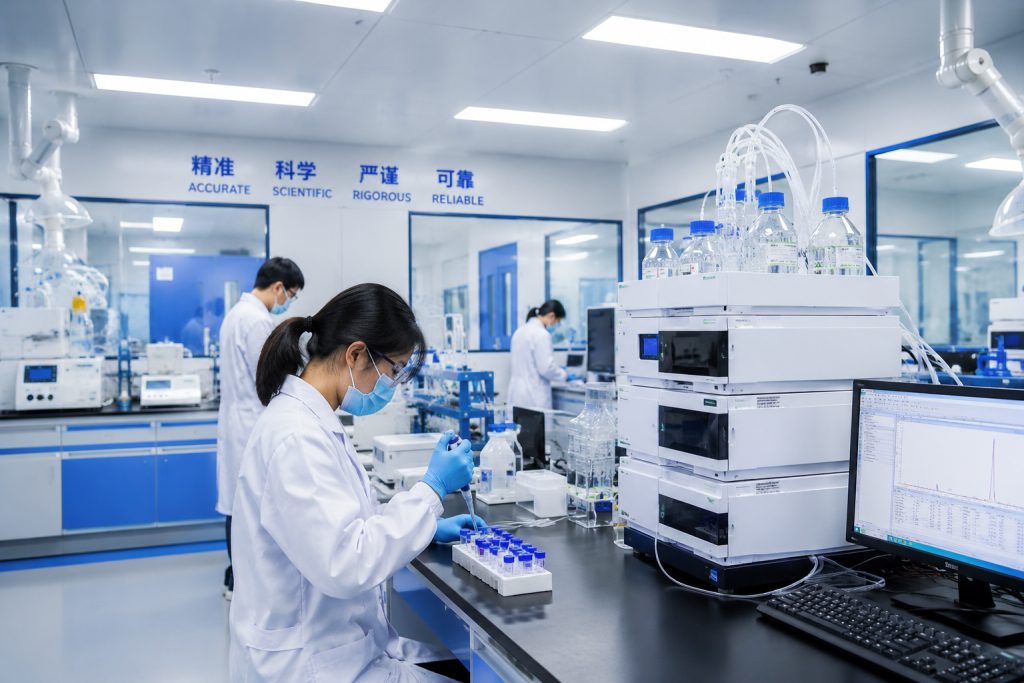
- HPLC purity;
- batch-specific analytical documentation.
A high purity percentage does not replace correct molecular identification.
Why Is Albumin Binding Important in Semaglutide Research?
Semaglutide’s long-acting design relies heavily on albumin binding.
A C18 fatty di-acid modification increases reversible interaction with albumin, helping protect the peptide from rapid clearance.
This makes Semaglutide an interesting research model for:
- GLP-1 receptor signaling;
- peptide half-life engineering;
- fatty-acid peptide conjugation;
- albumin-binding strategies;
- metabolic signaling;
- incretin biology;
- peptide stability research.
For researchers, these structural features are just as important as the widely discussed metabolic effects.
What Do Semaglutide Reviews Say?
Current Semaglutide reviews remain strongly mixed.
Positive experiences frequently mention:
- reduced food-related thoughts;
- lower perceived appetite;
- easier portion control;
- perceived weight-management benefits.
Negative or mixed experiences include:
- nausea;
- vomiting;
- fatigue;
- gastrointestinal discomfort;
- limited appetite suppression;
- effects that change over time.
Large review platforms currently show more positive than negative experiences overall, but individual responses vary widely.
These reviews usually relate to approved prescription products, compounded formulations or other commercial sources.
They should not be interpreted as evidence about SUNONE research-grade Semaglutide.

Research-Grade Semaglutide Is Not the Same as an Approved Drug Product
This distinction is essential.
Approved products such as Wegovy, Ozempic and Rybelsus are regulated pharmaceutical formulations manufactured under specific drug-approval conditions.
SUNONE Semaglutide is supplied as a research-grade laboratory material.
Clinical results from approved pharmaceutical products therefore cannot automatically establish:
- pharmaceutical equivalence;
- clinical safety;
- clinical efficacy;
- formulation equivalence;
- suitability for human administration
of research-grade peptide material.
Research data should provide scientific context, not authorization for personal or clinical use.
What Should Researchers Check When Choosing a Semaglutide Supplier?
For professional Semaglutide research, buyers should focus on analytical identity rather than consumer marketing.
Molecular Identity
Documentation should support the expected Semaglutide molecular structure.
HPLC Purity
Batch-specific chromatography should characterize purity and related peptide impurities.
Salt or Counterion State
The exact chemical form should be identified rather than assumed.
Certificate of Analysis
A batch-specific Semaglutide COA improves traceability and experimental reproducibility.
Storage Documentation
Applicable storage conditions should be confirmed through the COA, SDS and specification sheet.
SUNONE currently supplies Semaglutide, CAS 910463-68-2, as ≥99.2% HPLC Certified Research Grade lyophilized peptide.
Semaglutide Research: Identity Before the Weight-Loss Keyword
Google often reduces Semaglutide to one phrase:
“weight-loss drug.”
For biotechnology research, that description leaves out much of the most interesting science.
Semaglutide is also a model for studying:
GLP-1 receptor signaling + fatty-acid peptide engineering + DPP-4 resistance + albumin binding + long-acting peptide design.
For laboratories, the first question should therefore not be:
“What results do people report?”
It should be:
“What molecular form of Semaglutide is being tested, and how well has it been analytically characterized?”
For reproducible Semaglutide research, molecular identity, chemical form, HPLC purity and batch-specific documentation should come before marketing claims.
SUNONE Semaglutide research peptide is for qualified labrtorynt, diagnois, druc tor mmatct or veteimant, use.research only, Not for human consumption, clinical treame.
Leave a Reply