
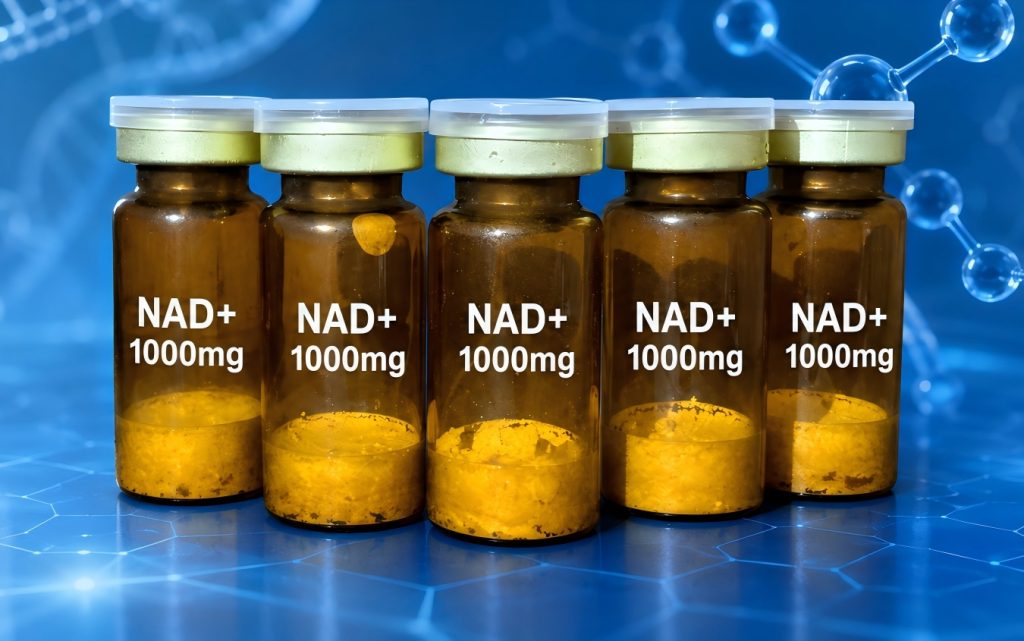
What Is NAD+?
NAD+, or Nicotinamide Adenine Dinucleotide, is a cellular coenzyme involved in redox reactions, energy metabolism and multiple signaling pathways.
It exists in two closely related redox states:
NAD+ = oxidized form
NADH = reduced form
SUNONE supplies research-grade NAD+, CAS 53-84-9, for qualified laboratory, analytical and manufacturing research.
SUNONE NAD+ Product Page:
Why NAD+ Should Not Be Studied Alone
A common online claim is that increasing NAD+ automatically improves mitochondrial or cellular function.
That is too simple.
NAD+ and NADH continuously cycle between oxidized and reduced states during metabolic reactions.
The balance between them is commonly described as the:
NAD+/NADH ratio
This ratio helps reflect cellular redox conditions and participates in energy metabolism.
Therefore:
total NAD concentration ≠ complete redox information.
What Does the NAD+/NADH Ratio Tell Researchers?
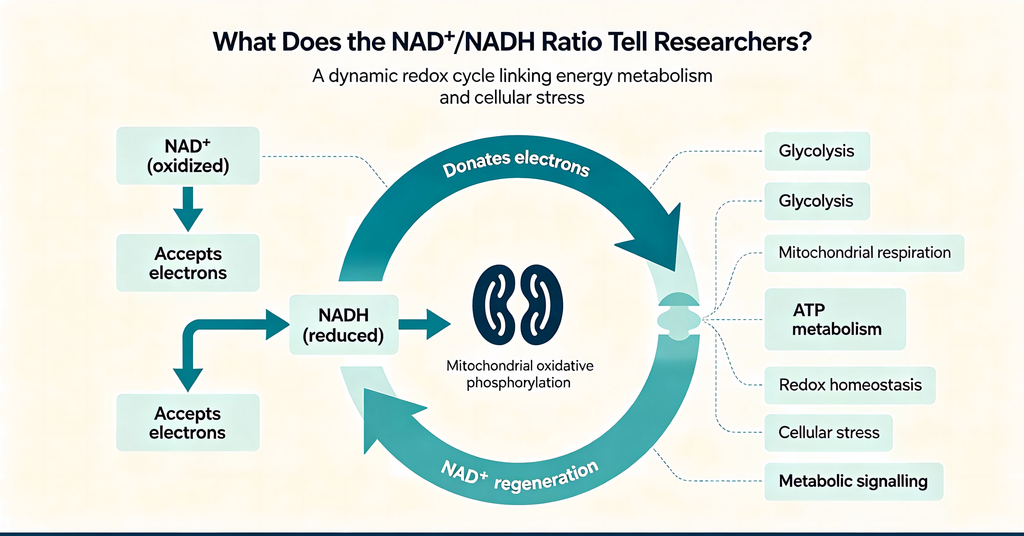
NAD+ accepts electrons during metabolic reactions and is converted to NADH.
NADH can then donate electrons during processes such as mitochondrial oxidative phosphorylation.
This redox cycle is involved in:
- glycolysis;
- mitochondrial respiration;
- ATP-related metabolism;
- redox homeostasis;
- cellular stress responses;
- metabolic signaling.
A useful research framework is:
NAD+ → electron acceptance → NADH → electron transfer → NAD+ regeneration.
Researchers interested in mitochondrial biology should therefore consider both sides of this cycle.
Why “More NAD+” Does Not Automatically Mean Better Biology
The biological meaning of NAD+ depends on context.
Relevant variables include:
- NAD+/NADH ratio;
- tissue type;
- cytosolic versus mitochondrial pools;
- NAD-consuming enzymes;
- metabolic state;
- measurement method.
For example, an increase in total NAD-related metabolites does not necessarily prove improved mitochondrial function or a specific physiological outcome.
This is one reason biomarker changes should not automatically be converted into claims about longevity, energy or clinical benefit.
What Does Current Human Research Say?
Interest in NAD+ metabolism has grown rapidly, especially in healthy-aging research.
A 2026 systematic review evaluated more than 100 NAD-related intervention studies, including human and animal research.
Animal studies frequently reported improvements in metabolic and mitochondrial outcomes.
Human evidence, however, remains more variable.
Studies involving NAD+ precursors such as NR and NMN often demonstrate changes in NAD-related biomarkers, but clinical outcomes are inconsistent across populations and endpoints.
Evidence for direct parenteral NAD+ in anti-aging or wellness applications remains especially limited.
Therefore:
biological plausibility ≠ established clinical benefit.
NAD+ Is Not the Same as NMN or NR
NAD+, NMN and NR are related but chemically distinct compounds.
NAD+ is the dinucleotide coenzyme itself.
NMN and NR are NAD-related precursors that can enter biosynthetic pathways leading toward NAD+.
Evidence from one molecule should not automatically be transferred to another.
For researchers, correct compound identity is essential when reading literature or comparing experimental results.

What Do NAD+ Reviews Say?
Current online NAD+ reviews are mixed.
Positive anecdotal comments include:
- improved perceived energy;
- improved morning alertness;
- greater mental consistency;
- reduced subjective fatigue.
Negative or neutral reports include:
- no noticeable benefit;
- significant fatigue;
- transient redness or discomfort;
- disappointment after initial perceived effects;
- uncertainty over whether changes were placebo-related.
These reports often involve different products and administration formats.
They may also involve NR, NMN or other compounds incorrectly discussed under the broad term “NAD.”
Therefore:
NAD+ reviews should be treated as anecdotal search sentiment—not controlled scientific evidence.
Why Analytical Identity Matters for NAD+ Research
NAD+ is a defined chemical entity.
Researchers evaluating research-grade NAD+ should verify:
- chemical identity;
- purity;
- oxidation state;
- applicable assay method;
- batch consistency;
- storage requirements;
- batch-specific documentation.
This matters because NAD-related molecules can participate in oxidation-reduction chemistry.
A generic label such as “NAD product” is therefore not sufficient for controlled laboratory research.
What Should Researchers Check When Choosing an NAD+ Supplier?
When comparing a research-grade NAD+ supplier, laboratories should prioritize analytical documentation.
SUNONE currently lists:
Product: NAD+
Chemical Name: Nicotinamide Adenine Dinucleotide
Synonyms: NAD(+), Nadide, Coenzyme I, beta-NAD, DPN+
CAS: 53-84-9
Purity: ≥99.7%
Grade: Research Grade
Researchers should also verify the applicable batch-specific COA, analytical method and storage information before use.
Final Thoughts
A common Google question is:
“How can NAD+ be increased?”
For laboratory research, a more useful question is:
“What does the NAD+/NADH balance show about cellular redox state?”
A stronger scientific framework is:
NAD+ identity → NADH → redox ratio → mitochondrial metabolism → analytical measurement → biological interpretation.
For laboratories comparing a research-grade NAD+ supplier, chemical identity, purity and batch-specific analytical documentation should take priority over generalized “energy” or “longevity” claims.
SUNONE research peptide is for qualified labrtorynt, diagnois, druc tor mmatct or veteimant, use.research only, Not for human consumption, clinical treame.
Leave a Reply