
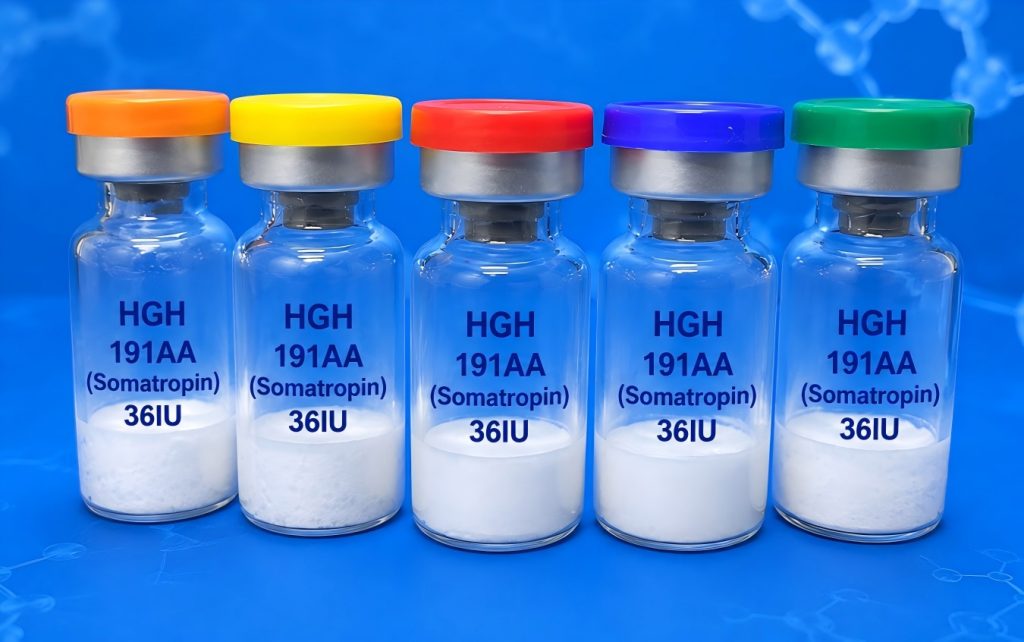
What Is HGH 191AA?
HGH 191AA, also known as Somatropin or recombinant human growth hormone (rHGH), is a recombinant protein consisting of 191 amino-acid residues.
Unlike many short research peptides, HGH 191AA is a relatively large protein with a defined three-dimensional structure.
SUNONE supplies research-grade HGH 191AA, CAS 12629-01-5, for qualified laboratory, analytical and manufacturing research.
SUNONE HGH 191AA Product Page:
Why Is HGH 191AA More Than a “High-Purity Peptide”?
A purity result such as:
HGH 191AA ≥99.7%
is useful, but it does not describe every aspect of protein quality.
Somatropin is a folded recombinant protein.
Its biological identity depends on more than amino-acid sequence alone.
Important structural attributes include:
- correct 191-amino-acid sequence;
- native protein conformation;
- correct disulfide-bond pairing;
- molecular mass;
- aggregation state;
- related protein impurities.
Therefore:
high HPLC purity ≠ complete confirmation of functional protein identity.
Why Do Disulfide Bonds Matter?
Human growth hormone contains four cysteine residues forming two intramolecular disulfide bonds:
Cys53–Cys165
and
Cys182–Cys189
These bonds help stabilize the protein’s three-dimensional structure.
Protein research has shown that incorrect disulfide formation, scrambling or degradation can alter recombinant-protein stability and biological behavior.
For HGH 191AA research, this creates an important quality framework:
sequence → folding → disulfide pairing → higher-order structure → biological activity.
Why Protein Folding Matters for Somatropin

A recombinant protein can have the expected molecular formula while still requiring confirmation of its higher-order structure.
Somatropin contains a characteristic alpha-helical protein architecture that supports growth-hormone receptor interaction.
Manufacturing conditions, purification processes and storage can influence:
- folding;
- aggregation;
- oxidation;
- deamidation;
- chain cleavage;
- disulfide integrity.
Mass-spectrometry studies of recombinant human growth hormone have detected differences in oxidation, deamidation and chain cleavage between different manufactured products.
This is why advanced protein characterization can provide information that a single purity percentage cannot.
What Does FDA-Level Somatropin Characterization Look Like?
Regulated pharmaceutical Somatropin has historically been characterized using multiple analytical techniques.
These may include:
- peptide mapping;
- LC-MS;
- reverse-phase HPLC;
- size-exclusion chromatography;
- SDS-PAGE;
- isoelectric focusing;
- circular dichroism;
- immunochemical testing;
- biological-activity testing.
This does not mean every research-grade lot requires the identical pharmaceutical testing package.
It does illustrate an important principle:
protein identity is multidimensional.
What Do Somatropin Reviews Say?
Current online Somatropin reviews are generally positive but mixed.
Positive reviews of regulated prescription products often mention:
- medically supervised growth response;
- improved energy;
- improved perceived well-being;
- better sleep in some users;
- improved function in diagnosed growth-hormone deficiency.
Negative or neutral reviews include:
- injection-site discomfort;
- sleep disturbance;
- fatigue;
- cost concerns;
- limited or variable response.
These reviews involve approved pharmaceutical brands such as Omnitrope, Humatrope, Genotropin and Norditropin.
They should not be interpreted as reviews of SUNONE Research Grade HGH 191AA.
Why Reviews Cannot Establish Research-Grade Product Performance
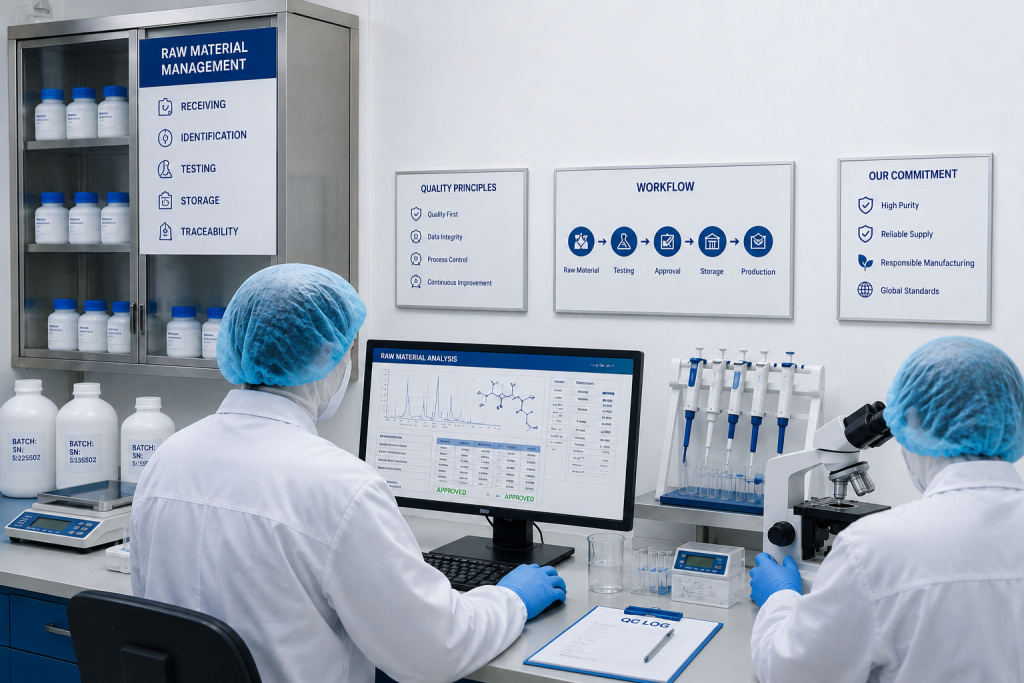
Pharmaceutical Somatropin products are manufactured and regulated as finished medicines.
Research-grade HGH 191AA is a different product category.
Differences may involve:
- manufacturing controls;
- formulation;
- excipients;
- sterility requirements;
- potency testing;
- regulatory status;
- intended use.
Therefore:
clinical reviews of prescription Somatropin ≠ evidence for research-grade HGH 191AA.
What Should Researchers Check When Choosing an HGH 191AA Supplier?
When evaluating a research-grade HGH 191AA supplier, laboratories should look beyond a headline HPLC purity number.
Useful questions include:
Sequence Identity
Does the material correspond to the intended 191-amino-acid Somatropin protein?
Molecular Mass
Does analytical characterization support the expected molecular mass?
Protein Purity
Does batch-specific documentation support the stated purity specification?
Higher-Order Structure
Where relevant to the research objective, has protein folding or structural integrity been appropriately evaluated?
Aggregation and Related Impurities
For protein research, aggregation and degradation products may matter separately from main-peak HPLC purity.
Batch-Specific Documentation
The current lot should be supported by the applicable COA, SDS and analytical specifications.
SUNONE currently lists:
Product: HGH 191AA (Somatropin)
Synonyms: HGH 191AA, Somatropin, Human Growth Hormone, Recombinant Human Growth Hormone, rHGH
CAS: 12629-01-5
Formula: C990H1528N262O300S7
Molecular Weight: 22125.19 g/mol
Sequence Length: 191 amino acids
Purity: ≥99.7%
Form: Lyophilized Powder
Grade: Research Grade
Final specifications and storage conditions should be verified against the applicable batch-specific documentation.
Final Thoughts
A common Google search asks:
“What purity is HGH 191AA?”
For protein researchers, a better question is:
“Does the material have the correct sequence, folding, disulfide architecture and analytical identity?”
A stronger research-quality framework is:
191-aa sequence → protein folding → disulfide bonds → aggregation profile → analytical characterization → biological relevance.
For laboratories comparing an HGH 191AA supplier, high HPLC purity is useful—but correct recombinant protein identity and batch-specific analytical documentation are equally important.
SUNONE research peptide is for qualified labrtorynt, diagnois, druc tor mmatct or veteimant, use.research only, Not for human consumption, clinical treame.
Leave a Reply