
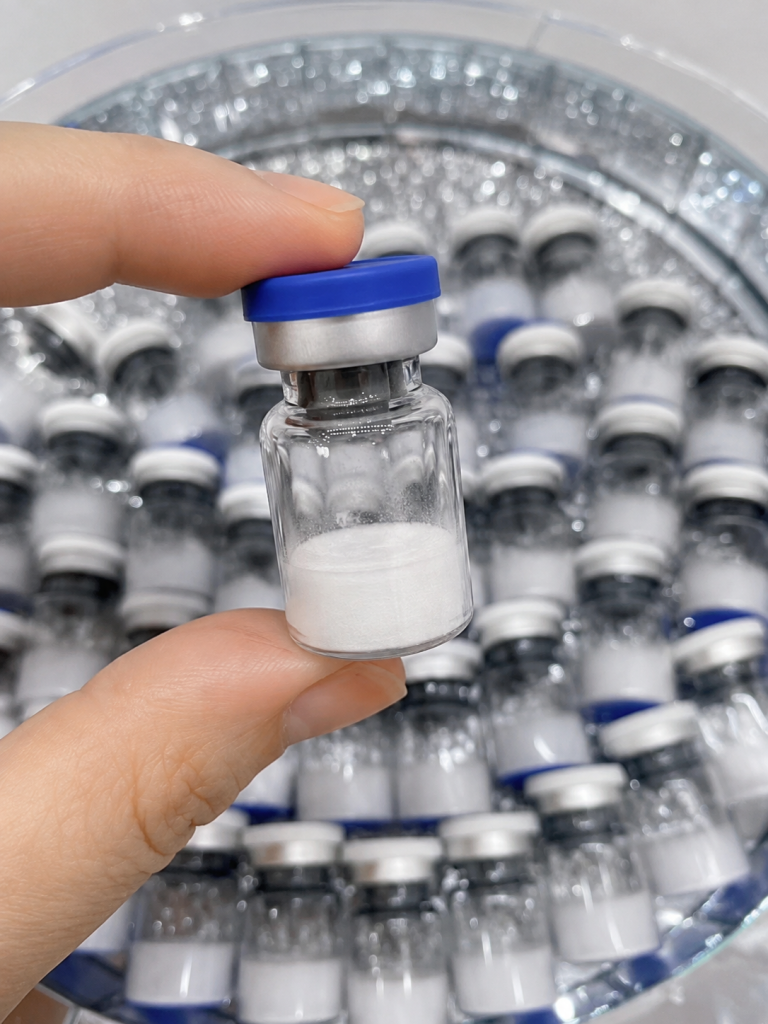
What Is Liraglutide?
Liraglutide, also known as NN2211, is a long-acting acylated GLP-1 analog used extensively in metabolic and peptide research.
Its molecular design differs from native GLP-1 through defined sequence and lipid modifications that extend its biological persistence.
SUNONE supplies Research Grade Liraglutide for qualified laboratory, analytical and biopharmaceutical research.
SUNONE Liraglutide Product Page:
Why Is Liraglutide More Than a “GLP-1 Peptide”?
Liraglutide is approximately 97% homologous to native human GLP-1.
Two important structural features are:
- substitution of arginine for lysine at position 34;
- attachment of a C16 fatty acid through a glutamic-acid spacer at Lys26.
These modifications are central to the identity of Liraglutide.
For analytical research, that means the product name alone is not enough.
Researchers should confirm that the analyzed material has the intended sequence, molecular mass and acylated structure.
Why Does Stability Matter in Liraglutide Research?
Peptide purity is not necessarily permanent.
Liraglutide can form degradation products when exposed to unfavorable chemical or environmental conditions.
Published stability research has shown sensitivity under:
- oxidative stress;
- hydrolytic stress;
- thermal stress.
A detailed LC-HRMS study separated and characterized multiple degradation products generated under stressed conditions.
This creates an important quality distinction:
initial purity and stability are not the same analytical attribute.
A material may begin with high purity but still require appropriate stability control to maintain its chemical profile.
What Is a Stability-Indicating HPLC Method?
A standard HPLC purity result may show a dominant main peak.
A stability-indicating method goes further.
It should be capable of separating the intact Liraglutide peak from relevant:
- process-related impurities;
- degradation products;
- modified peptide species;
- related substances.
A 2025 study developed a validated HPLC method capable of simultaneously separating and quantifying five specific Liraglutide-related substances.
This matters because:
“99% HPLC” is most useful when the method can distinguish the correct molecule from important impurities and degradants.
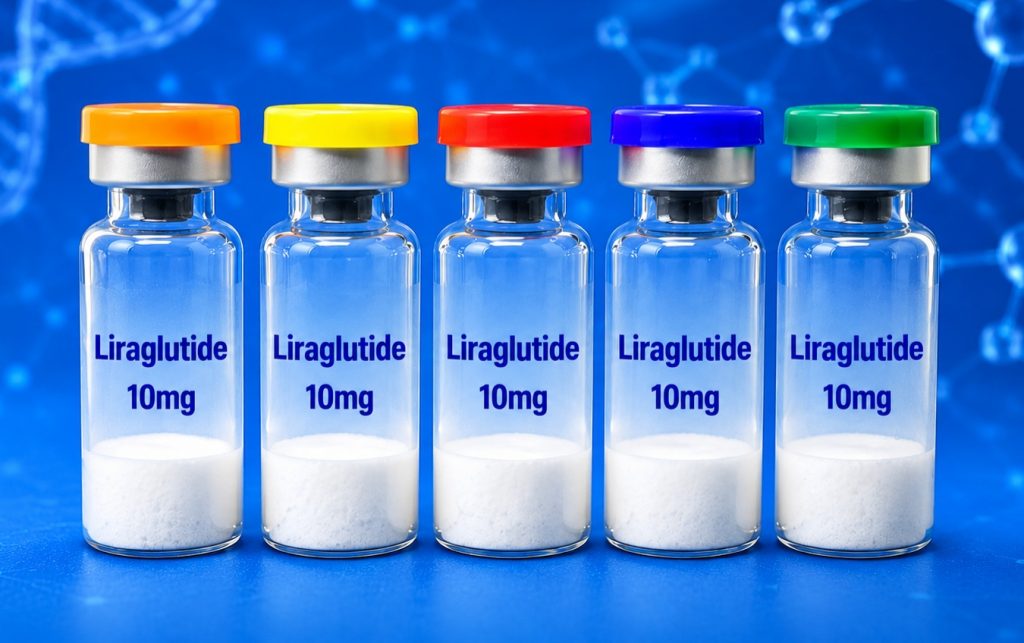
Why Degradation Products Matter
Research has demonstrated that Liraglutide can produce multiple degradation species under stress conditions.
One LC-HRMS investigation characterized 19 degradation products generated under acidic, basic and oxidative conditions.
That does not mean those degradation products are present in every Liraglutide batch.
Instead, it highlights a broader analytical principle:
peptide quality should be evaluated through identity, purity and stability—not purity alone.
For laboratories, stability-indicating analysis can provide more useful information than a single headline HPLC percentage.
Liraglutide and Pharmaceutical Products Are Not Interchangeable
Liraglutide is the active molecule used in approved pharmaceutical products such as Saxenda and Victoza.
Those products are manufactured under defined pharmaceutical processes and finished-product specifications.
SUNONE Liraglutide is supplied as Research Grade material.
Sharing the same molecular name does not establish:
- pharmaceutical equivalence;
- identical formulation;
- identical stability;
- clinical efficacy;
- clinical safety.
Published clinical data for prescription Liraglutide should therefore not automatically be transferred to research-grade material.
What Do Current Liraglutide Reviews Say?

Current online Liraglutide reviews are predominantly positive but show substantial variation.
Positive prescription-user reviews often mention:
- reduced appetite;
- increased satiety;
- weight-related improvements;
- improved glucose-related outcomes.
Negative reviews commonly mention:
- nausea;
- headache;
- constipation;
- diarrhea;
- vomiting;
- fatigue;
- limited response in some users.
Large current review aggregations show more positive than negative sentiment.
However, these reviews generally refer to prescription Saxenda or Victoza.
They are not reviews of SUNONE Research Grade Liraglutide and should not be interpreted as evidence about SUNONE research material.
What Should Researchers Check When Choosing a Liraglutide Supplier?
SUNONE currently lists:
Product: Liraglutide
Synonyms: Liraglutide, NN2211, GLP-1 Analog
CAS: 204656-20-2
Formula: C172H265N43O51
Molecular Weight: 3751.2 g/mol
Form: Research-grade peptide material
Documentation: SDS, Certificate of Analysis and Specification Sheet
For laboratory procurement, researchers should consider:
identity → HPLC purity → related substances → degradation profile → storage → batch-specific COA.
Analytical results and specifications should always be verified against the applicable batch documentation.
Final Thoughts
A common Google search asks:
“What purity is Liraglutide?”
For analytical researchers, the stronger question is:
“Can the HPLC method distinguish intact Liraglutide from important impurities and degradation products?”
That creates a more complete research framework:
molecular identity → acylated structure → HPLC purity → related substances → degradation products → stability-indicating analysis → batch-specific documentation.
For organizations comparing a Liraglutide supplier, a high purity number is useful—but the analytical method behind that number matters just as much.
SUNONE research peptide is for qualified labrtorynt, diagnois, druc tor mmatct or veteimant, use.research only, Not for human consumption, clinical treame.
Leave a Reply