
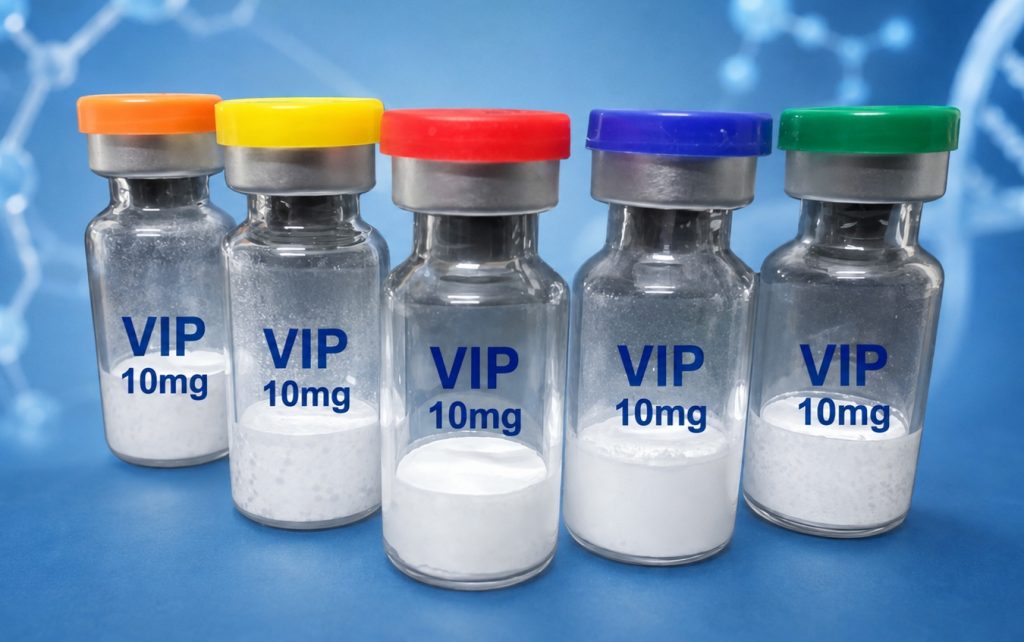
Why VIP Peptide Research Is More Complex Than It Looks
Vasoactive Intestinal Peptide (VIP) is a 28-amino-acid neuropeptide that has remained an important subject in receptor biology, cellular signaling and molecular research.
Also known as Vasoactive Intestinal Polypeptide or Aviptadil, VIP is particularly interesting because it participates in several biological signaling systems rather than being associated with only one pathway.
This makes VIP peptide research relevant to laboratories studying neuropeptide signaling, receptor pharmacology and cellular communication.
What Is Vasoactive Intestinal Peptide?
VIP is a naturally occurring 28-amino-acid peptide widely studied as both a neuropeptide and signaling molecule.
Key research identifiers include:
- Product Name: Vasoactive Intestinal Peptide
- Abbreviation: VIP
- Synonyms: Aviptadil, Vasoactive Intestinal Polypeptide
- CAS Number: 37221-79-7
- Molecular Weight: 3326.8 g/mol
- Sequence Length: 28 amino acids
- Research Category: Neuropeptide and receptor research
SUNONE supplies Vasoactive Intestinal Peptide (VIP), CAS 37221-79-7, as ≥99% HPLC-tested lyophilized research material.
Learn more about the product here:
VIP, VPAC1 and VPAC2: A Receptor-Focused Research Tool
One reason VIP remains scientifically interesting is its interaction with peptide receptors including VPAC1 and VPAC2.
VIP-related research therefore spans several areas:
- neuropeptide signaling research;
- VPAC receptor interaction studies;
- cellular communication;
- gastrointestinal signaling;
- immune-system signaling;
- endocrine pathway research.
For laboratories, this broad receptor biology makes VIP useful not simply as a peptide compound, but as a tool for studying how peptide signals operate across different cellular systems.
The Often-Overlooked Challenge: VIP Stability
An important issue sometimes missing from commercial descriptions of VIP is peptide stability.
Scientific literature has repeatedly highlighted the rapid enzymatic degradation and relatively short biological half-life of VIP as an important challenge.
This makes material quality, storage conditions and experimental design especially relevant when working with VIP research peptide.
For researchers comparing a VIP peptide supplier, price alone may therefore provide little information about experimental suitability.
Product identity and analytical quality matter.

What Does Research Say? Positive Findings and Important Limitations
Scientific discussion around Aviptadil and VIP includes both encouraging and negative findings.
Some experimental and clinical studies have reported biologically interesting effects and acceptable tolerability under specific controlled conditions.
Other randomized research, however, has failed to demonstrate significant improvement in primary clinical outcomes.
Reported adverse events in clinical investigations have also included effects such as diarrhea and infusion-related reactions.
These mixed findings are scientifically useful: they demonstrate why individual studies should not be converted into broad claims about VIP.
For research organizations, peer-reviewed evidence should take priority over online testimonials or promotional statements.
How to Evaluate a VIP Peptide Supplier
For biotechnology companies, universities and qualified laboratories sourcing high-purity Vasoactive Intestinal Peptide, several factors deserve attention.
Analytical Purity
Look for clear HPLC purity specifications and batch-specific analytical information.
Identity and Traceability
CAS number, molecular information, peptide sequence and lot identification should be clearly documented.
Supporting Documentation
Professional research suppliers should make appropriate documents available, including:
- Certificate of Analysis (COA)
- Safety Data Sheet (SDS)
- Specification Sheet
Storage Information
Because peptide stability can influence experimental consistency, researchers should follow validated storage and handling procedures.
SUNONE provides VIP peptide research material with ≥99% HPLC specification and supporting analytical documentation for qualified B2B research customers.

Conclusion
Vasoactive Intestinal Peptide is more than another research peptide.
Its interaction with VPAC receptors, broad signaling biology and stability challenges make it a particularly interesting compound for researchers studying neuropeptide and receptor systems.
For laboratories searching for a reliable Vasoactive Intestinal Peptide supplier, analytical purity, documentation, traceability and appropriate storage information should remain central sourcing considerations.
Disclaimer:
This content is provided for scientific and educational purposes only. SUNONE research peptide is for qualified labrtorynt, diagnois, druc tor mmatct or veteimant, use.research only, Not for human consumption, clinical treame. Purchasers are responsible for complying with applicable laws and regulations in their jurisdiction.
Leave a Reply