
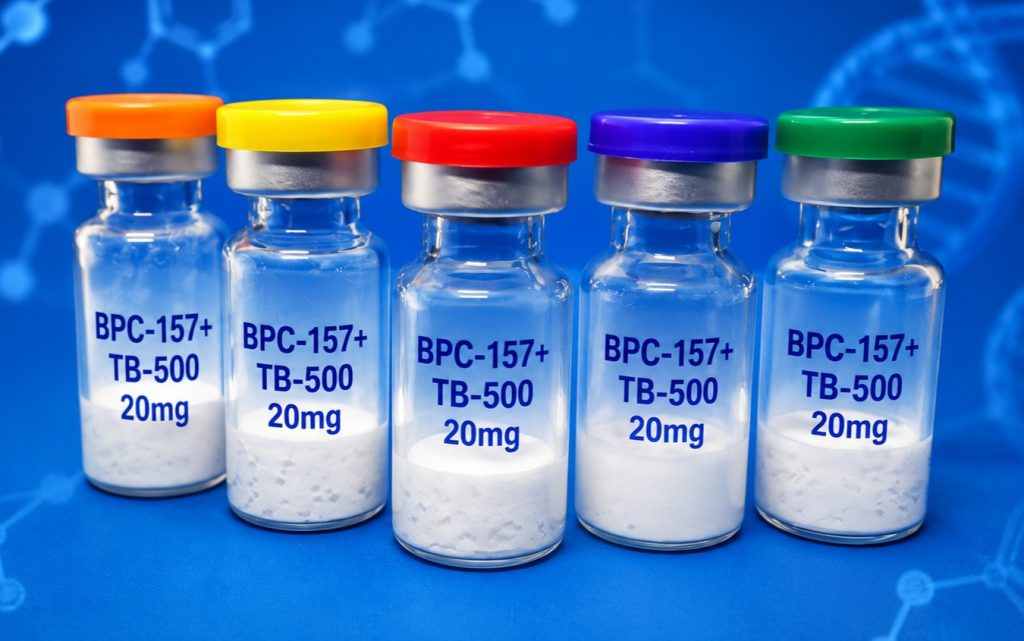
Two Peptides. One Vial. More Questions.
Search BPC-157 + TB-500, and you will quickly encounter bold claims about recovery, tissue repair and the so-called “Wolverine stack.”
For professional researchers, however, a peptide blend creates a much more important question:
Can both components actually be identified, quantified and documented in the same batch?
That is where serious research procurement begins.
What Is a BPC-157 + TB-500 Research Blend?
A BPC-157 + TB-500 research blend combines two peptide components associated with different areas of regenerative-biology research.
BPC-157 has been investigated primarily in preclinical studies involving cytoprotection, inflammatory signaling and tissue-related pathways. A 2026 review noted substantial preclinical activity, but also emphasized major translational gaps and the absence of an approved formulation or completed Phase II clinical program.
Thymosin β4-related research has explored actin regulation, cell migration, angiogenesis and tissue repair.
These scientific backgrounds explain why researchers are interested in studying the two pathways together.
But they do not prove that a combined commercial blend has established clinical efficacy.
The Evidence Problem: 1 + 1 Does Not Automatically Equal Clinical Proof
This is one of the biggest problems with online content about BPC-157 TB-500 blends.
Research on BPC-157 is often combined with studies involving full-length thymosin β4, animal models and individual components, and then presented as if the specific blend itself had been clinically validated.
That is not scientifically precise.
A study involving one component cannot automatically establish:
- efficacy of the blend;
- interaction between both components;
- optimal component ratio;
- clinical safety;
- therapeutic equivalence.
For responsible research content, component evidence and combination evidence should remain separate.
Positive and Negative Reviews Tell the Same Procurement Story
Online communities contain positive anecdotes describing perceived improvement in discomfort or recovery.
Other users report little benefit, high cost, questionable purity or unwanted experiences such as gastrointestinal symptoms and anxiety.
None of these anecdotes establish clinical effectiveness or causation.
But they highlight one issue that professional laboratories should take seriously:
buyers often do not know exactly what is in an unverified blend.
Why a Peptide Blend Needs More Analytical Documentation
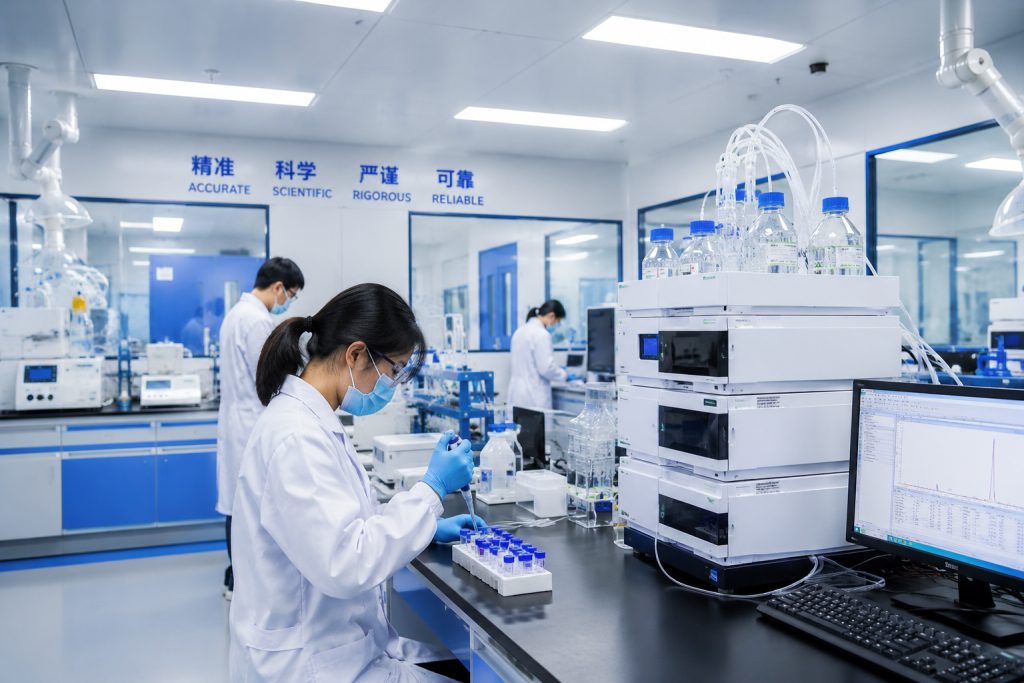
For a single peptide, researchers normally evaluate identity and purity.
For a multi-component peptide blend, additional questions appear.
Professional buyers should consider:
- What exactly is component 1?
- What exactly is component 2?
- What quantity of each component is present?
- What is the intended ratio?
- Is purity documented for the relevant components?
- Does the COA correspond to the actual lot?
- Are analytical methods appropriate for a multi-component formulation?
- Is the chemical form of each component clearly stated?
A blend should not be assigned one misleading CAS number, molecular formula or molecular weight simply because that looks convenient.
Two molecules require two identities.
Regulatory Attention Makes Characterization Even More Important
FDA’s 2026 review of BPC-157-related materials specifically discussed peptide-related impurities, aggregation, incomplete characterization and potential immunogenicity concerns.
BPC-157- and TB-500-related bulk substances were also considered by FDA’s Pharmacy Compounding Advisory Committee in July 2026. The advisory process should not be confused with FDA approval or a final regulatory determination.
For research buyers, the practical lesson is simple:
documentation matters more as scientific and regulatory scrutiny increases.

SUNONE BPC-157 + TB-500 Research Blend
SUNONE supplies BPC-157 + TB-500 Research Blend for qualified laboratory and manufacturing applications.
Current product information includes:
- ≥99.6% Research Grade;
- lyophilized powder;
- BPC-157 + TB-500 multi-component formulation;
- 10 mg total: BPC-157 5 mg + TB-500 5 mg;
- 20 mg total: BPC-157 10 mg + TB-500 10 mg;
- batch-specific COA;
- SDS;
- Specification Sheet;
- B2B quotation supply.
Looking for a BPC-157 + TB-500 Supplier?
For biotechnology companies, peptide research laboratories and distributors, a blend should not be purchased on name recognition alone.
If your organization is evaluating a BPC-157 + TB-500 supplier, ask for current information covering:
identity, component ratio, purity, batch documentation, packaging, MOQ and repeat supply.
Request BPC-157 + TB-500 COA, Specifications & Quote from SUNONE:
Conclusion
Putting two research peptides into one vial does not simplify quality control.
It makes characterization more important.
For professional peptide procurement, the right question is not:
“Does this blend have a popular name?”
It is:
“Can the supplier prove what each component is, how much is present and which analytical data belong to this batch?”
For multi-component research materials, clarity is part of quality.
This content is provided for scientific and educational purposes only. SUNONE research peptide is for qualified labrtorynt, diagnois, druc tor mmatct or veteimant, use.research only, Not for human consumption, clinical treame. Purchasers are responsible for complying with applicable laws and regulations in their jurisdiction.
Leave a Reply