
GHK-Cu Is Everywhere in 2026
Search GHK-Cu, Copper Tripeptide-1 or copper peptide, and you will find skincare products, research discussions and increasingly bold claims about collagen, skin renewal, hair and healthy aging.
Some of that interest is scientifically grounded.
GHK-Cu is a copper-binding tripeptide complex formed from glycine, histidine and lysine coordinated with copper.
It has been studied for decades in areas including:
- extracellular-matrix biology;
- collagen-related signaling;
- skin remodeling;
- wound-repair pathways;
- copper-dependent cellular signaling.
But popularity creates a sourcing problem:
not every product labeled “copper peptide” is analytically equivalent.
What Is GHK-Cu?
GHK-Cu, also known as Copper Tripeptide-1, is a copper complex of the tripeptide Gly-His-Lys.
Research reviews describe GHK-Cu as a biologically active copper-binding peptide associated with tissue-remodeling and repair pathways. Published work has reported changes in collagen synthesis, skin density and appearance in small human studies.
That is why GHK-Cu has become one of the most recognizable peptides in cosmetic and skin research.
Why Is GHK-Cu So Popular?
The appeal is easy to understand.
Copper is biologically important, while GHK acts as a carrier and signaling peptide.
Together, the GHK-Cu complex has been investigated in relation to:
- collagen and elastin biology;
- fibroblast activity;
- extracellular-matrix remodeling;
- wound-related signaling;
- oxidative-stress pathways.
This gives GHK-Cu a stronger research foundation than many trend-driven cosmetic peptides.
But there is an important scientific limit.

Promising Does Not Mean Fully Proven
A 2024 review of GHK and related peptides concluded that important questions remain regarding skin permeability, physicochemical characteristics and the strength of anti-wrinkle efficacy evidence.
Recent dermatologist commentary has made the same point: available human studies are generally small, and many lack the rigor of large randomized controlled trials.
That means responsible content should avoid statements such as:
“clinically proven to reverse aging”
“guaranteed collagen regeneration”
“proven hair-growth treatment”
A more accurate description is:
GHK-Cu is a well-studied cosmetic and tissue-remodeling research peptide with promising but still incomplete human evidence.
Positive and Negative Reviews Tell the Same Story
Online users often report positive subjective changes in skin texture, brightness or hair appearance.
Others report little effect or describe reactions such as:
- redness;
- itching;
- rash;
- fatigue;
- local irritation.
These anecdotes are not controlled research and should not be used to establish efficacy or safety.
For a professional laboratory, the more useful question is:
Was the material actually the claimed GHK-Cu complex, and was the batch properly characterized?
Why Copper-Complex Identity Matters
GHK-Cu is not simply “GHK plus some copper.”
The coordination state and copper-complex form are part of the material being studied.
Professional buyers should therefore verify:
Identity
Is the product specifically identified as GHK-Cu / Copper Tripeptide-1?
Purity
Is HPLC purity linked to the actual lot?
Copper-Complex Form
Does the supplier document the relevant copper-complex specification?
Batch-Specific COA
Does the Certificate of Analysis correspond to the supplied batch?
Analytical Traceability
Can the lot be connected to documented identity and purity data?
Storage Specification
Are the required storage conditions clearly stated?
A headline such as “99% peptide” is not enough if the complex identity itself is unclear.
SUNONE GHK-Cu Copper Peptide
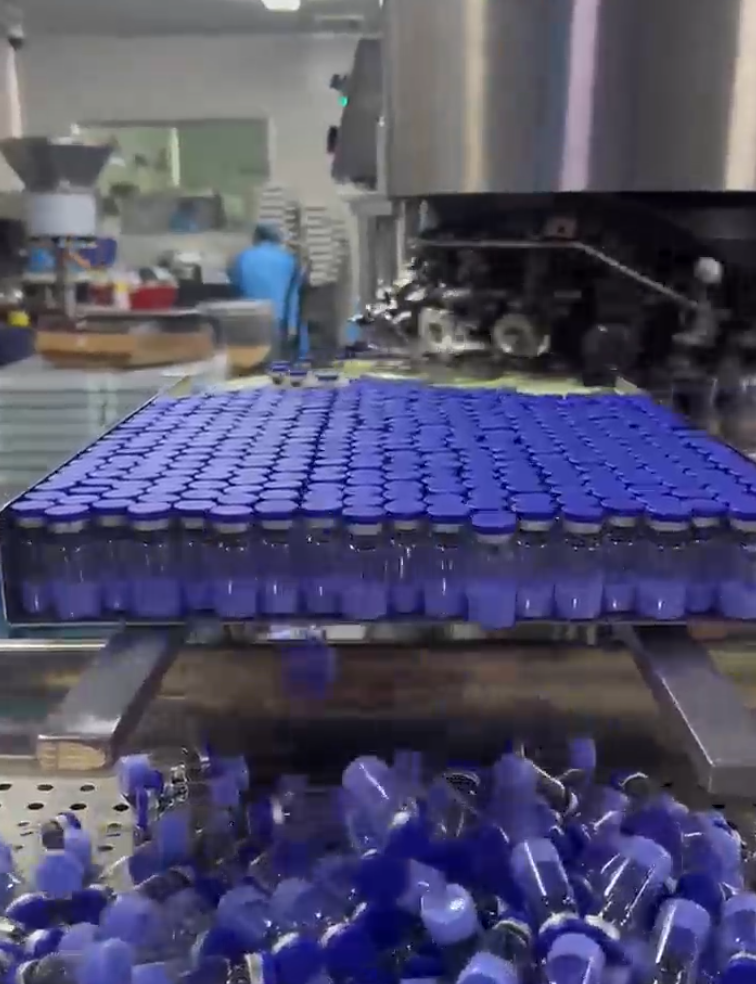
SUNONE supplies GHK-Cu / Copper Tripeptide-1 for qualified laboratory, cosmetic-formulation and peptide research applications.
Current product information includes:
- GHK-Cu / Copper Tripeptide-1;
- CAS 300801-03-0;
- molecular formula C28H48CuN12O8;
- molecular weight 744.3 g/mol;
- ≥99.6% HPLC;
- lyophilized Research Grade material;
- 50 mg and 100 mg B2B specifications;
- Certificate of Analysis;
- SDS;
- Specification Sheet.
SUNONE also advises researchers to verify final identity, purity, copper-complex form and analytical specifications against the applicable batch-specific documentation.
Looking for a GHK-Cu Supplier?
For cosmetic research companies, biotechnology laboratories and peptide distributors, the right purchasing question should not simply be:
“Is this copper peptide 99% pure?”
A better question is:
“Can the supplier document the identity and copper-complex characteristics of the exact batch?”
If your organization is evaluating GHK-Cu peptide, Copper Tripeptide-1, GHK Copper or other cosmetic-research peptides, SUNONE can provide current specifications, batch documentation, MOQ, packaging and B2B quotation information.
Conclusion
GHK-Cu deserves its scientific interest.
But the strongest content does not need exaggerated anti-aging claims.
The real research story is already compelling:
a biologically active copper-binding tripeptide with decades of tissue-remodeling research, growing cosmetic interest, and important remaining questions about delivery and human efficacy.
For procurement, one principle matters most:
verify the complex, verify the purity, and verify the batch.
This content is provided for scientific and educational purposes only. SUNONE research peptide is for qualified labrtorynt, diagnois, druc tor mmatct or veteimant, use.research only, Not for human consumption, clinical treame. Purchasers are responsible for complying with applicable laws and regulations in their jurisdiction.
Leave a Reply