
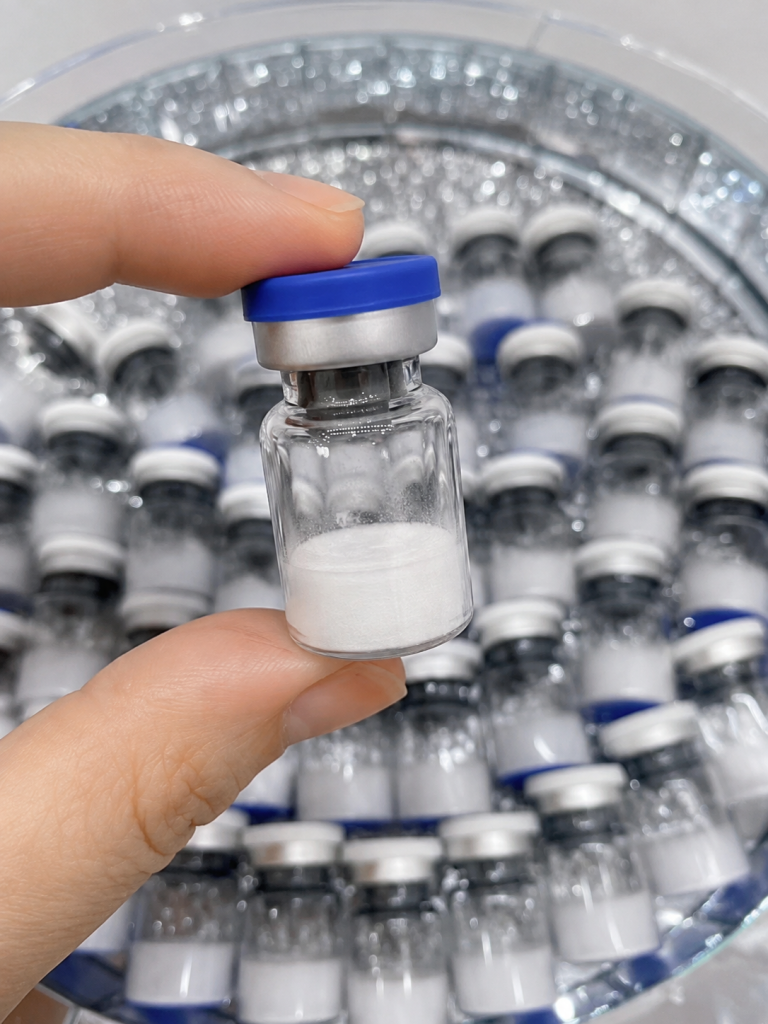
AOD-9604 Is Often Called HGH Fragment. That Is Only Part of the Story.
Search for AOD-9604 peptide and you will frequently see it described alongside HGH Fragment 176-191.
The two are closely related.
They should not automatically be treated as identical research materials.
AOD-9604 is a synthetic peptide derived from the C-terminal region of human growth hormone and is commonly described in research literature as a modified hGH fragment. Its defined sequence and molecular identity make accurate labeling especially important when comparing research results.
For laboratory procurement, that creates a simple rule:
similar names do not replace molecular identification.
What Is AOD-9604?
SUNONE identifies AOD-9604 with the sequence:
YLRIVQCRSVEGSCGF
and CAS 221231-10-3.
Current SUNONE specifications list a molecular weight of 1815.1 g/mol, ≥99% HPLC purity and lyophilized form.
AOD-9604 research has historically focused on metabolic and adipose-tissue biology because the molecule was developed from a region of human growth hormone associated with lipid-metabolism research.
That history explains keywords such as:
AOD-9604 research peptide, hGH fragment peptide, metabolic peptide research and AOD-9604 vs HGH Fragment 176-191.

The Human Trial Record Is More Important Than the Marketing Story
AOD-9604 is unusual among many research peptides because it actually went through a substantial human obesity-development program.
That program also produced an important negative result.
In the Phase IIb OPTIONS study, hundreds of participants were randomized to placebo or several AOD-9604 groups while participating in a diet and exercise program.
The primary weight-loss endpoint was not met, and there was no significant overall difference between the groups.
That evidence matters.
It means scientifically responsible content should not describe AOD-9604 as a proven weight-loss treatment simply because earlier preclinical research was encouraging.
Preclinical activity and human clinical efficacy are different questions.
Why AOD-9604 Should Not Be Confused With HGH Fragment 176-191
Modern search results frequently compare the two molecules because they share most of their sequence.
But research laboratories need greater precision.
AOD-9604 incorporates a specific modification associated with its development as a distinct research analog, while HGH Fragment 176-191 refers to a related hGH C-terminal fragment.
For analytical work, even a small sequence difference can affect:
molecular mass, reference standards, identity confirmation and interpretation of published literature.
That means a study using one molecule should not automatically be cited as evidence for the other.
Positive and Negative AOD-9604 Reviews Are Highly Mixed
Online sentiment reflects the same uncertainty.
Some users describe perceived changes in abdominal fat or body composition, although many report using AOD-9604 alongside GLP-1-related compounds, diet changes or other peptides.
Other users report little or no noticeable effect. A June 2026 discussion included multiple comments describing the peptide as ineffective, with participants also pointing to the unsuccessful Phase IIb trial.
These reports are anecdotal.
They cannot establish efficacy, safety, purity or product identity.
For professional researchers, testimonials are not a substitute for analytical data.
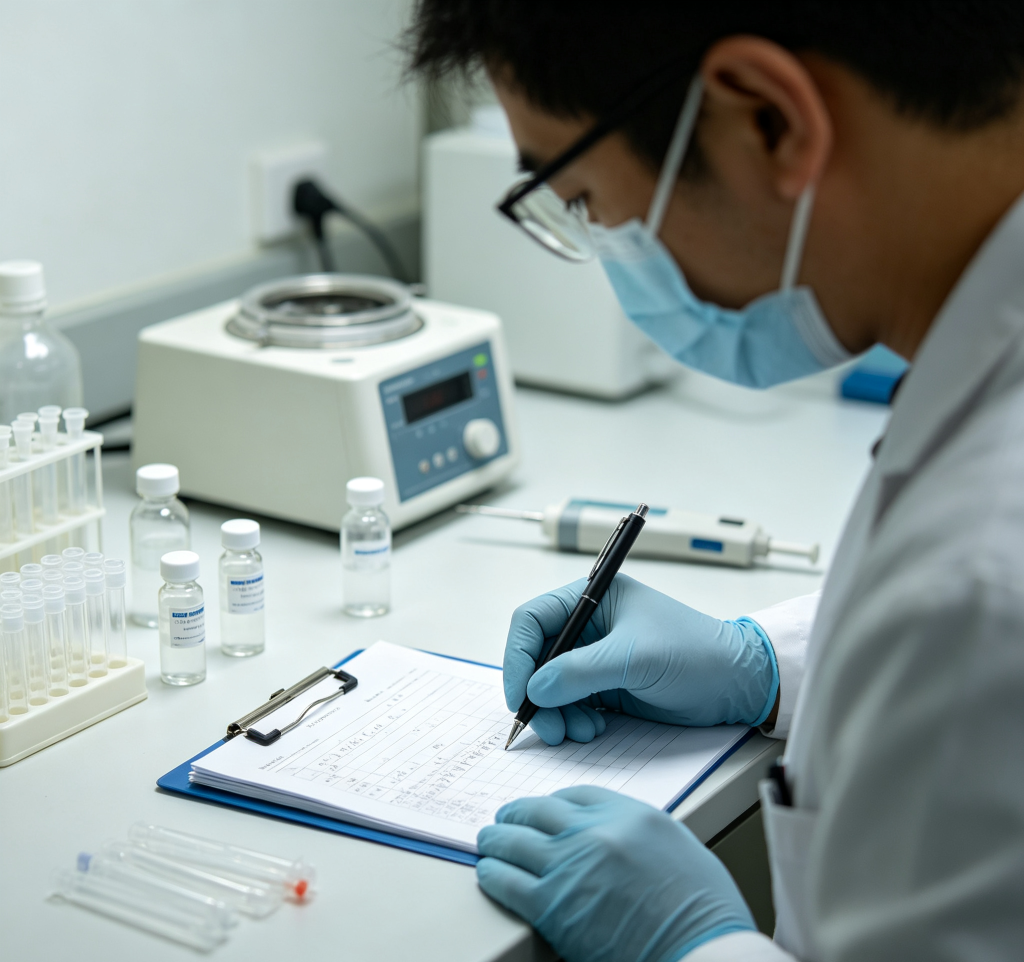
What Should an AOD-9604 Buyer Verify?
When sourcing research-grade AOD-9604, laboratories should verify more than a marketing purity number.
Important questions include:
Sequence identity — Does the material correspond to YLRIVQCRSVEGSCGF?
Molecular identity — Is identity supported by appropriate analytical documentation?
HPLC purity — Is the result linked to the specific production batch?
Batch COA — Does the Certificate of Analysis correspond to the supplied lot?
Storage specification — Are handling conditions documented?
Traceability — Can the material be connected to its production and QC records?
SUNONE publishes batch-oriented documentation for AOD-9604 and states that current purity, identity and analytical results should be verified against the applicable lot-specific COA.
SUNONE AOD-9604 Research Peptide
SUNONE supplies AOD-9604 research peptide for qualified laboratory and manufacturing research.
Current product information includes:
CAS: 221231-10-3
Sequence: YLRIVQCRSVEGSCGF
Molecular Formula: C78H123N23O23S2
Molecular Weight: 1815.1 g/mol
Purity: ≥99%, HPLC
Form: Lyophilized Powder
Documentation: COA, SDS and Specification Sheet.
View SUNONE AOD-9604 Specifications:
Looking for an AOD-9604 Supplier with COA?
For peptide laboratories, biotechnology companies and research distributors, the key sourcing question should not simply be:
“Is this AOD-9604?”
A better question is:
“Can the supplier verify the exact sequence, identity and batch-specific purity of the material?”
If your organization is evaluating AOD-9604 peptide, AOD9604 research material, hGH-derived research peptides or related metabolic research compounds, SUNONE can provide current specifications, documentation, MOQ, packaging and B2B quotation information.
Conclusion
AOD-9604 has something many peptide marketing pages ignore:
a real human clinical-development history—and a pivotal trial that failed to establish significant weight-loss efficacy.
That does not eliminate its value as a research molecule.
It makes accurate evidence interpretation more important.
For professional procurement:
verify the sequence, verify the molecular identity, verify the HPLC data and verify the batch-specific COA.
The search term may attract attention.
Scientific transparency should generate the inquiry.
This content is provided for scientific and educational purposes only. SUNONE research peptide is for qualified labrtorynt, diagnois, druc tor mmatct or veteimant, use.research only, Not for human consumption, clinical treame. Purchasers are responsible for complying with applicable laws and regulations in their jurisdiction.
Leave a Reply