
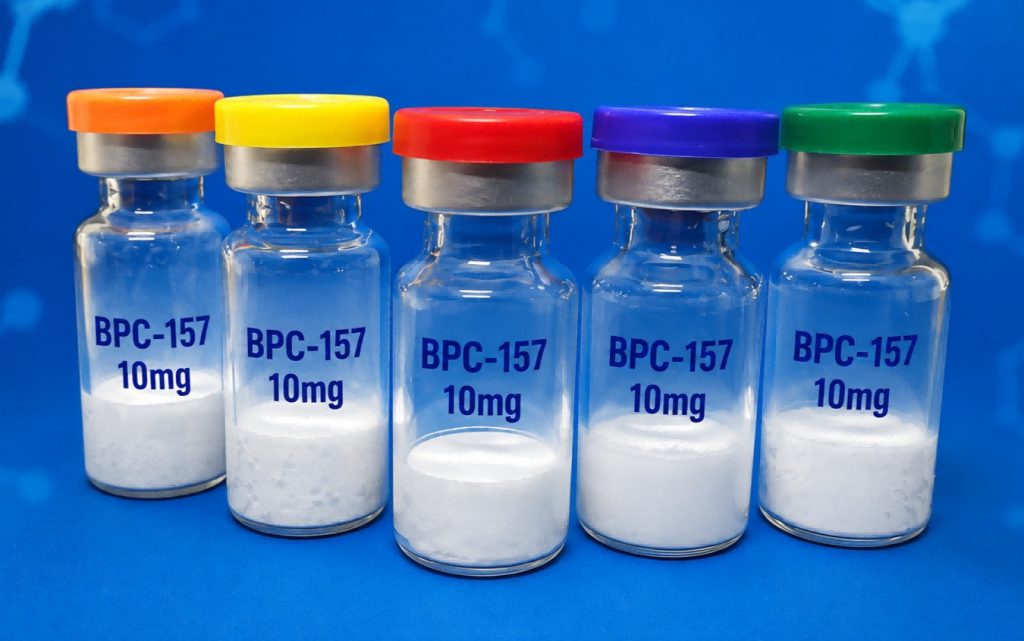
BPC-157 Is Everywhere. The Human Evidence Is Not.
Search for BPC-157 peptide in 2026 and the molecule appears almost everywhere: research suppliers, recovery discussions, compounding debates and laboratory-testing reports.
Its popularity has grown much faster than its clinical evidence.
A 2026 scientific review concluded that although BPC-157 has accumulated decades of preclinical research, it still has no approved pharmaceutical formulation, no validated clinical regimen and no completed Phase II trial.
That creates an unusual B2B procurement problem:
the product name is famous, but the evidence base and supply-chain quality are much less straightforward.
What Is BPC-157?
BPC-157 is a synthetic 15-amino-acid peptide, commonly described as a pentadecapeptide derived from a gastric protein fragment.
SUNONE lists BPC-157 under CAS 137525-51-0, with molecular formula C62H98N16O22 and molecular weight approximately 1419.5 g/mol.
Common search terms include:
BPC-157 peptide, BPC 157, BPC-157 research peptide, regenerative peptide, tissue repair peptide and pentadecapeptide research.
But search popularity should not be confused with clinical validation.
2026 Made the Regulatory Story More Complicated
In July 2026, FDA’s Pharmacy Compounding Advisory Committee reviewed BPC-157 free base and acetate.
The committee voted 8–6, with one abstention, in favor of recommending the substances for possible inclusion on the 503A Bulks List.
That result is important—but easy to misrepresent.
FDA explains that advisory committees provide non-binding recommendations. A favorable committee vote is not FDA drug approval and does not itself create an approved therapeutic product.
As of September 2026, the final regulatory process was still unresolved.
For responsible B2B content, therefore:
“FDA advisory committee recommendation” should never be rewritten as “FDA approved.”
FDA’s Scientific Concerns Are Also About Characterization
FDA’s 2026 review identified insufficient clinical safety information for BPC-157 free base and acetate.
The agency also highlighted potential concerns involving immunogenicity, aggregation and peptide-related impurities, together with limitations in physicochemical characterization and human evidence.
For laboratories, this makes analytical documentation highly relevant.
The procurement question is not simply:
“Is the purity above 99%?”
It should also be:
“Does the analytical evidence actually support the labeled BPC-157 batch?”
2026 Testing Reports Show Why the Question Matters
Independent market testing illustrates how inconsistent research-peptide supply can be.
One 2026 testing project reported BPC-157 samples ranging from high purity to samples in which no BPC-157 was detected. Another broader research-peptide survey found that only 29 of 38 tested products met or exceeded their stated purity claims.
Separate independent testing has also demonstrated that correctly characterized BPC-157 lots can show good agreement between supplier documentation and independent analytical results.
The lesson is not that every supplier is unreliable.
It is that the label alone cannot verify the batch.

What Do Positive and Negative BPC-157 Reviews Really Tell Us?
Positive online discussions commonly describe perceived improvement in recovery, pain or gastrointestinal symptoms.
Negative discussions and real-world reports include lack of noticeable effect, gastrointestinal complaints, neuropsychiatric symptoms and concerns about unverified products.
These reports are anecdotal.
They usually do not confirm molecular identity, purity, concurrent products, medical history or other confounding factors.
That means a positive testimonial cannot establish efficacy—and a negative testimonial cannot establish that a correctly identified BPC-157 molecule caused the reported problem.
For professional procurement:
reviews describe market sentiment; analytical data describe the material.
What Should a BPC-157 Buyer Verify?
When evaluating a BPC-157 supplier, professional laboratories should look for more than a headline purity percentage.
Identity — Does mass or equivalent analysis support BPC-157?
HPLC purity — Is the chromatogram associated with the actual batch?
Peptide content — Is quantitative content information available where specified?
Chemical form — Is the relevant form clearly identified?
Batch COA — Does the certificate match the material being shipped?
Traceability — Can QC documentation be connected to the specific production lot?
The strongest B2B quality story is not:
“99%+ purity.”
It is:
“Here is the batch, here is the identity evidence, and here is the documentation supporting it.”
SUNONE BPC-157 Research Peptide
SUNONE supplies BPC-157 research peptide for qualified laboratory, analytical and manufacturing research.
Current product information includes:
CAS: 137525-51-0
Molecular Formula: C62H98N16O22
Molecular Weight: 1419.5 g/mol
Grade: Research Grade
Form: Lyophilized Powder
Storage: 2–8°C according to batch COA/SDS
Available B2B formats: 5 mg × 10 vials and 10 mg × 10 vials
Documentation: SDS, Certificate of Analysis and Specification Sheet.
View SUNONE BPC-157 Specifications :
Looking for a BPC-157 Supplier with COA?
For peptide laboratories, biotechnology companies and research distributors, the sourcing question should no longer be only:
“Who sells BPC-157?”
A better question is:
“Can the supplier document the exact identity and quality of the batch being quoted?”
If your organization is evaluating BPC-157 peptide, BPC 157, research-grade BPC-157 or related regenerative research peptides, SUNONE can provide current specifications, batch documentation, packaging, MOQ and B2B quotation information.
Conclusion
BPC-157’s popularity is no longer the interesting part of the story.
The more important question in 2026 is whether the material behind the label has actually been characterized.
Preclinical popularity is not human clinical proof.
A committee recommendation is not FDA approval.
And a purity claim is not complete molecular verification.
For professional procurement:
verify identity, verify purity, verify chemical form and verify the batch-specific COA.
The BPC-157 keyword may bring buyers to the page.
Analytical transparency should give them a reason to inquire.
This content is provided for scientific and educational purposes only. SUNONE research peptide is for qualified labrtorynt, diagnois, druc tor mmatct or veteimant, use.research only, Not for human consumption, clinical treame. Purchasers are responsible for complying with applicable laws and regulations in their jurisdiction.
Leave a Reply