
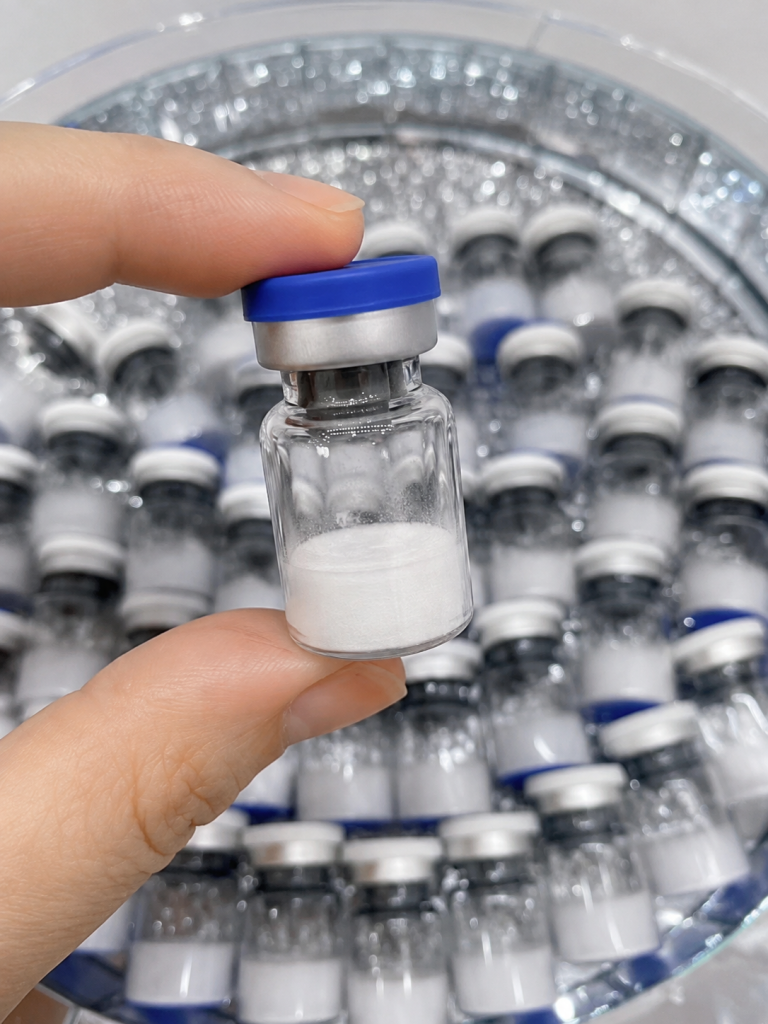
Four Amino Acids. A Surprisingly Complicated Research Story.
Epithalon—also known as Epitalon—is only four amino acids long:
Ala-Glu-Asp-Gly (AEDG).
That simplicity has helped make Epitalon one of the most recognizable peptides in aging and telomere research.
But Google searches often compress a complicated scientific story into a very simple headline:
“Epitalon activates telomerase and extends lifespan.”
The published evidence deserves more precision.
Epitalon Is Not Epithalamin
This is one of the most important distinctions in Epithalon research.
Epithalamin refers to a pineal-gland-derived polypeptide preparation.
Epitalon / Epithalon is a defined synthetic tetrapeptide: AEDG.
A recent scientific review explains that Epitalon was synthesized based on the amino-acid composition of Epithalamin and has subsequently been investigated using in-vitro, in-vivo and computational models.
For research procurement, that difference matters.
A defined AEDG peptide can be characterized by sequence, molecular mass, chromatographic purity and batch-specific analytical documentation.
A biological extract is a fundamentally different research material.
What Does the Telomerase Research Actually Show?
The telomere story is scientifically interesting.
A published study found that Epithalon induced telomerase activity and telomere elongation in cultured human fetal fibroblasts.
More recently, a 2025 study reported increased telomere length in several human cell lines, with normal cells showing hTERT/telomerase-associated changes.
Those findings support keywords such as:
Epitalon telomere research
Epithalon telomerase peptide
AEDG peptide research
But there is an important scientific boundary.
Cellular telomere elongation is not the same thing as demonstrating longer human lifespan.
A laboratory mechanism should not automatically become a clinical longevity claim.
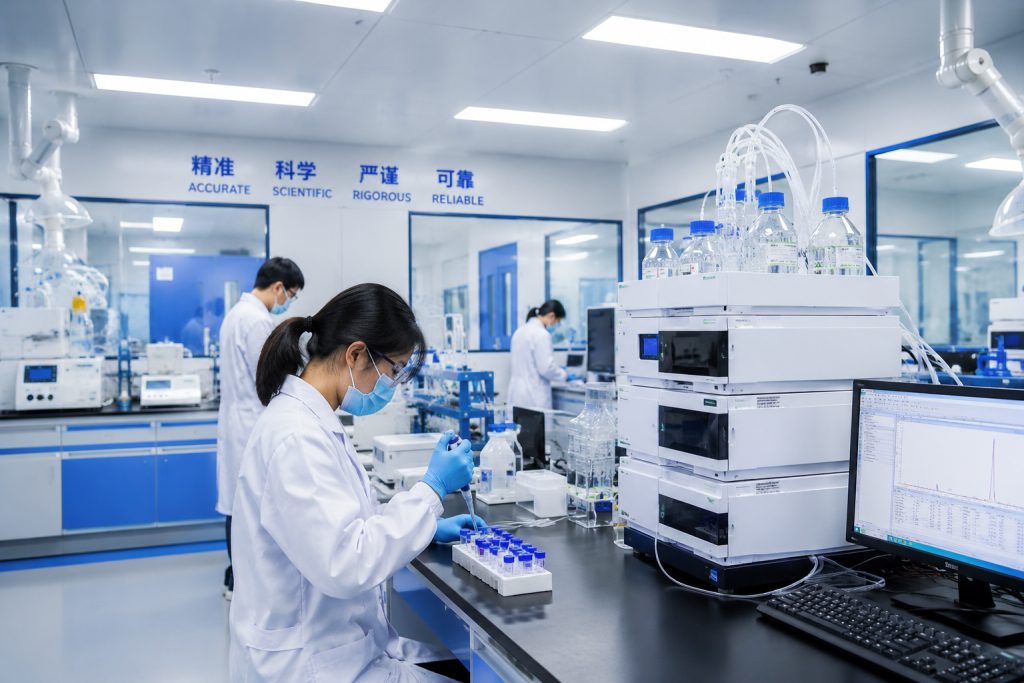
The Evidence Base Is Broader Than One Mechanism—and Still Incomplete
A 2025 review summarizes experimental research involving melatonin-related biology, oxidative-stress pathways, neuroendocrine mechanisms, gene expression and telomerase activity.
At the same time, the authors note that Epitalon’s physicochemical and structural characterization remains less developed than its biological literature.
That creates an interesting B2B lesson:
The smaller the peptide, the easier it may look to manufacture—but analytical verification still matters.
Four amino acids do not eliminate questions about identity, peptide-related impurities, moisture, content or batch consistency.
Positive and Negative Epitalon Reviews Tell Very Different Stories
Community feedback illustrates the evidence gap.
Some users describe perceived improvements in sleep or cognitive recall.
Others report almost no noticeable effect after several weeks, apart from possibly modest sleep changes.
Other discussions openly question whether the claimed effects are meaningful at all.
These experiences are anecdotal.
They cannot establish efficacy, safety, molecular identity or causality.
For laboratories and distributors, user testimonials are much less useful than batch-specific analytical documentation.
Why “99% Purity” Should Not Be the Only Question
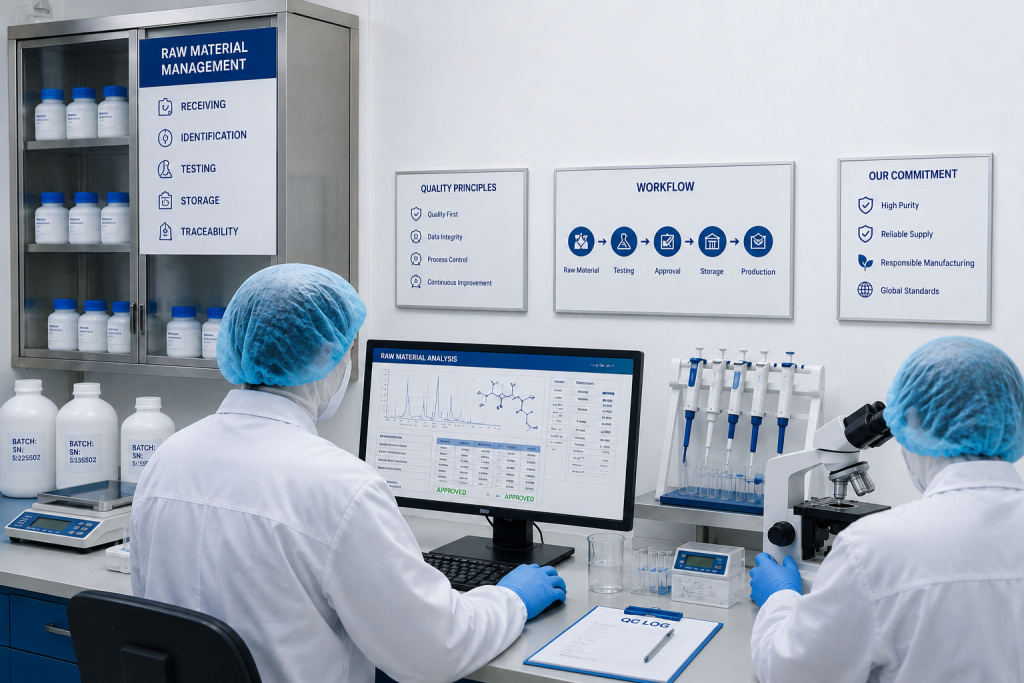
Current Epitalon supplier search results increasingly highlight HPLC, mass spectrometry, peptide content and lot-specific COA documentation.
Professional research buyers should therefore verify:
Identity — Does the material correspond to AEDG?
Molecular mass — Does identity testing support the intended molecule?
HPLC purity — Is the chromatogram linked to the supplied lot?
Peptide content — Does nominal vial quantity correspond to analytical content where tested?
Batch COA — Does the documentation match the shipment?
Traceability — Can the supplied material be linked to its production and QC records?
Purity is important.
Identity + purity + content + batch traceability tell a much stronger story.
SUNONE Epithalon Research Peptide
SUNONE supplies Epithalon / Epitalon / AEDG peptide for qualified laboratory, analytical and scientific research.
Current specifications include:
Sequence: Ala-Glu-Asp-Gly (AEDG)
CAS: 307297-39-8
Molecular Formula: C14H22N4O9
Molecular Weight: 390.35 g/mol
Purity: ≥99%, HPLC
Form: Lyophilized
Storage: 2–8°C, protected from light
B2B Sizes: 10 mg and 50 mg
Documentation: COA, HPLC data, specification information, SDS and identity/mass analysis where applicable.
View SUNONE Epithalon Specifications:
Looking for an Epitalon Supplier with COA?
For peptide laboratories, biotechnology companies and research distributors, the best procurement question is not:
“Does Epitalon extend lifespan?”
The more useful B2B question is:
“Can the supplier verify exactly which AEDG peptide material this batch contains?”
If your organization is evaluating Epitalon peptide, Epithalon peptide, AEDG, Ala-Glu-Asp-Gly or related aging-pathway research materials, SUNONE can provide current specifications, batch documentation, packaging, MOQ and B2B quotation information.
Conclusion
Epitalon is a remarkably small peptide attached to very large claims.
The real research story is more interesting:
Epitalon is not Epithalamin.
Telomerase activation in cells is not proof of human lifespan extension.
And 99% purity alone does not completely define a research batch.
For professional procurement:
verify AEDG identity, verify analytical purity, verify batch content and verify the COA.
The longevity headline may generate the search.
Scientific precision should generate the inquiry.
This content is provided for scientific and educational purposes only. SUNONE research peptide is for qualified labrtorynt, diagnois, druc tor mmatct or veteimant, use.research only, Not for human consumption, clinical treame. Purchasers are responsible for complying with applicable laws and regulations in their jurisdiction.
Leave a Reply