
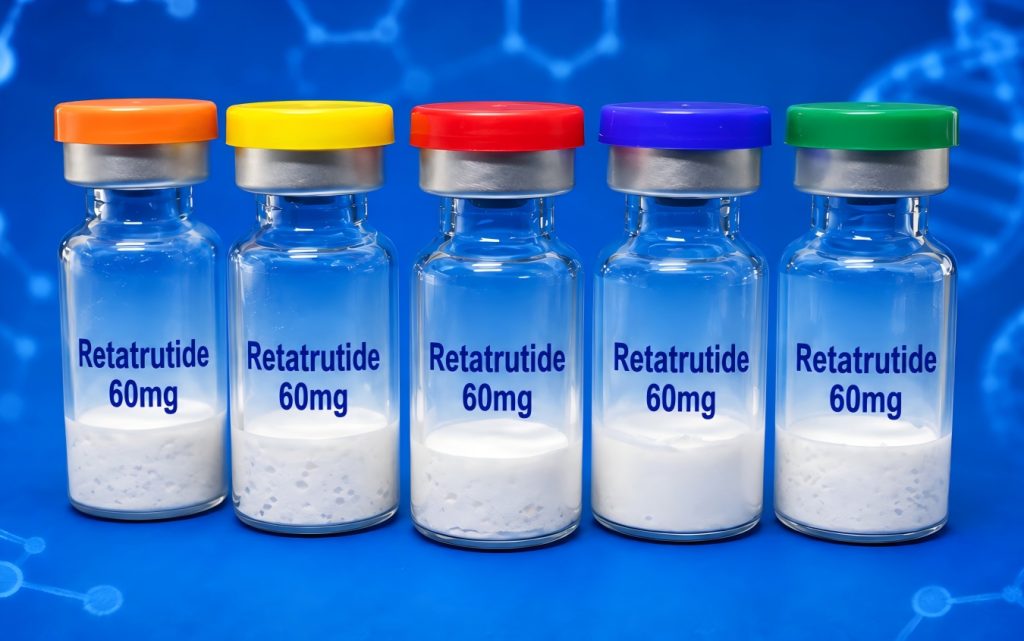
Retatrutide Has Moved From “Promising” to Phase 3 Headlines
For several years, Retatrutide was mostly discussed as an experimental GIP, GLP-1 and glucagon triple agonist.
In 2026, that changed.
New Phase 3 results from Eli Lilly’s TRIUMPH program reported substantial changes in body weight across several studied populations.
In TRIUMPH-1, participants receiving the highest studied dose had an average weight reduction of 28.3% at 80 weeks. Additional Phase 3 trials involving participants with type 2 diabetes or cardiovascular disease also reported significant weight reductions.
That explains why searches for:
Retatrutide, LY3437943, Retatrutide peptide, triple agonist and GLP-1/GIP/glucagon agonist
are growing rapidly.
But there is an important distinction research buyers should not overlook:
Phase 3 clinical data do not make every material labeled “Retatrutide” a pharmaceutical product.
What Is Retatrutide?
Retatrutide, also known as LY3437943, is an investigational peptide designed to activate three metabolic receptors:
GIP receptor
GLP-1 receptor
Glucagon receptor
This triple-receptor profile differentiates Retatrutide from single GLP-1 agonists and dual GIP/GLP-1 agonists.
The original Phase 2 randomized trial published in the New England Journal of Medicine established Retatrutide as a triple-hormone-receptor agonist and reported substantial reductions in body weight over 48 weeks.
The molecule is therefore relevant to research involving:
metabolic signaling, incretin biology, energy homeostasis, glucose and lipid metabolism, peptide–receptor interactions and multi-receptor agonist design.
2026 Phase 3 Data Change the Science—Not the Regulatory Status
The 2026 TRIUMPH data are scientifically important.
They do not mean Retatrutide is currently an approved medicine.
Eli Lilly continues to describe Retatrutide as investigational, and in July 2026 announced plans to submit a Biologics License Application to FDA in the first quarter of 2027.
FDA has separately stated that Retatrutide:
- is not a component of an FDA-approved drug;
- has not been found safe and effective by FDA for any condition;
- cannot currently be used in compounding under U.S. federal law.
For B2B research suppliers, this distinction is essential.
Research-grade Retatrutide should never be presented as approved pharmaceutical Retatrutide.

Positive Results Still Come With Tolerability Questions
Retatrutide’s clinical results have generated considerable attention, but efficacy is only one part of the research picture.
Earlier controlled trials reported gastrointestinal adverse events as among the common side effects, while ongoing Phase 3 development continues to characterize efficacy and tolerability across different populations.
Community feedback is similarly mixed.
Some users report substantial appetite suppression, weight change and perceived improvements in metabolic markers.
Others describe nausea, uncertain response, concerns about long-term safety, or no noticeable effects at all.
These online experiences are anecdotal.
They cannot establish efficacy, safety or product quality.
The Bigger 2026 Problem: “Retatrutide” Has Become a Marketing Keyword
High search volume creates another problem.
The name Retatrutide is increasingly used on websites selling products that are not part of Lilly’s clinical-development supply chain.
FDA has issued multiple 2026 warning letters involving online sellers marketing Retatrutide as an unapproved drug.
That makes analytical verification especially important for legitimate laboratory procurement.
A vial label saying “Retatrutide” does not establish:
molecular identity, chemical form, purity, lot traceability or equivalence to clinical-trial material.
What Should Laboratories Verify When Buying Retatrutide?
Professional buyers sourcing Retatrutide research peptide should verify several things before comparing suppliers.
Molecular Identity
Does the material correspond to the stated LY3437943 structure?
Chemical Form
Is the relevant salt or chemical state documented?
HPLC Purity
Does the purity result correspond to the actual production batch?
Batch-Specific COA
Is the Certificate of Analysis linked to the supplied lot?
Analytical Identity
Are appropriate identity data available according to the product specification?
Storage & Traceability
Can the supplied batch be traced to its quality and storage documentation?
These questions matter because public chemical databases may describe specific Retatrutide forms differently.
The exact material being supplied should always be defined by the applicable batch documentation.
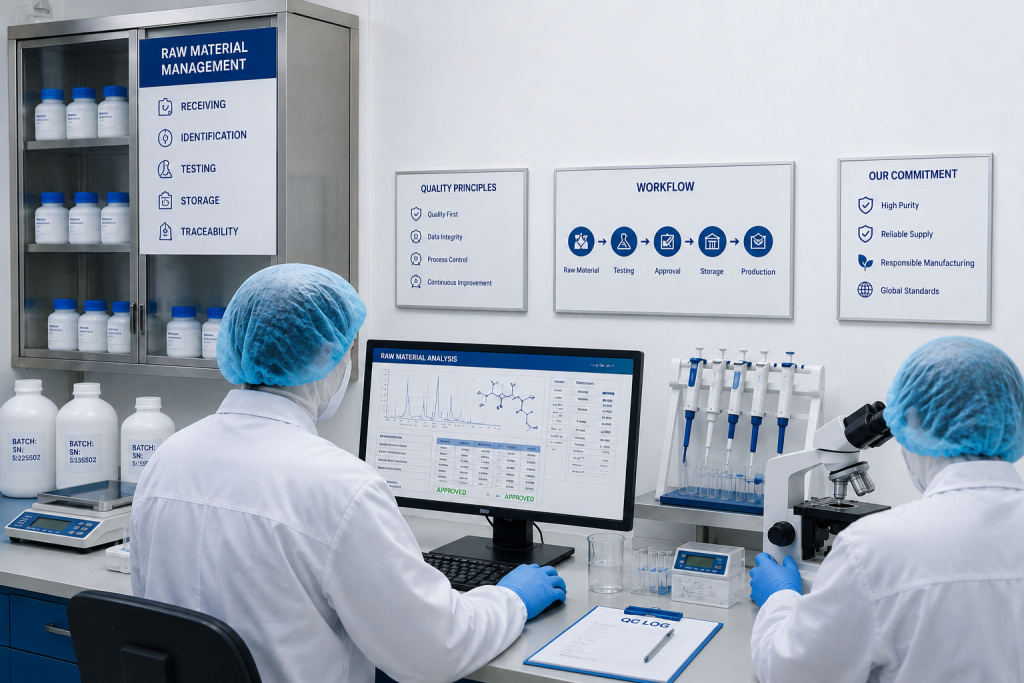
SUNONE Retatrutide Research Peptide
SUNONE supplies Retatrutide / LY3437943 research peptide for qualified laboratory and manufacturing research.
Current product information includes:
Retatrutide / LY3437943 / LY-3437943
CAS: 2381089-83-2
Molecular Formula: C221H342N46O68
Molecular Weight: approximately 4731 g/mol
Purity: ≥99.6% by HPLC
Grade: Research Grade
Form: Lyophilized Powder
Documentation: COA, SDS and Specification Sheet.
SUNONE also specifies that final chemical form, salt state, molecular identity, purity and other analytical specifications should be verified against the applicable batch-specific COA.
View SUNONE Retatrutide Specifications :
Looking for a Retatrutide Supplier with COA?
For biotechnology companies, peptide laboratories and research distributors, the right question is no longer simply:
“Do you sell Retatrutide?”
The stronger procurement question is:
“Can you document exactly which Retatrutide material this batch contains?”
If your organization is evaluating Retatrutide peptide, LY3437943, triple agonist research material, or other GIP/GLP-1/glucagon receptor research peptides, SUNONE can provide current specifications, batch documentation, packaging, MOQ and B2B quotation information.
Request Retatrutide COA, Specifications & B2B Quote:
Conclusion
Retatrutide’s 2026 Phase 3 results have made it one of the most closely watched metabolic research molecules in the world.
But the stronger the clinical headlines become, the more important one distinction becomes:
clinical-trial Retatrutide, an investigational drug candidate, and independently supplied research-grade Retatrutide are not automatically equivalent products.
For professional research procurement:
verify the molecule, verify the chemical form, verify the HPLC data, and verify the batch-specific COA.
The Phase 3 headline may generate interest.
The analytical documentation should generate the inquiry.
This content is provided for scientific and educational purposes only. SUNONE research peptide is for qualified labrtorynt, diagnois, druc tor mmatct or veteimant, use.research only, Not for human consumption, clinical treame. Purchasers are responsible for complying with applicable laws and regulations in their jurisdiction.
Leave a Reply