
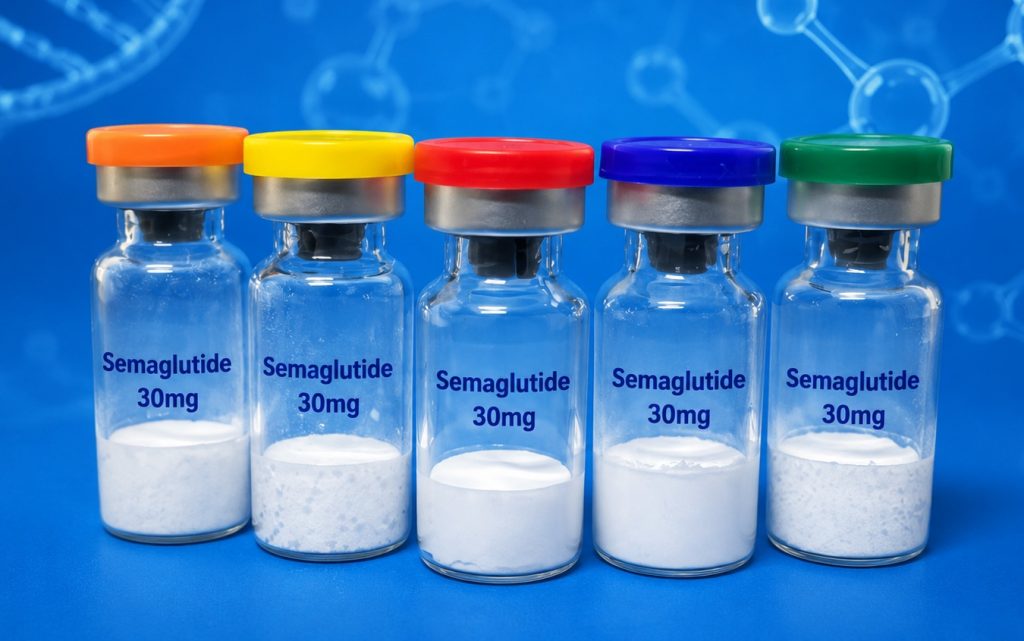
“Semaglutide” Is Now a Famous Name. That Creates a Sourcing Problem.
Few research peptides have achieved the visibility of Semaglutide.
The molecule is associated with major approved pharmaceutical products, extensive GLP-1 research and a rapidly expanding scientific literature.
But for laboratories and biotechnology buyers, popularity creates an important problem:
A vial labeled “Semaglutide” does not prove pharmaceutical equivalence, molecular identity or batch quality.
That distinction matters more in 2026 than ever.
What Is Semaglutide?
Semaglutide is a synthetic GLP-1 receptor agonist / GLP-1 analogue designed with structural modifications that extend its biological persistence.
Published discovery research describes two amino-acid substitutions and a fatty-acid-containing side chain attached at Lys26. These features improve albumin binding and contribute to prolonged exposure.
This makes Semaglutide relevant to laboratory research involving:
GLP-1 receptor signaling, incretin biology, metabolic regulation, glucose-related pathways, appetite signaling and energy homeostasis.
But the exact research material still needs to be defined analytically.
Approved Semaglutide and Research-Grade Semaglutide Are Not the Same Product
FDA-approved medicines containing Semaglutide include products such as Ozempic, Rybelsus and Wegovy.
Those are regulated finished pharmaceutical products with defined formulations, manufacturing controls and approved labeling.
A separately manufactured research-grade Semaglutide peptide is not automatically equivalent to any of them.
FDA has repeatedly warned companies against presenting non-approved semaglutide products as “the same” as approved drugs.
For B2B research procurement, this is an important rule:
Same molecule name does not mean same finished product.

Chemical Form Can Change the Question
Another issue often disappears in online product listings.
FDA specifically warns that semaglutide sodium and semaglutide acetate are different active ingredients from the form used in approved semaglutide drugs, and FDA says it does not have information establishing that those salt forms have the same chemical and pharmacological properties.
That makes one question especially important when choosing a Semaglutide supplier:
What exact chemical form does this batch contain?
Researchers should verify that answer through the applicable product specification and batch-specific COA—not assumptions based on the product name.
Positive and Negative Semaglutide Reviews Tell Different Stories
Online sentiment around Semaglutide is strongly mixed.
Positive community reports commonly mention perceived appetite reduction, less interest in food and significant weight change.
Negative discussions frequently describe nausea, constipation, vomiting, fatigue and heartburn.
Controlled clinical evidence confirms that gastrointestinal adverse events are common with pharmaceutical semaglutide. In STEP 1, nausea, diarrhea, vomiting and constipation occurred substantially more frequently with semaglutide than placebo.
However, online testimonials cannot establish the identity or purity of the material involved.
For research laboratories, reviews are not a substitute for analytical documentation.
A 99%+ Purity Claim Is Only One Part of the Story
When evaluating research-grade Semaglutide, professional buyers should verify:
Molecular identity — Does the material correspond to the intended Semaglutide structure?
Chemical form — What salt, counterion or chemical state applies?
HPLC purity — Is the reported purity linked to the supplied production lot?
Batch COA — Does the Certificate of Analysis correspond to the actual shipment?
Storage specification — Are handling and storage requirements documented?
Lot traceability — Can the supplied material be connected to its analytical records?
A high HPLC number can be useful.
It is not a complete identity statement.
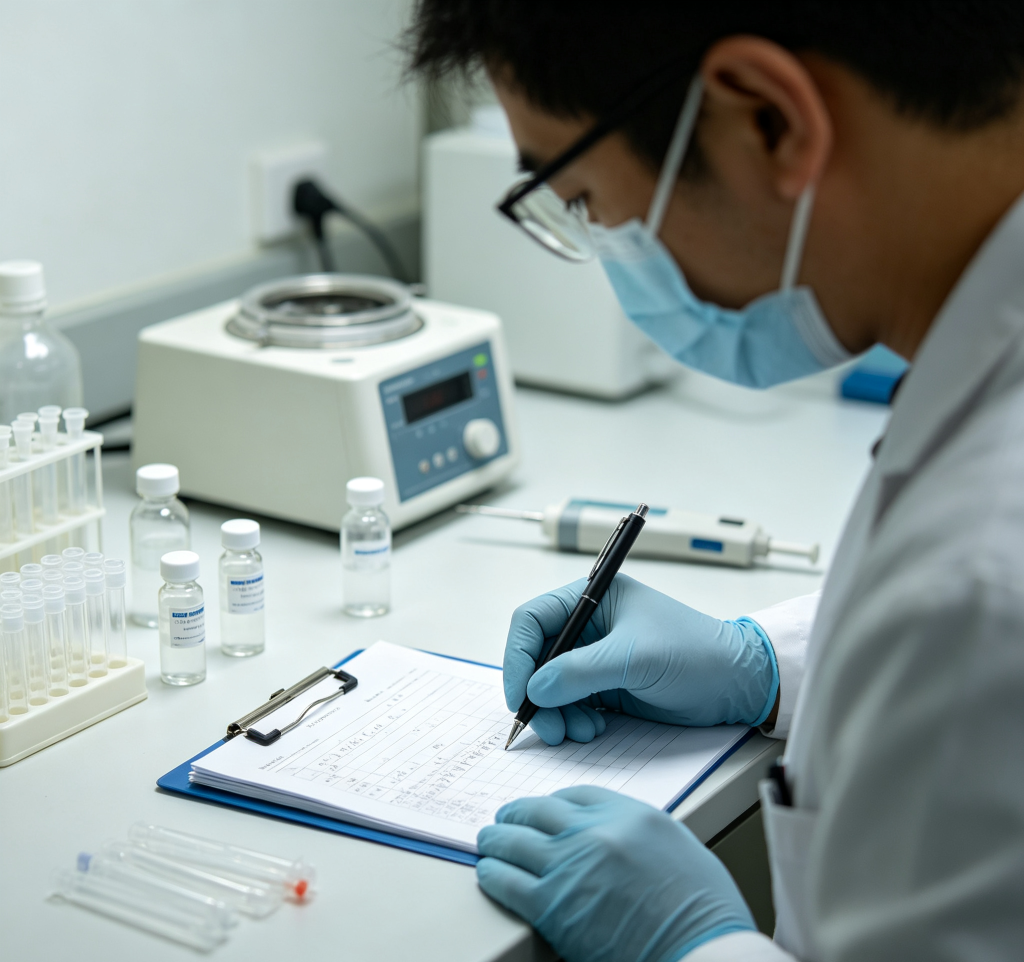
SUNONE Research-Grade Semaglutide
SUNONE supplies Semaglutide research peptide for qualified laboratory and manufacturing applications.
Current product information includes:
CAS: 910463-68-2
Molecular Formula: C187H291N45O59
Molecular Weight: 4113.58 g/mol
Purity: ≥99.2%, HPLC Certified
Form: Lyophilized Powder
Storage: 2–8°C
B2B sizes: 5 mg, 10 mg, 15 mg, 20 mg and 30 mg
Documentation: COA, SDS and Specification Sheet.
SUNONE specifically recommends verifying the exact peptide form, termini, purity, counterion or salt state and batch-specific analytical specifications against the applicable COA.
View SUNONE Semaglutide Specifications:
Looking for a Semaglutide Supplier with COA?
For biotechnology companies, peptide laboratories and research distributors, the sourcing question should not simply be:
“Is this Semaglutide?”
A stronger procurement question is:
“Can the supplier document exactly which Semaglutide material this batch contains?”
If your organization is evaluating Semaglutide peptide, GLP-1 research peptide, research-grade Semaglutide or related incretin-research materials, SUNONE can provide current specifications, batch documentation, packaging, MOQ and B2B quotation information.
Conclusion
Semaglutide’s global popularity makes molecular verification more important—not less.
Approved pharmaceutical Semaglutide and independently manufactured research material should never be assumed equivalent simply because they share a name.
For professional procurement:
verify the identity, verify the chemical form, verify the purity and verify the batch-specific COA.
The keyword may generate the search.
The documentation should generate the inquiry.
This content is provided for scientific and educational purposes only. SUNONE research peptide is for qualified labrtorynt, diagnois, druc tor mmatct or veteimant, use.research only, Not for human consumption, clinical treame. Purchasers are responsible for complying with applicable laws and regulations in their jurisdiction.
Leave a Reply