
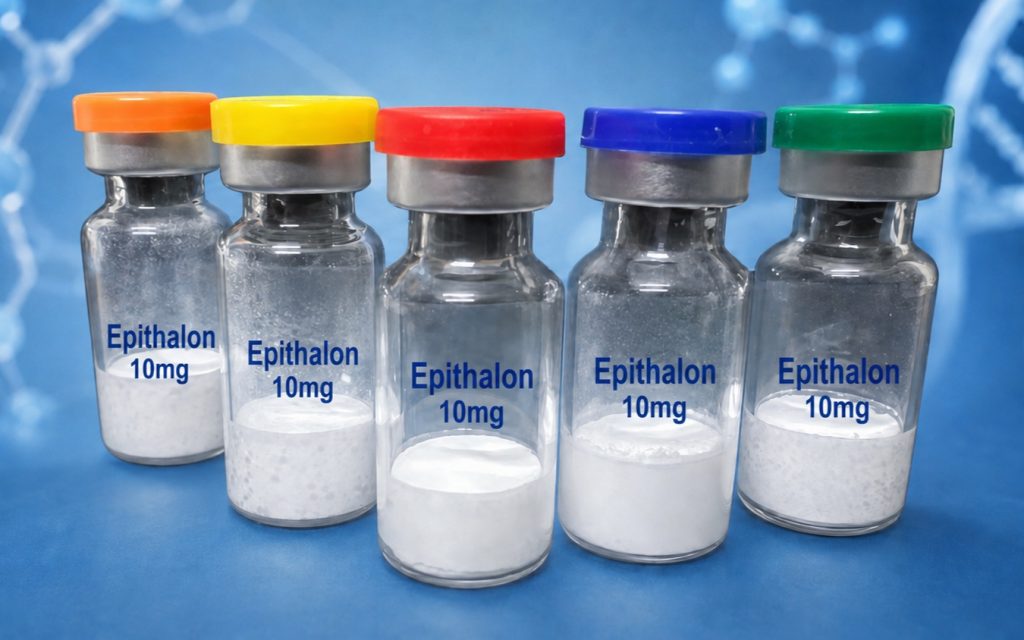
Search for Epitalon online and you will quickly encounter claims about telomeres, longevity and healthy aging. But for laboratories and biotechnology buyers, a much more practical question comes first: is the peptide properly identified, characterized and documented?
Also known as Epithalon, Epithalone or AEDG peptide, Epitalon has become an increasingly discussed research peptide in aging-related cellular biology.
What Is Epitalon?
Epitalon / Epithalon (CAS 307297-39-8) is a synthetic tetrapeptide composed of four amino acids:
Ala-Glu-Asp-Gly — AEDG
Its small structure has made it a subject of experimental research involving:
- peptide signaling;
- telomerase-related mechanisms;
- telomere biology;
- cellular aging pathways;
- molecular and cellular biology;
- healthy-aging research models.
Recent laboratory research has renewed scientific interest in the relationship between Epitalon peptide, telomerase activity and telomere biology.
However, laboratory findings should not be confused with demonstrated human anti-aging effects.
Why Is Epitalon Generating So Much Interest?
One of the most discussed areas of Epitalon research involves telomeres — the protective structures at chromosome ends.
Experimental studies have examined whether Epitalon may influence telomerase-associated pathways and telomere length in cultured cells.
That makes the peptide scientifically interesting.
It does not, however, establish that Epitalon has been proven to extend human lifespan or provide a clinically established anti-aging treatment.
For serious researchers, separating these two ideas is essential.
What Do Epitalon Reviews Say?
Online discussions about Epitalon are highly mixed.
Some individuals report perceived changes in sleep or general well-being.
Others describe no noticeable effect, while negative reports involving fatigue, sleep disruption or other unwanted experiences can also be found.
These anecdotes have major limitations.
They generally cannot confirm:
- the identity of the material used;
- peptide purity;
- batch quality;
- contaminants or impurities;
- other compounds used at the same time;
- causality.
For research organizations, online reviews therefore reinforce a more useful principle:
Analytical data matter more than anecdotes.
Choosing an Epitalon Supplier: Don’t Stop at “99% Purity”
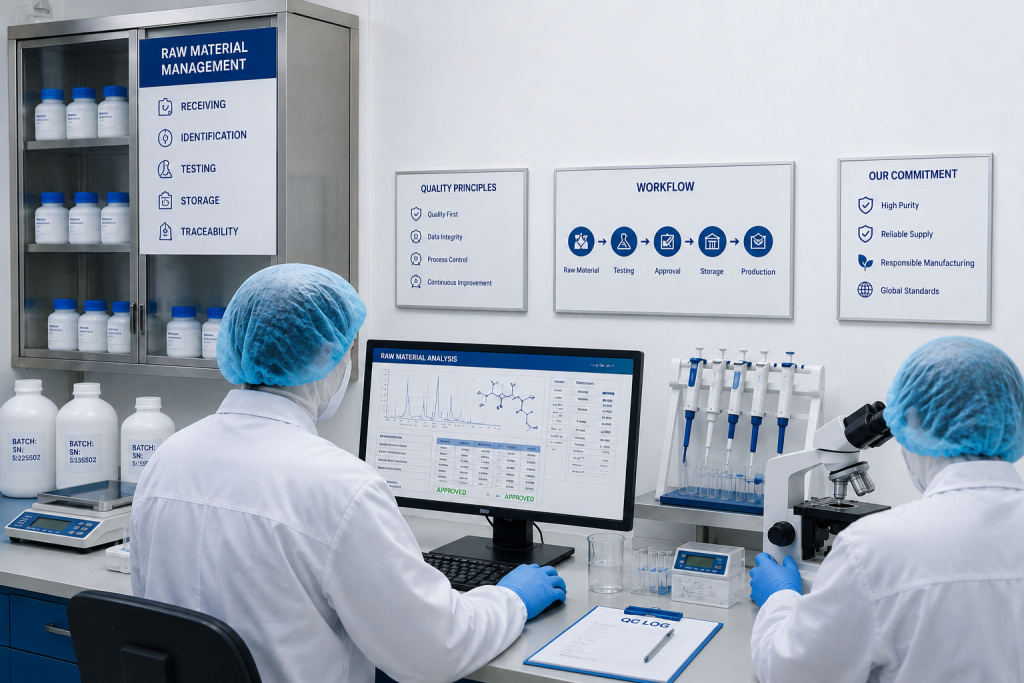
When sourcing Epitalon research peptide, professional buyers should verify more than a marketing percentage.
1. Confirm the Peptide Identity
Epitalon should correspond to the AEDG sequence — Ala-Glu-Asp-Gly.
Identity information should match the product and batch documentation.
2. Review HPLC Data
Epitalon HPLC purity can provide useful information about relative purity and impurity profiles.
But purity and molecular identity are not the same thing.
3. Ask About LC-MS or Mass Analysis
Where applicable, mass-related analytical information can provide additional support for peptide identity.
4. Request a Batch-Specific COA
An Epitalon Certificate of Analysis should correspond to the actual production lot.
Professional buyers may want to review:
- COA;
- HPLC chromatogram;
- identity or mass data;
- specifications;
- SDS;
- lot number;
- storage information.
Epitalon Research Peptide from Sunone
Sunone (Hong Kong) Biopharmaceutical International Technology Co., Limited supplies Epitalon for qualified laboratory research and manufacturing applications.
Current product information includes:
Product: Epithalon / Epitalon
Sequence: Ala-Glu-Asp-Gly (AEDG)
CAS: 307297-39-8
Molecular Weight: 390.35 g/mol
Grade: Research Grade
Purity: ≥99% by HPLC
Form: Lyophilized Powder
Documentation: COA, HPLC, SDS and Specification Sheet available
Looking for high-purity Epitalon peptide, analytical documentation or B2B quantities?
View Epitalon Specifications:
Send Sunone your required quantity, specification, packaging and analytical-documentation requirements to discuss a B2B quotation.
Epitalon FAQ
Is Epitalon the same as Epithalon?
Epitalon and Epithalon are widely used as alternative spellings for the synthetic AEDG tetrapeptide. Buyers should still confirm the sequence and chemical identity in batch documentation.
What is the Epitalon peptide sequence?
The peptide sequence is Ala-Glu-Asp-Gly (AEDG).
What is the CAS number for Epitalon?
Sunone lists CAS 307297-39-8.
What should buyers request from an Epitalon supplier?
Professional buyers may consider requesting batch-specific COA, HPLC data, identity or mass analysis where applicable, SDS, product specifications and lot traceability.
Where can I request Epitalon research peptide?
Qualified B2B buyers can review the Sunone Epitalon product page and submit their required quantity and specifications for quotation.
This content is provided for scientific and educational purposes only. SUNONE research peptide is for qualified labrtorynt, diagnois, druc tor mmatct or veteimant, use.research only, Not for human consumption, clinical treame. Purchasers are responsible for complying with applicable laws and regulations in their jurisdiction.
Leave a Reply