
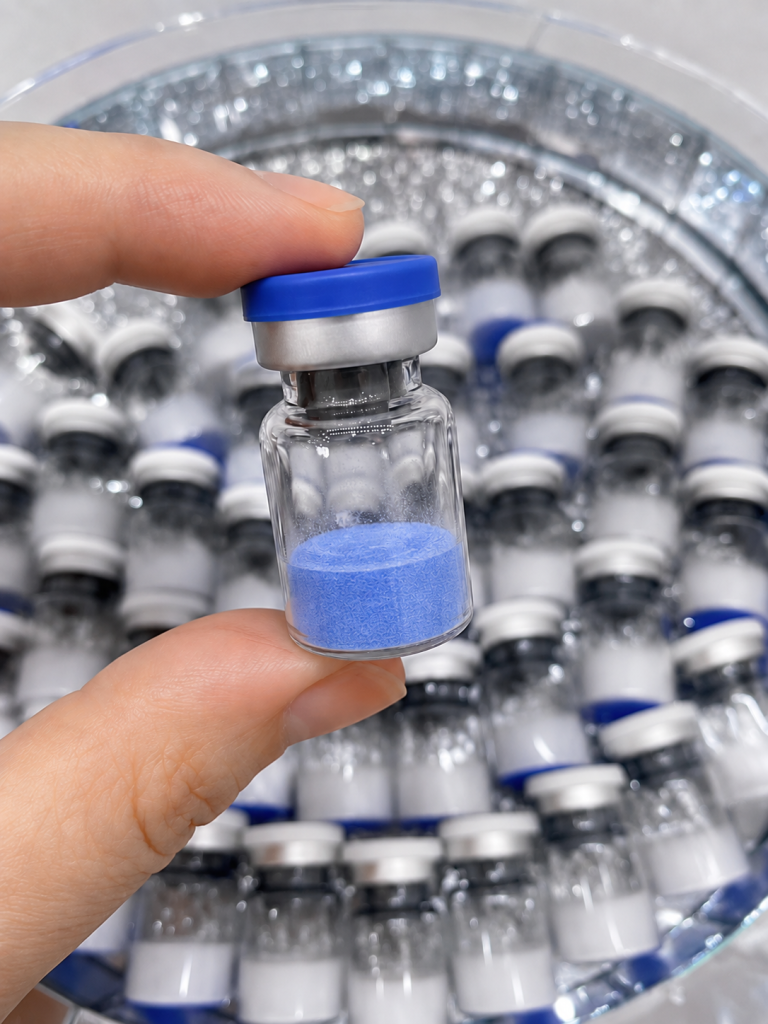
GHK-Cu is often described simply as a “copper peptide.” For professional buyers, that description leaves out the most important analytical question: are you verifying GHK—or the actual GHK-Cu copper complex?
The difference matters.
What Is GHK-Cu?
GHK-Cu (Copper Tripeptide-1, CAS 300801-03-0) is a copper-binding complex formed from the tripeptide:
Gly-His-Lys (GHK)
and a copper ion.
It is commonly searched as:
- GHK-Cu
- Copper Tripeptide-1
- Copper Tripeptide 1
- Gly-His-Lys Copper Complex
- GHK Copper
- Copper Peptide
GHK-Cu is widely investigated in laboratory and cosmetic research involving extracellular-matrix biology, fibroblasts, collagen-related pathways and cellular remodeling.
GHK and GHK-Cu Are Not the Same Thing
This distinction is easy to overlook.
GHK is the peptide.
GHK-Cu is the copper-coordinated peptide complex.
Published experimental research has shown that copper coordination can matter to biological observations involving GHK-related systems.
For B2B sourcing, this creates a practical question:
Does the analytical documentation verify only peptide purity—or the expected copper-complex material?
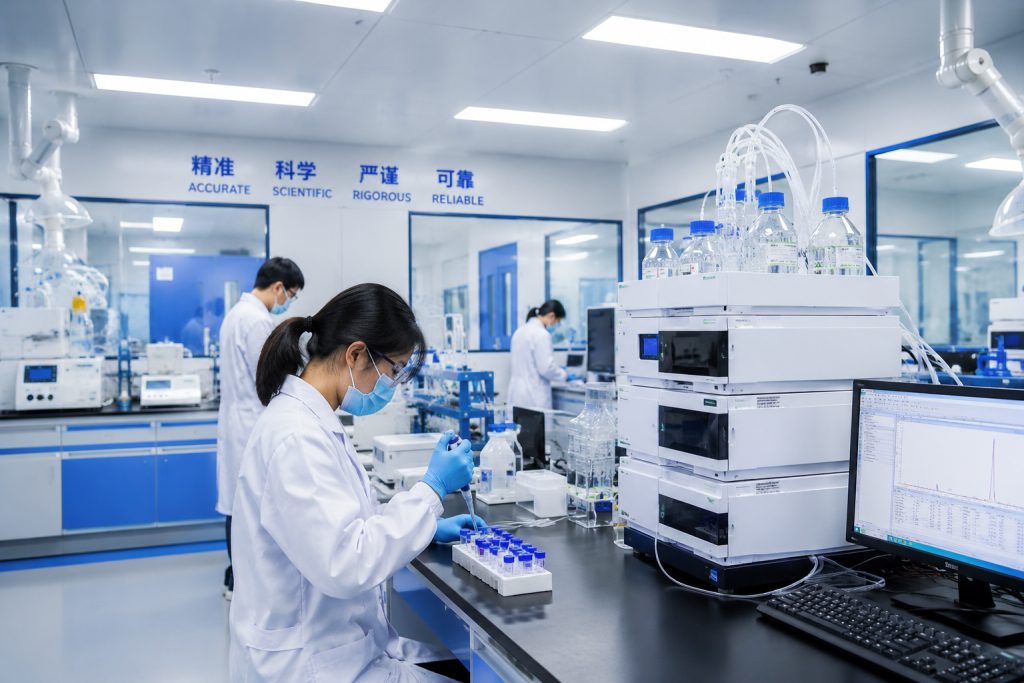
Why “99% HPLC” Does Not Answer Everything
A high HPLC purity result is useful.
But it does not automatically answer:
- Is the principal material GHK-Cu?
- Is copper present in the expected complex?
- Is free GHK distinguishable from the copper-bound form?
- Are degradation products controlled?
- Is the material consistent between lots?
For a coordination complex, purity and complete chemical characterization are not necessarily the same question.
What Do GHK-Cu Reviews Say?
Online experiences are mixed.
Positive discussions commonly mention perceived improvements in skin texture, firmness or appearance.
Negative experiences include:
- redness;
- burning;
- stinging;
- irritation;
- itching;
- temporary breakouts or bumps.
These reports are anecdotal.
Different cosmetic formulations, concentrations, ingredients and product sources make direct comparisons difficult.
Online reviews cannot establish the quality, safety or performance of a research-grade GHK-Cu batch.
What Should B2B Buyers Verify?
1. Confirm GHK-Cu—not Simply GHK
Professional documentation should clearly identify the supplied material as the GHK-Cu copper complex where that is the required research material.
2. Review HPLC Purity
GHK-Cu HPLC data can provide valuable information about chromatographic purity and related impurities.
But purity alone should not be confused with full molecular characterization.
3. Review Identity Data
Where appropriate, MS, LC-MS or other suitable analytical methods can provide additional evidence supporting molecular identity.
For copper-peptide research, buyers may also need to consider how the copper-complex form is characterized.
4. Consider Stability
Published physicochemical studies show that GHK-Cu stability can depend on environmental and formulation conditions.
This means storage, handling and formulation compatibility can matter to research reproducibility.
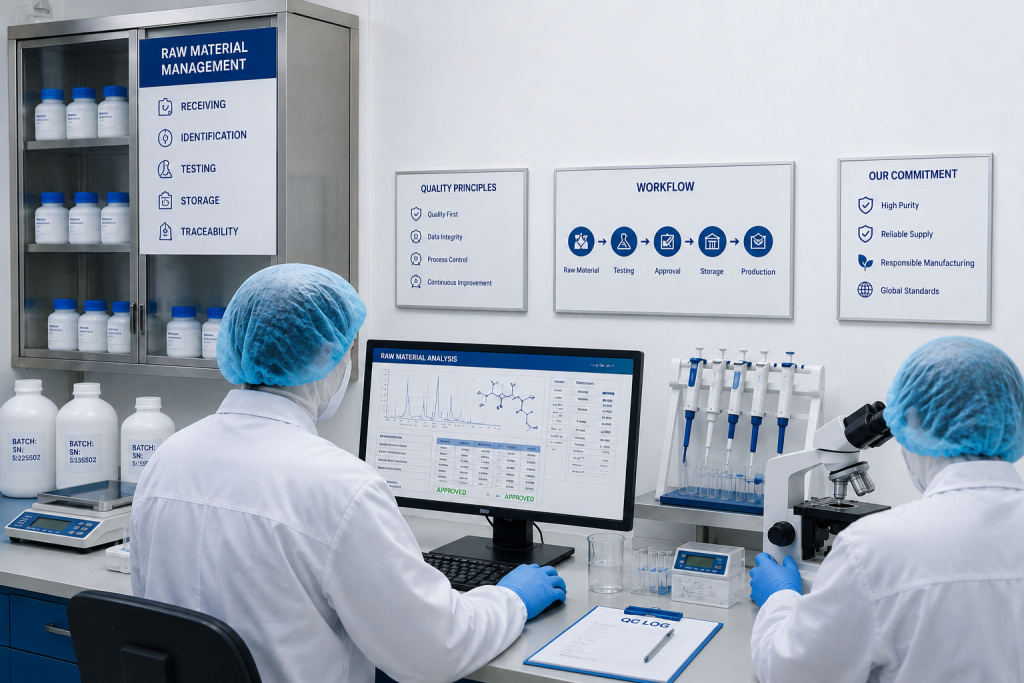
5. Request a Batch-Specific COA
Depending on the intended research application, buyers may consider reviewing:
- HPLC purity;
- molecular identity;
- copper-complex specification;
- relevant impurity profile;
- lot number;
- SDS;
- storage conditions;
- batch traceability.
GHK-Cu Copper Peptide from Sunone
Sunone (Hong Kong) Biopharmaceutical International Technology Co., Limited supplies GHK-Cu for qualified laboratory research, cosmetic formulation research and biotechnology manufacturing applications.
Current product information includes:
Product: GHK-Cu
Synonyms: Copper Tripeptide-1 / Gly-His-Lys Copper Complex / GHK Copper
CAS: 300801-03-0
Molecular Formula: C28H48CuN12O8
Molecular Weight: 744.3 g/mol
Grade: Research Grade
Form: Lyophilized Powder
Storage: 2–8°C
Documentation: COA, SDS and Specification Sheet available
Current B2B configurations include:
50 mg × 10 vials
100 mg × 10 vials
Final identity, purity, copper-complex form and analytical specifications should be confirmed against the applicable batch-specific documentation.
Looking for a GHK-Cu supplier with analytical documentation and B2B manufacturing support?
View Sunone GHK-Cu Specifications:
Send Sunone your required quantity, packaging, analytical-documentation and OEM/ODM requirements for a current quotation.
FAQ
Is GHK the same as GHK-Cu?
No. GHK is the Gly-His-Lys tripeptide, while GHK-Cu refers to its copper-coordinated complex.
What is another name for GHK-Cu?
GHK-Cu is commonly called Copper Tripeptide-1, Copper Tripeptide 1, Gly-His-Lys Copper Complex or GHK Copper.
What is the CAS number of GHK-Cu?
Sunone lists GHK-Cu as CAS 300801-03-0.
Does 99% HPLC prove the material is correctly characterized GHK-Cu?
Not necessarily by itself. Chromatographic purity and complete molecular or complex identity are separate analytical questions.
What should buyers request from a GHK-Cu supplier?
Professional buyers may consider requesting a batch-specific COA, HPLC data, appropriate identity testing, copper-complex specification, SDS and lot traceability.
This content is provided for scientific and educational purposes only. SUNONE research peptide is for qualified labrtorynt, diagnois, druc tor mmatct or veteimant, use.research only, Not for human consumption, clinical treame. Purchasers are responsible for complying with applicable laws and regulations in their jurisdiction.
Leave a Reply