
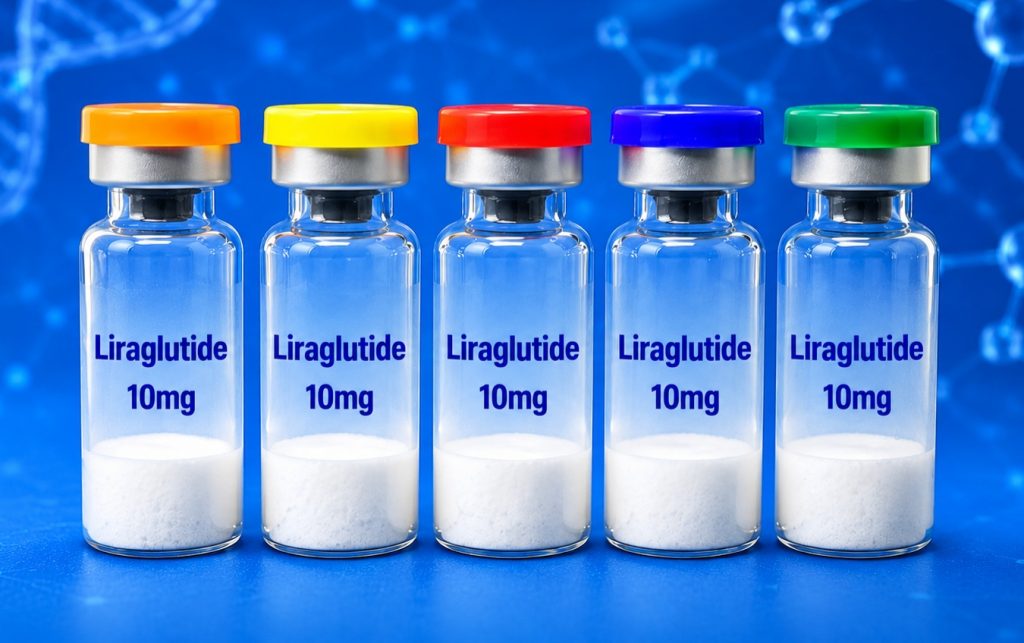
A peptide can resemble GLP-1 and still not be correctly identified as Liraglutide.
For professional research buyers, this matters because Liraglutide is not defined only by its amino-acid backbone.
Its fatty-acid modification is part of the molecular design.
That means a serious sourcing question is not simply:
“Is this a GLP-1 peptide?”
It is:
“Has the complete acylated Liraglutide molecule been analytically verified?”
What Is Liraglutide?
Liraglutide, also known as NN2211, is a long-acting acylated GLP-1 analog used extensively in GLP-1 receptor and metabolic-pathway research.
Common identifiers include:
CAS: 204656-20-2
Molecular Formula: C172H265N43O51
Molecular Weight: approximately 3751.2 g/mol
Liraglutide is closely related to human GLP-1, but it is not simply native GLP-1 supplied in a vial.
Its molecular engineering includes an important fatty-acid modification.
Why Acylation Is Part of Liraglutide Identity
One of Liraglutide’s defining structural features is its attached fatty-acid chain.
This modification contributes to reversible interaction with albumin and is an important part of what distinguishes Liraglutide from native GLP-1.
For B2B laboratories, that creates an analytical question:
Is the peptide backbone correct—and is the expected acylated structure also present?
A correct sequence without the correct modification would not represent the complete intended Liraglutide molecular identity.
Why HPLC Purity Alone Is Not Enough
A specification such as ≥98% HPLC can provide useful information about chromatographic purity.
But purity and identity are different questions.
HPLC alone may not completely establish:
- correct peptide sequence;
- correct acylation;
- expected molecular mass;
- modification-site identity;
- relevant peptide-related impurities;
- batch-to-batch consistency.
This is why professional sourcing should distinguish:
Sequence → Modification → Molecular Identity → Purity → Batch Documentation
Where LC-MS Becomes Important
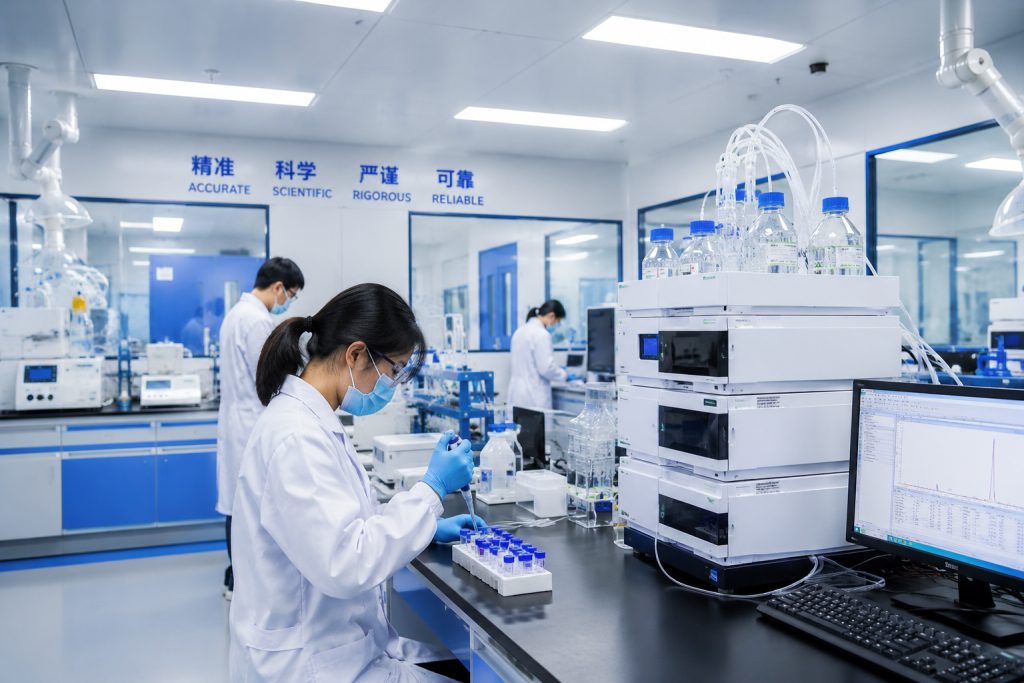
For a structurally modified peptide such as Liraglutide, appropriate mass-spectrometry analysis can provide additional evidence supporting the expected molecular species.
Professional buyers may therefore consider reviewing:
HPLC data for chromatographic purity;
MS / LC-MS data for molecular identity;
batch-specific COA for the actual supplied lot;
and
chemical specifications confirming the intended Liraglutide structure.
A headline purity number should not replace complete analytical documentation.
Liraglutide Is Also Not Automatically Equivalent to a Finished Drug
Liraglutide is the active molecule associated with regulated pharmaceutical products.
However, sharing the molecule name does not make independently supplied research-grade Liraglutide equivalent to an approved finished pharmaceutical product.
Approved products have product-specific:
- manufacturing processes;
- formulation controls;
- excipient systems;
- quality standards;
- regulatory specifications;
- labeled indications.
Research material should therefore be evaluated according to its own analytical documentation and intended use.
What Do Liraglutide Reviews Say?
Online experiences are mixed.
Positive discussions commonly describe perceived:
- appetite control;
- reduced food noise;
- earlier fullness;
- body-weight changes.
Negative discussions frequently mention:
- nausea;
- heartburn;
- constipation;
- fatigue;
- dizziness;
- gastrointestinal discomfort;
- very low appetite;
- little or no perceived effect.
These reports are anecdotal.
Most involve regulated medicines or other formulations—not Sunone research material.
They cannot establish the quality, safety or efficacy of a separately sourced Liraglutide research batch.
What Should B2B Buyers Verify?
When evaluating a Liraglutide supplier, professional buyers may consider asking:
Is the complete molecular identity verified?
The analytical specification should reflect Liraglutide as an acylated peptide rather than only a generic GLP-1 sequence.
What does the HPLC result represent?
Review chromatographic purity and relevant related substances.
Is MS or LC-MS documentation available?
Appropriate mass analysis can provide additional molecular-identity evidence.
Does the COA correspond to the actual batch?
Generic specifications should not replace lot-specific analytical records.
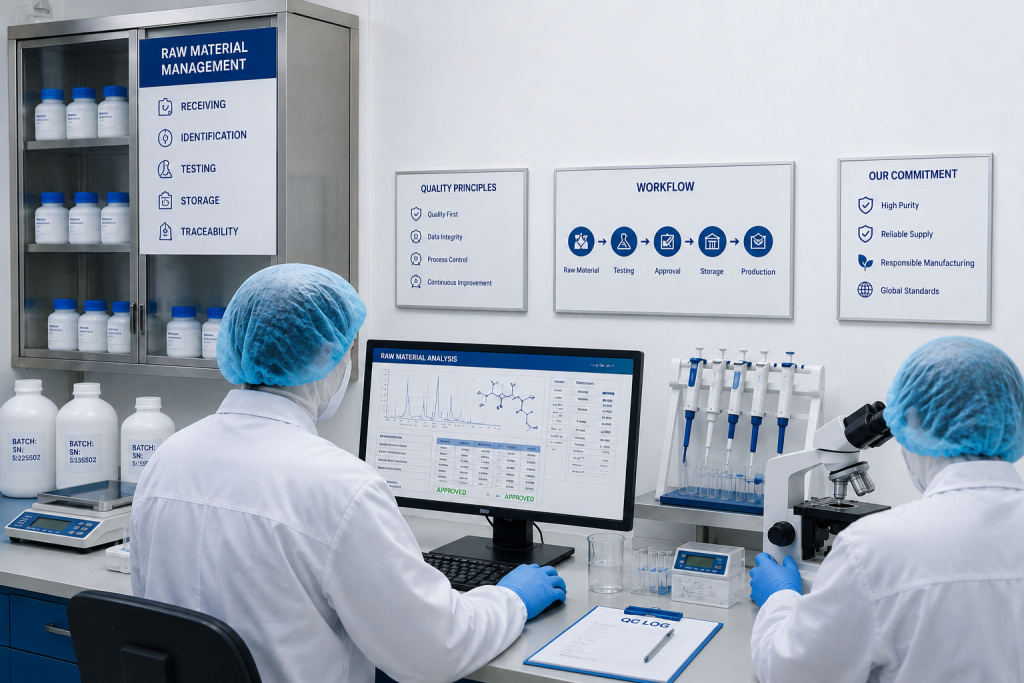
Is full lot traceability available?
The vial, batch number, HPLC/MS documentation and COA should correspond to the same production lot.
Liraglutide Research Peptide from Sunone
Sunone (Hong Kong) Biopharmaceutical International Technology Co., Limited supplies Liraglutide for qualified laboratory research, analytical development and biotechnology manufacturing applications.
Current listed specifications include:
Product: Liraglutide
Development Name: NN2211
CAS: 204656-20-2
Molecular Formula: C172H265N43O51
Molecular Weight: approximately 3751.2 g/mol
Product Type: Acylated GLP-1 Analog
Purity Specification: ≥98% HPLC
Form: Lyophilized Peptide
Storage: 2–8°C
Documentation: COA, SDS, Specification Sheet and applicable HPLC/MS documentation
Current listed B2B formats include:
5 mg × 10 vials
10 mg × 10 vials
subject to production requirements and availability.
Looking for a Liraglutide supplier with batch-specific analytical documentation?
View Sunone Liraglutide Specifications:
Contact Sunone with your required quantity, analytical-documentation requirements, packaging format, labeling and OEM/ODM project specifications for a current quotation.
FAQ
Is Liraglutide simply human GLP-1?
No. Liraglutide is an engineered GLP-1 analog with specific structural modifications, including fatty-acid acylation.
Why does Liraglutide acylation matter?
The fatty-acid modification is part of the molecular structure and contributes to albumin interaction and the molecule’s protracted pharmacological characteristics.
What is the CAS number of Liraglutide?
Liraglutide is commonly identified as CAS 204656-20-2.
Does ≥98% HPLC prove complete Liraglutide identity?
Not by itself. Chromatographic purity and complete molecular identity—including structural modification—are separate analytical questions.
Why use LC-MS for Liraglutide?
Where appropriate, mass-spectrometry analysis can provide additional evidence supporting the expected molecular species and complement HPLC purity data.
What should buyers request from a Liraglutide supplier?
Professional buyers may consider requesting a batch-specific COA, HPLC chromatogram, suitable MS/LC-MS identity documentation, impurity specifications, chemical-form information, SDS and lot traceability.
This content is provided for scientific and educational purposes only. SUNONE research peptide is for qualified labrtorynt, diagnois, druc tor mmatct or veteimant, use.research only, Not for human consumption, clinical treame. Purchasers are responsible for complying with applicable laws and regulations in their jurisdiction.
Leave a Reply