
“VIP,” “Vasoactive Intestinal Peptide” and “Aviptadil” are often used interchangeably online. For a professional research buyer, that shortcut may be too simple.
The reason is analytical:
Different reference databases may distinguish the peptide by terminal form, CAS number and substance identity.
For B2B laboratories, that means the first sourcing question should not simply be:
“Do you sell VIP?”
It should be:
“Exactly which VIP molecular form does this batch contain?”
What Is Vasoactive Intestinal Peptide?
Vasoactive Intestinal Peptide (VIP) is a 28-amino-acid neuropeptide studied in receptor signaling, neurobiology, gastrointestinal biology, immune signaling and cellular communication.
Its sequence is commonly represented as:
HSDAVFTDNYTRLRKQMAVKKYLNSILN
VIP primarily interacts with the VPAC1 and VPAC2 receptors, members of the class-B G-protein-coupled receptor family.
This makes terms such as VIP peptide, Vasoactive Intestinal Peptide, VIP research peptide, VPAC1 peptide research and VPAC2 receptor research relevant across multiple laboratory fields.
VIP and Aviptadil: Why the Name Needs Clarification
Search peptide databases and you may encounter both:
Vasoactive Intestinal Peptide — CAS 37221-79-7
and
Aviptadil — CAS 40077-57-4
These records are closely related, but professional buyers should not assume that every database entry or supplier specification describes exactly the same terminal chemical form.
In particular, Aviptadil records commonly describe a C-terminally amidated 28-amino-acid peptide.
That creates an important procurement question:
Does the supplier’s CAS number, sequence, terminal modification, molecular mass and COA all describe the same material?
For reproducible research, naming consistency matters.
Why “99% HPLC” Does Not Resolve the Identity Question
A specification such as ≥99% HPLC is useful for evaluating chromatographic purity.
But HPLC purity alone does not automatically tell a buyer:
- which terminal form is present;
- whether the material matches the intended VIP reference;
- whether the measured molecular mass is correct;
- what relevant peptide impurities are present;
- whether the result belongs to the actual supplied lot.
This is why professional VIP sourcing should separate:
Name → Sequence → Terminal Form → Molecular Identity → Purity → Batch Documentation

HPLC and LC-MS Answer Different Questions
For a VIP peptide supplier, analytical documentation matters more than a headline purity percentage.
HPLC can help characterize chromatographic purity and related impurities.
Where appropriate, MS or LC-MS can provide additional evidence supporting expected molecular identity.
For a peptide where the terminal form may matter, the exact analytical specification becomes especially important.
What Do VIP Peptide Reviews Say?
Online experiences are mixed.
Positive discussions sometimes mention perceived changes involving:
- cognition or brain fog;
- gut function;
- sleep;
- circulation;
- inflammatory symptoms.
Negative experiences include reports of:
- flushing;
- headache;
- gastrointestinal discomfort;
- fatigue;
- symptom flares.
These online reports are anecdotal.
Product source, molecular form, purity, formulation, concurrent compounds and individual health conditions are usually unknown.
Online reviews therefore cannot establish the quality, safety or efficacy of a research-grade VIP batch.
What Should B2B Buyers Verify?
Before sourcing Vasoactive Intestinal Peptide for laboratory research, consider asking:
What CAS number is assigned to the material?
Determine whether the specification references VIP CAS 37221-79-7, Aviptadil CAS 40077-57-4 or another defined material.
What is the exact peptide sequence and terminal form?
Do not rely on the word “VIP” alone.
Is molecular identity supported analytically?
Where appropriate, request MS or LC-MS identity information in addition to HPLC purity.
Does the COA belong to the actual lot?
A generic specification is not the same thing as a batch-specific Certificate of Analysis.
Is lot traceability available?
The vial, lot number, COA and analytical results should be traceable to the same supplied material.

VIP Research Peptide from Sunone
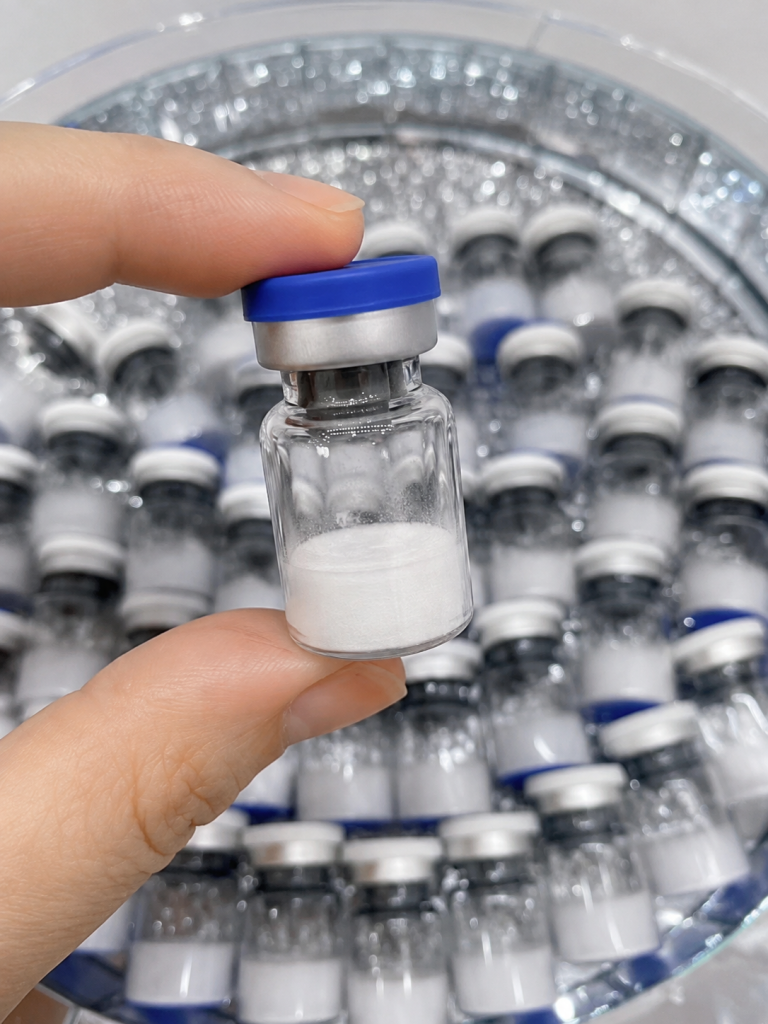
Sunone (Hong Kong) Biopharmaceutical International Technology Co., Limited supplies Vasoactive Intestinal Peptide for qualified laboratory research and biotechnology manufacturing applications.
Current listed product information includes:
Product: Vasoactive Intestinal Peptide
Abbreviation: VIP
Sequence Length: 28 amino acids
Listed CAS: 37221-79-7
Listed Molecular Formula: C147H237N43O43S
Listed Molecular Weight: 3326.8 g/mol
Grade: Research Grade
Purity Specification: ≥99% HPLC
Form: Lyophilized Powder
Storage: 2–8°C, protected from light
Documentation: COA, SDS and Specification Sheet available
Current B2B formats include 5 mg × 10 vials and 10 mg × 10 vials, subject to availability and project requirements.
Because VIP and Aviptadil terminology can vary across databases, buyers should confirm the exact sequence, terminal form, molecular identity and applicable batch-specific COA before use.
Looking for a VIP peptide supplier with analytical documentation and B2B production support?
View Sunone VIP Peptide Specifications :
Send Sunone your required quantity, vial format, analytical-documentation requirements and OEM/ODM needs for a current quotation.
FAQ
Is VIP the same as Aviptadil?
They are very closely related terms, but major chemical databases maintain separate substance records and CAS identifiers. Buyers should verify the precise molecular and terminal form rather than treating the names as automatically interchangeable.
How many amino acids are in VIP?
Human Vasoactive Intestinal Peptide contains 28 amino-acid residues.
What receptors does VIP interact with?
VIP is principally associated with the VPAC1 and VPAC2 receptors.
Does ≥99% HPLC prove VIP identity?
No. HPLC purity and complete molecular identity are separate analytical questions.
What should buyers request from a VIP supplier?
Depending on the intended laboratory application, buyers may consider requesting a batch-specific COA, HPLC data, appropriate MS/LC-MS identity information, exact sequence/terminal-form specification, SDS and lot traceability.
This content is provided for scientific and educational purposes only. SUNONE research peptide is for qualified labrtorynt, diagnois, druc tor mmatct or veteimant, use.research only, Not for human consumption, clinical treame. Purchasers are responsible for complying with applicable laws and regulations in their jurisdiction.
Leave a Reply