
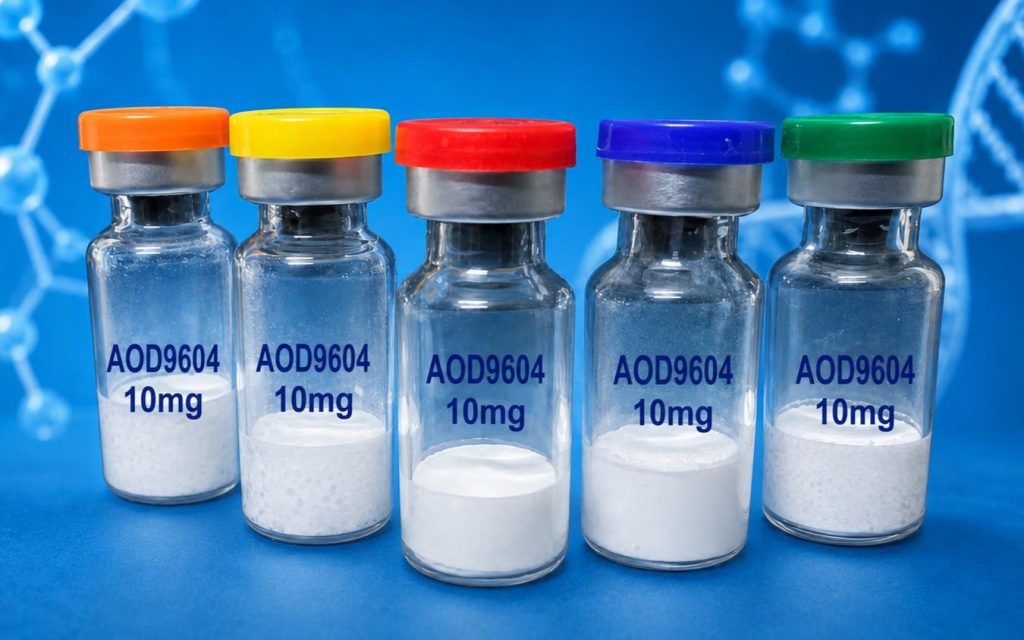
Search for AOD-9604 peptide online and you will encounter many descriptions involving fat metabolism, HGH fragments and body-composition research.
But there is an important distinction researchers should make:
What has actually been demonstrated in experimental studies, and what remains unproven?
AOD-9604, also written as AOD9604 or AOD 9604, is a synthetic peptide related to the C-terminal region of human growth hormone (hGH). It has been investigated primarily in metabolic and lipid-biology research.
What Is AOD-9604?
AOD-9604 is a synthetic peptide associated with amino acids 177–191 of human growth hormone, with an additional tyrosine residue.
Key identifiers include:
- Product: AOD-9604
- CAS Number: 221231-10-3
- Sequence: YLRIVQCRSVEGSCGF
- Molecular Formula: C78H123N23O23S2
- Molecular Weight: approximately 1815.1 g/mol
- Form: Lyophilized peptide powder
- Research category: HGH-fragment and metabolic peptide research
The compound is also found in scientific databases under names associated with LAT-8881 and the HGH 177–191 region.
Why Has AOD-9604 Attracted Research Interest?
Early laboratory studies investigated AOD-9604 in obese animal models.
Published research reported changes involving lipolysis, lipid metabolism and fat oxidation in rodents. Researchers also examined whether these effects occurred through the same pathways used by intact human growth hormone.
Interestingly, experimental studies suggested that AOD-9604 did not interact with the human growth hormone receptor in the same way as full-length HGH.
That makes AOD-9604 scientifically interesting as a model for studying how a specific peptide fragment may behave differently from its parent hormone.
Animal Results Are Not the Same as Human Evidence
This distinction is important because online discussions can easily blur the two.
Positive findings involving AOD-9604 and fat metabolism came largely from preclinical models. They should not automatically be translated into claims that AOD-9604 produces predictable fat loss in humans.
Public discussions and user reviews are also inconsistent.
Some individuals report perceived changes in body composition, while others report little or no noticeable effect. Because these reports commonly involve diet changes, exercise or simultaneous use of other compounds, they cannot establish cause and effect.
For scientific readers, anecdotal reports should therefore remain separate from controlled experimental evidence.
Research Material Quality Is Another Question
Even when researchers are interested in the published biology of AOD-9604, they still need to confirm that the material used in laboratory work is appropriately characterized.
Important sourcing considerations include:
Peptide Identity
A product name alone does not confirm molecular identity.
Analytical methods such as mass spectrometry may help determine whether a research sample is consistent with the expected AOD-9604 molecule.
HPLC Purity
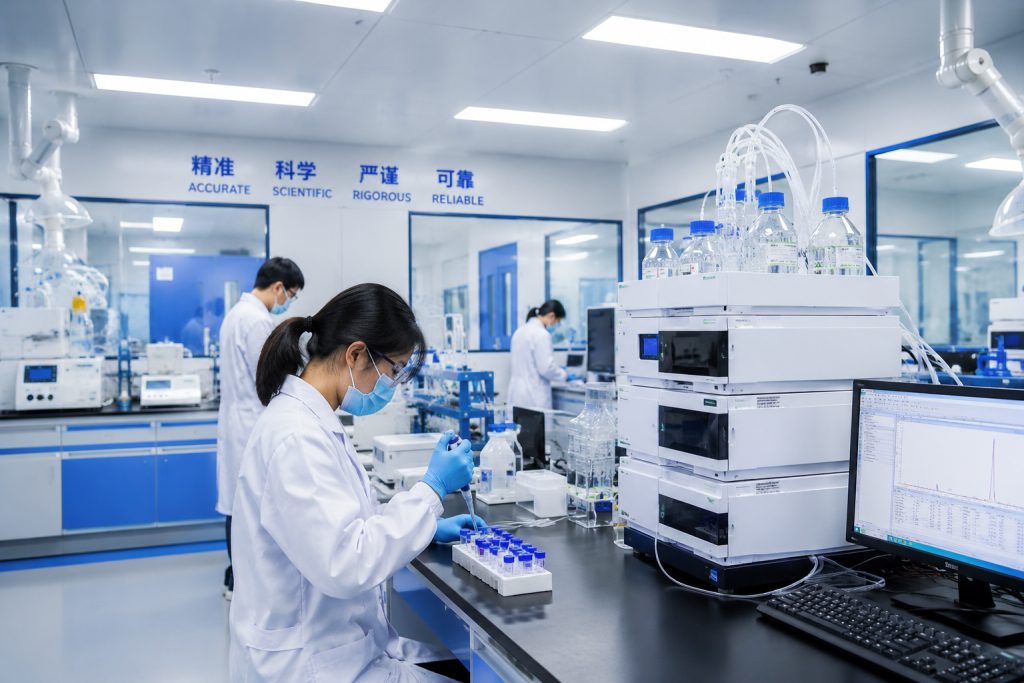
AOD-9604 HPLC analysis is commonly used to evaluate peptide purity and related components.
For reproducible research, laboratories should review analytical results linked to the actual supplied lot whenever possible.
Batch-Specific COA
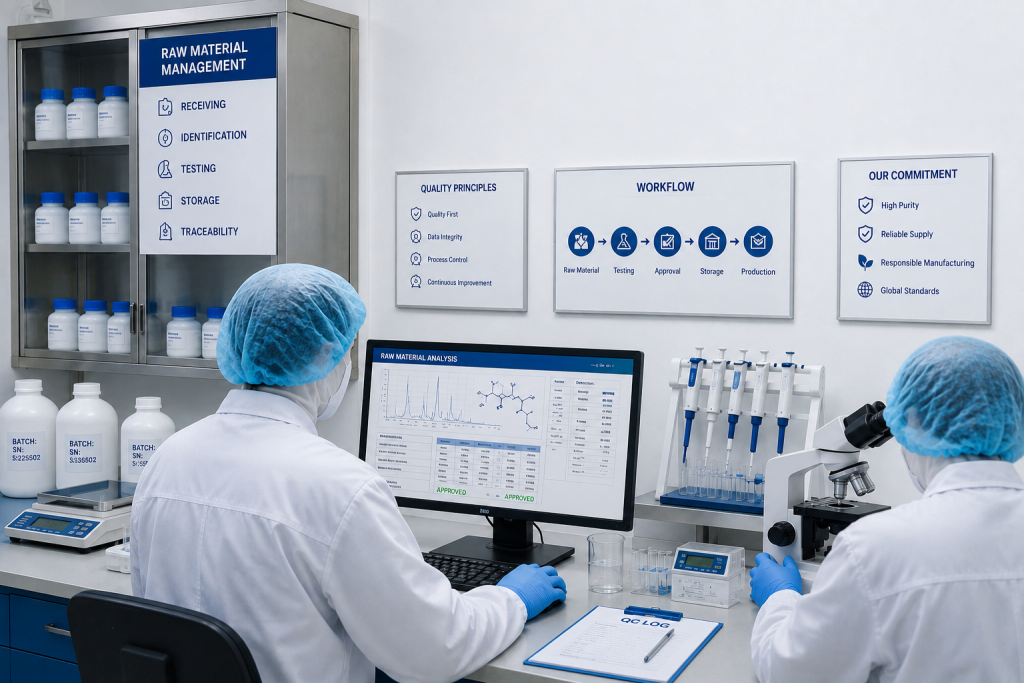
A Certificate of Analysis (COA) may include batch identification, purity results, analytical methods and release information.
Batch-specific documentation is particularly important because analytical results can vary between manufacturing lots.
Sunone AOD-9604 Research Peptide
Sunone (Hong Kong) Biopharmaceutical International Technology Co., Limited supplies AOD-9604 for qualified laboratory research and manufacturing applications.
Sunone AOD-9604 specifications include:
- CAS 221231-10-3
- Sequence YLRIVQCRSVEGSCGF
- ≥99% HPLC specification
- Lyophilized powder
- 2 mg, 5 mg and 10 mg research formats
- Batch-specific COA support
- Safety Data Sheet (SDS)
- Product specification documentation
View the Sunone AOD-9604 research peptide product page for current specifications and B2B sourcing information.
For biotechnology companies comparing an AOD-9604 supplier or peptide manufacturer, molecular identity, HPLC purity, batch traceability and analytical documentation should be considered together rather than relying on the product name or a purity percentage alone.
Final Perspective
AOD-9604 is an interesting example of how a small peptide fragment can generate a much larger scientific discussion.
Published animal studies provide a basis for continued investigation into AOD-9604, lipid metabolism, lipolysis and HGH-fragment biology.
At the same time, the available evidence also highlights an important principle:
Preclinical findings, human evidence and online testimonials are three different levels of information.
For laboratory researchers, separating those categories—and verifying the identity and quality of the material being studied—provides a more reliable foundation for AOD-9604 research.
This content is provided for scientific and educational purposes only. SUNONE research peptide is for qualified labrtorynt, diagnois, druc tor mmatct or veteimant, use.research only, Not for human consumption, clinical treame. Purchasers are responsible for complying with applicable laws and regulations in their jurisdiction.
Leave a Reply