
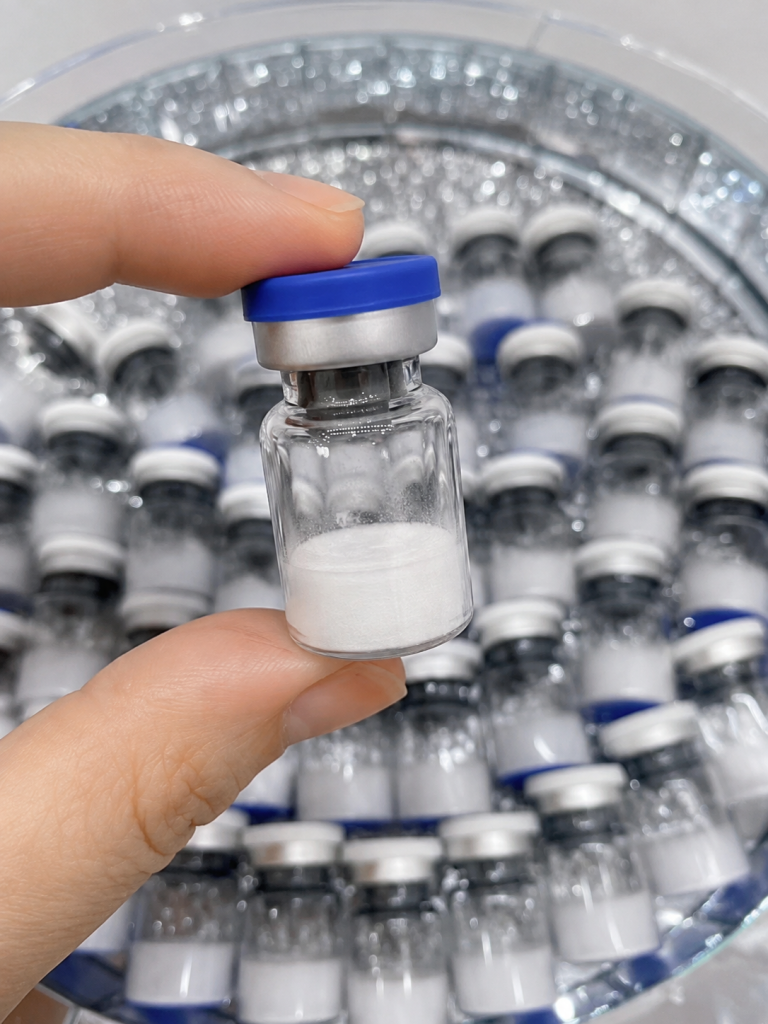
The name Delta Sleep-Inducing Peptide (DSIP) sounds unusually definitive.
It suggests a peptide with one obvious function: inducing deep, delta-wave sleep.
The scientific record, however, is considerably more interesting—and more complicated.
DSIP is a small nine-amino-acid neuropeptide studied in sleep physiology, circadian biology and neuroendocrine research. Historical studies have produced mixed findings, making DSIP a useful example of why a peptide’s name should not be treated as a therapeutic claim.
What Is DSIP?
DSIP, also known as Delta Sleep-Inducing Peptide or Emideltide, is a linear nonapeptide.
Key molecular information includes:
- CAS: 62568-57-4
- Sequence: Trp-Ala-Gly-Gly-Asp-Ala-Ser-Gly-Glu
- One-letter sequence: WAGGDASGE
- Molecular formula: C35H48N10O15
- Molecular weight: approximately 848.8 g/mol
- Length: 9 amino acids
Its compact sequence makes DSIP research peptide relevant not only to historical sleep studies but also to broader neuropeptide and analytical research.
Why Is It Called Delta Sleep-Inducing Peptide?
DSIP received its name from early experimental work associated with sleep-related EEG activity.
That historical name can create a misconception.
Published research has investigated DSIP in relation to sleep architecture, EEG activity, circadian rhythms, neuroendocrine signaling and other physiological processes. However, the evidence does not support treating the name itself as proof that DSIP reliably “induces deep sleep.”
Human Sleep Studies Have Produced Mixed Results
Historical human studies illustrate the uncertainty.
Some experiments reported changes in sleep efficiency, sleep latency or nighttime sleep.
Other controlled research found that although certain measurements changed, the overall clinical significance was limited. One placebo-controlled study concluded that short-term DSIP treatment was unlikely to provide major therapeutic benefit for chronic insomnia.
This distinction is important for scientific research.
A research signal is not the same as an established clinical effect.
Online Experiences Are Mixed Too
Public discussions about DSIP show a similar pattern.
Some individuals report perceived improvements in sleep depth or recovery, while others describe little or no noticeable change.
These experiences may explain continued interest in DSIP sleep research, but testimonials cannot establish peptide identity, purity or biological activity.
For laboratories, analytical documentation is more useful than consumer anecdotes.
What Should Researchers Verify When Sourcing DSIP?
For a DSIP peptide supplier, the product name alone is not enough.
Researchers should consider:
Sequence Identity
The expected DSIP sequence is WAGGDASGE.
Clear sequence documentation helps distinguish the intended nine-residue peptide from incorrectly identified research material.
HPLC Purity
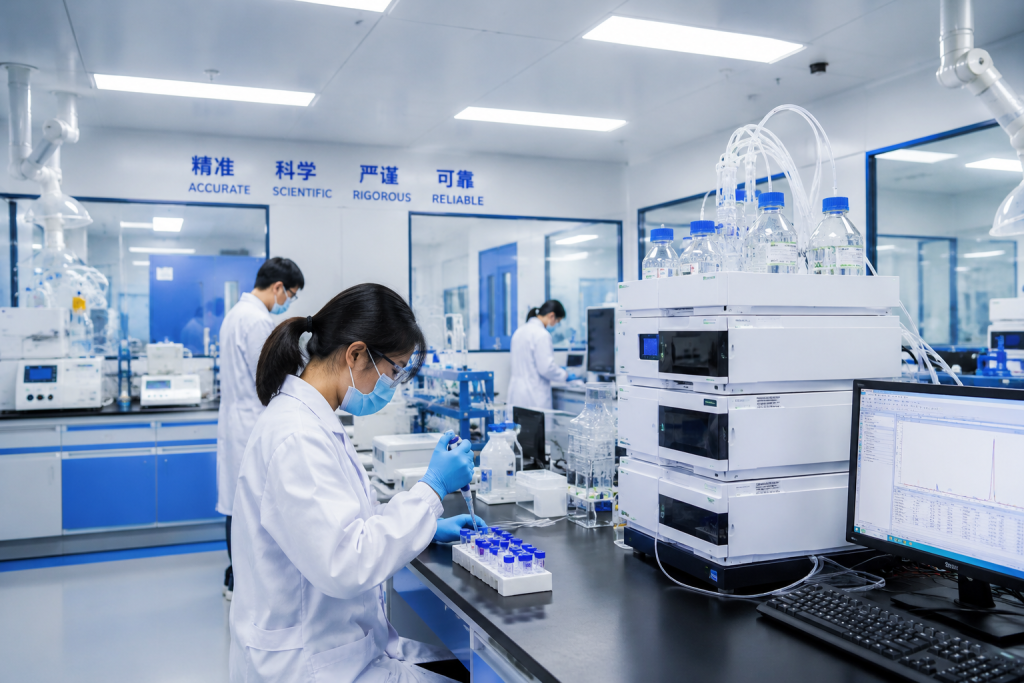
DSIP HPLC analysis can provide information about chromatographic purity and peptide-related impurities.
A lot-specific analytical result is more informative than a generic “high purity” statement.
Molecular Identity
Purity does not prove molecular identity.
Mass-based analytical techniques can provide additional evidence that the material corresponds to the expected DSIP molecule.
Batch-Specific COA
A DSIP Certificate of Analysis (COA) should ideally connect analytical results with the actual production lot.
This improves traceability and helps laboratories document research materials consistently.

Sunone DSIP Research Peptide
Sunone (Hong Kong) Biopharmaceutical International Technology Co., Limited supplies DSIP for qualified laboratory, scientific and manufacturing applications.
Current Sunone DSIP specifications include:
- CAS 62568-57-4
- Sequence WAGGDASGE
- ≥99% HPLC specification
- Lyophilized peptide format
- 5 mg and 10 mg research formats
- Certificate of Analysis documentation
- Safety Data Sheet
- Product specification documentation
- Storage at 2–8°C, protected from light
View the Sunone DSIP research peptide product page for current specifications and B2B sourcing information.
For laboratories comparing a DSIP supplier or peptide manufacturer, sequence identity, HPLC purity, analytical verification and batch traceability provide a stronger basis for procurement than claims based on the peptide’s name.
Final Perspective
DSIP demonstrates an important principle in peptide research:
A memorable biological name can be simpler than the science behind it.
Decades of research have explored DSIP in sleep, EEG, circadian and neuroendocrine models, yet the experimental record remains more nuanced than the phrase “sleep-inducing peptide” suggests.
For researchers, that uncertainty is not a weakness—it is precisely why careful experimental design and well-characterized research material matter.
This content is provided for scientific and educational purposes only. SUNONE research peptide is for qualified labrtorynt, diagnois, druc tor mmatct or veteimant, use.research only, Not for human consumption, clinical treame. Purchasers are responsible for complying with applicable laws and regulations in their jurisdiction.
Leave a Reply