
Search for Epithalon peptide online and you will quickly encounter terms such as telomeres, telomerase, cellular aging and longevity research.
But for scientists and biotechnology buyers, an important distinction comes first:
What has actually been studied, and how can the identity of an Epithalon research peptide be verified?
Epithalon, also widely spelled Epitalon, is a synthetic tetrapeptide with the amino-acid sequence Ala-Glu-Asp-Gly (AEDG). Its small four-residue structure has made it an interesting molecule for experimental peptide and cellular-biology research.
What Is Epithalon?
Epithalon is identified by several names in scientific and chemical searches:
- Product name: Epithalon / Epitalon
- Sequence: Ala-Glu-Asp-Gly
- Abbreviation: AEDG
- CAS number: 307297-39-8
- Molecular formula: C14H22N4O9
- Molecular weight: 390.35 g/mol
- Peptide class: Synthetic tetrapeptide
Because Epithalon contains only four amino-acid residues, it provides researchers with a relatively compact peptide model for analytical characterization and experimental biological studies.

Why Does Epithalon Appear in Telomere Research?
Some published laboratory studies have examined Epithalon and telomerase activity, including experiments involving cultured human fibroblasts.
Earlier cell-culture research reported changes involving telomerase activity and telomere length after exposure to Epithalon. More recent cellular research has continued investigating possible relationships among Epitalon, hTERT expression, telomerase activity and alternative telomere-lengthening mechanisms.
These findings explain why search terms such as Epithalon telomere research, Epitalon telomerase research and AEDG peptide research continue to attract scientific interest.
However, laboratory observations should not automatically be interpreted as established anti-aging effects in humans.
Cellular research and therapeutic evidence are not the same thing.
What Should Laboratories Verify When Sourcing Epithalon?
Search results for Epithalon suppliers increasingly emphasize analytical documentation rather than the product name alone.
For professional research procurement, several factors deserve attention.
HPLC Purity
Epithalon HPLC analysis can help evaluate peptide purity and related components within a sample.
A percentage shown on a product page is most useful when it can be connected to the actual production batch.
Molecular Identity
Purity and identity are different analytical questions.
Techniques such as mass spectrometry or LC-MS can provide evidence that the analyzed material is consistent with the expected Epithalon peptide molecular identity.
Batch-Specific COA
A useful Epithalon Certificate of Analysis (COA) should be associated with a specific production lot whenever possible.
Batch traceability helps research laboratories connect the supplied material with its analytical records rather than relying on a generic certificate.
Storage and Physical Form
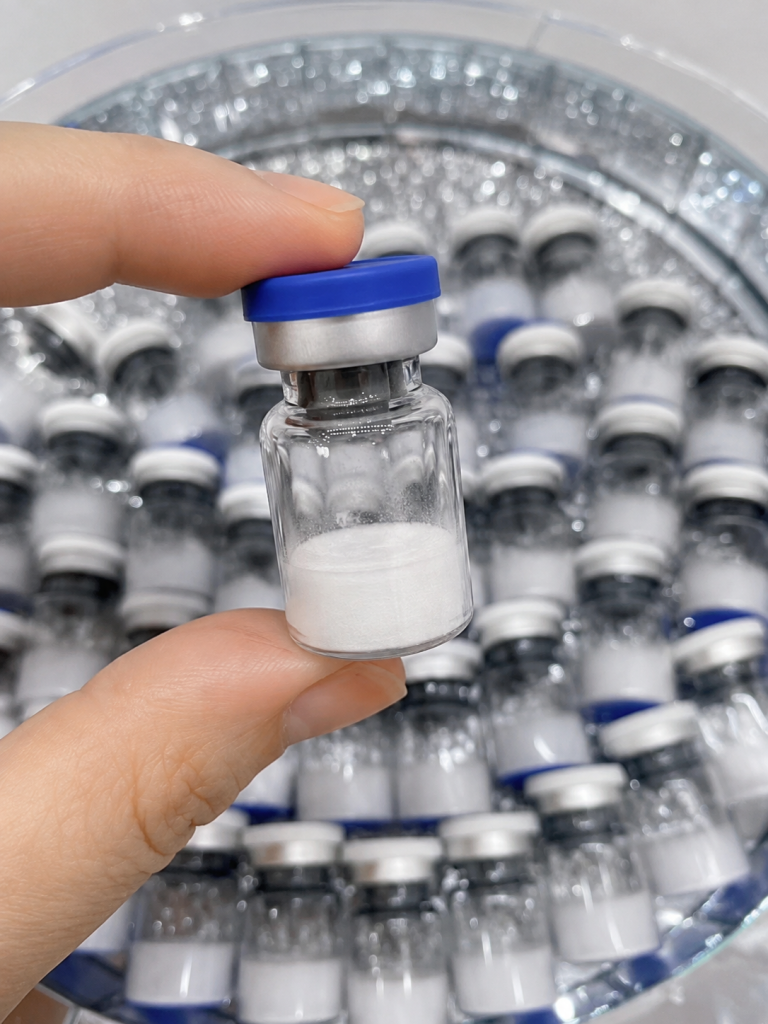
Research Epithalon is commonly supplied as a lyophilized peptide powder.
Storage requirements should follow the applicable product specification and batch documentation to help maintain material integrity during laboratory handling.
Epithalon Research Peptide from Sunone
Sunone (Hong Kong) Biopharmaceutical International Technology Co., Limited supplies Epithalon for qualified laboratory, analytical and scientific research applications.
Sunone Epithalon specifications include:
- Ala-Glu-Asp-Gly (AEDG) sequence
- CAS 307297-39-8
- ≥99% HPLC purity specification
- Lyophilized powder
- 10 mg and 50 mg research formats
- Certificate of Analysis documentation
- Safety Data Sheet
- Batch-related analytical documentation
View the Sunone Epithalon research peptide product page for current specifications, documentation and B2B inquiry information.
For biotechnology companies comparing an Epithalon supplier or peptide manufacturer, peptide identity, HPLC purity, batch documentation and traceability should be evaluated alongside commercial considerations such as pack size, lead time and manufacturing capacity.
Final Perspective
Epithalon is a structurally simple peptide associated with a surprisingly complex area of biological research.
Its AEDG tetrapeptide sequence, published cellular studies and continued interest in telomere biology make it a useful subject for qualified laboratory investigation.
At the same time, strong search interest should not replace analytical verification.
For research buyers, the practical questions remain straightforward:
Is the peptide identity verified? Is purity supported by analytical data? And does the COA correspond to the actual supplied batch?
Those questions provide a stronger foundation for scientific procurement than marketing claims alone.
This content is provided for scientific and educational purposes only. SUNONE research peptide is for qualified labrtorynt, diagnois, druc tor mmatct or veteimant, use.research only, Not for human consumption, clinical treame. Purchasers are responsible for complying with applicable laws and regulations in their jurisdiction.
Leave a Reply