
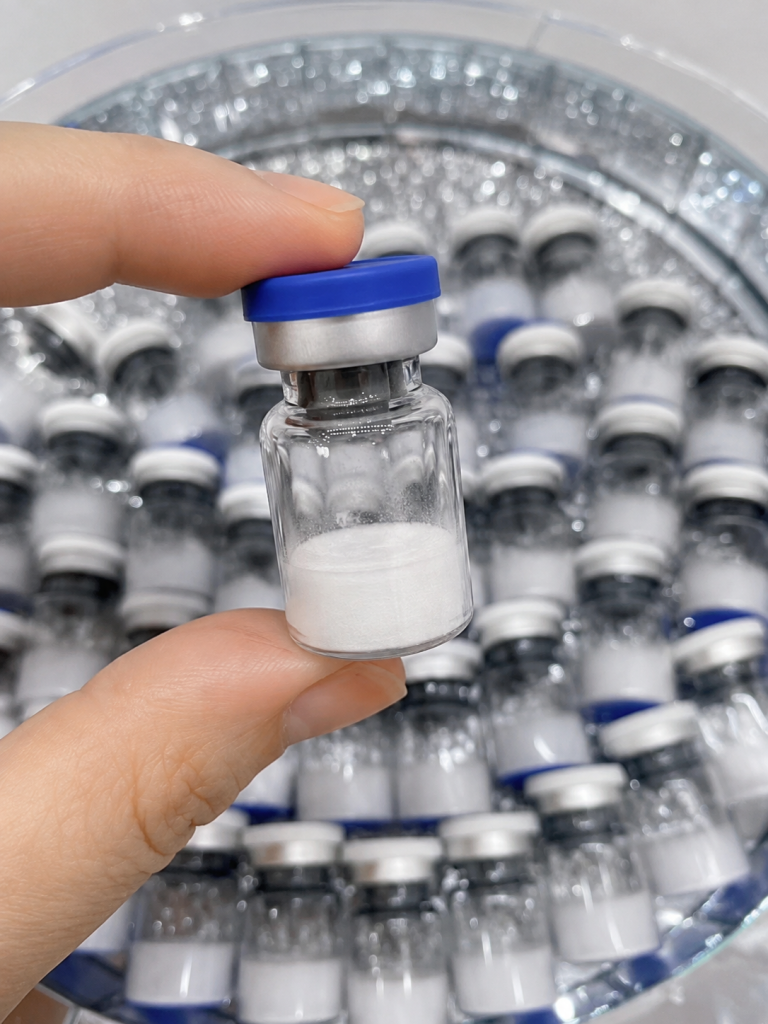
Search for PT-141 peptide and another name appears almost immediately:
Bremelanotide.
Search a little further and you will encounter Vyleesi, MC4R, melanocortin receptors, Melanotan II, HPLC purity and numerous online reviews.
These terms are scientifically connected—but they should not all be treated as descriptions of the same finished product.
For laboratories sourcing PT-141 research peptide, understanding that distinction is an important part of material qualification.
What Is PT-141?
PT-141, also known as Bremelanotide, is a synthetic cyclic heptapeptide associated with melanocortin receptor research.
Key molecular identifiers include:
- Name: PT-141 / Bremelanotide
- CAS: 189691-06-3
- Molecular formula: C50H68N14O10
- Molecular weight: approximately 1025.16 g/mol
- Peptide class: Synthetic cyclic heptapeptide
- Research area: Melanocortin receptor pharmacology
PT-141 originated from research involving the Melanotan II scaffold but has a distinct molecular and pharmacological profile.
Why Does MC4R Appear in PT-141 Research?
Much of the scientific interest in PT-141 concerns the melanocortin receptor system.
In particular, research frequently discusses MC4R and, to a lesser extent, other melanocortin receptors.
This explains why Google searches for PT-141 often overlap with terms such as:
MC4R agonist, melanocortin receptor agonist, alpha-MSH analog, melanocortin peptide and receptor pharmacology.
For laboratories, these pathways make PT-141 relevant to controlled receptor-binding and melanocortin-signaling research.

Is Research-Grade PT-141 the Same as Vyleesi?
No—not as a finished product.
Bremelanotide is also the active ingredient associated with an authorized prescription drug product.
However, regulatory authorization applies to the specific approved pharmaceutical product, including its formulation, manufacturing controls, delivery system, labeling and intended use.
A lyophilized PT-141 research peptide sold as laboratory material should not therefore be represented as an FDA-approved drug simply because the molecule is also known as bremelanotide.
Molecular identity and finished-product regulatory status are different concepts.
What Do Online Reviews Actually Tell Us?
Public reviews of prescription bremelanotide are mixed.
Some patients report positive experiences, while others describe limited effects. Negative reports frequently mention nausea, vomiting, headache, flushing or fatigue.
These experiences may help explain why PT-141 reviews and bremelanotide reviews receive significant search interest.
But they do not establish the quality or performance of an independently sourced research peptide.
For laboratory procurement, a testimonial cannot replace analytical data.
What Should Researchers Verify When Sourcing PT-141?
Molecular Identity
A supplier should clearly identify the material as PT-141/Bremelanotide with the applicable molecular specifications.
Mass-spectrometry data can provide evidence supporting molecular identity.
HPLC Purity
PT-141 HPLC analysis provides information about chromatographic purity and related components.
Researchers should preferably evaluate data associated with the actual production lot.
Batch-Specific COA
A PT-141 Certificate of Analysis (COA) should identify the corresponding batch and its analytical results.
A generic certificate or “99% purity” statement provides less traceability than lot-specific documentation.
Identity and Purity Are Different
This distinction is particularly important in peptide sourcing.
A high HPLC purity percentage does not, by itself, establish that the material is the intended molecule.
Combining chromatographic purity information with appropriate identity testing provides a stronger analytical picture.
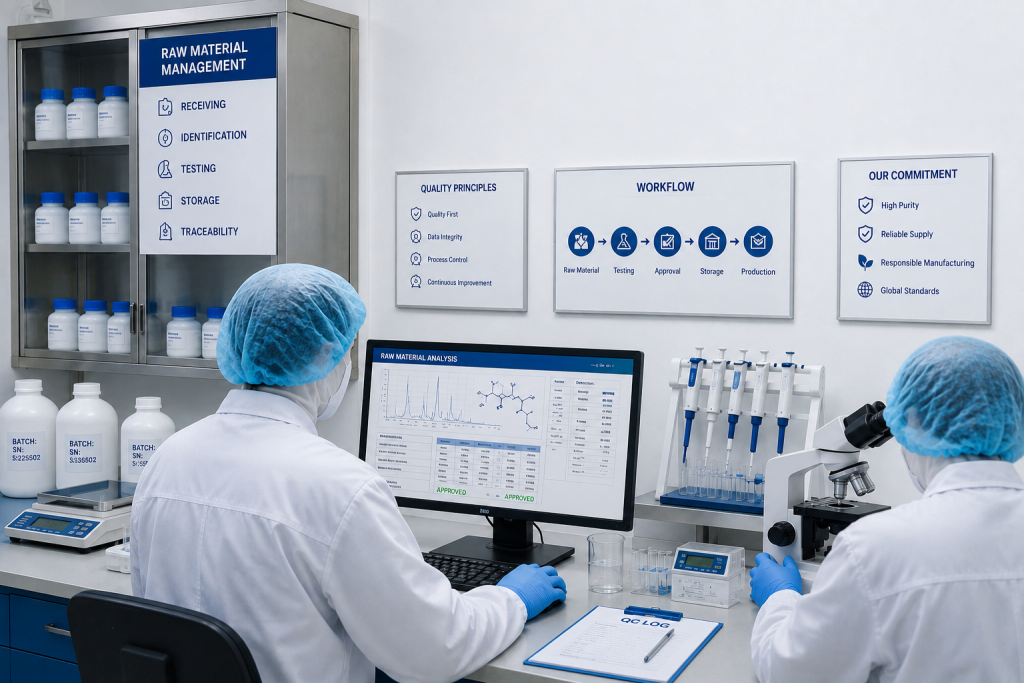
Sunone PT-141 (Bremelanotide) Research Peptide
Sunone (Hong Kong) Biopharmaceutical International Technology Co., Limited supplies PT-141 for qualified laboratory, analytical and manufacturing applications.
Current Sunone product specifications include:
- CAS 189691-06-3
- Molecular formula C50H68N14O10
- Molecular weight approximately 1025.16 g/mol
- Lyophilized peptide powder
- 5 mg and 10 mg research formats
- HPLC analytical documentation
- Mass-spectrometry identity data available by batch
- Certificate of Analysis
- Safety Data Sheet
- OEM/ODM and bulk manufacturing support
View the Sunone PT-141 (Bremelanotide) research peptide product page for current specifications, batch documentation and B2B sourcing information.
For biotechnology companies comparing a PT-141 supplier, Bremelanotide supplier or peptide manufacturer, molecular identity, HPLC purity, MS verification and batch traceability should be evaluated separately from consumer reviews or pharmaceutical marketing claims.
Final Perspective
PT-141 illustrates an important issue in modern peptide sourcing:
The same molecular name can appear in scientific literature, an approved medicine and a research-material catalog without making those finished products equivalent.
For research buyers, the useful questions are therefore straightforward:
Is the molecule correctly identified?
Is HPLC purity supported by batch data?
Is MS identity information available?
And does the COA correspond to the material actually supplied?
Those questions provide a stronger foundation for reproducible PT-141 and melanocortin receptor research.
This content is provided for scientific and educational purposes only. SUNONE research peptide is for qualified labrtorynt, diagnois, druc tor mmatct or veteimant, use.research only, Not for human consumption, clinical treame. Purchasers are responsible for complying with applicable laws and regulations in their jurisdiction.
Leave a Reply