
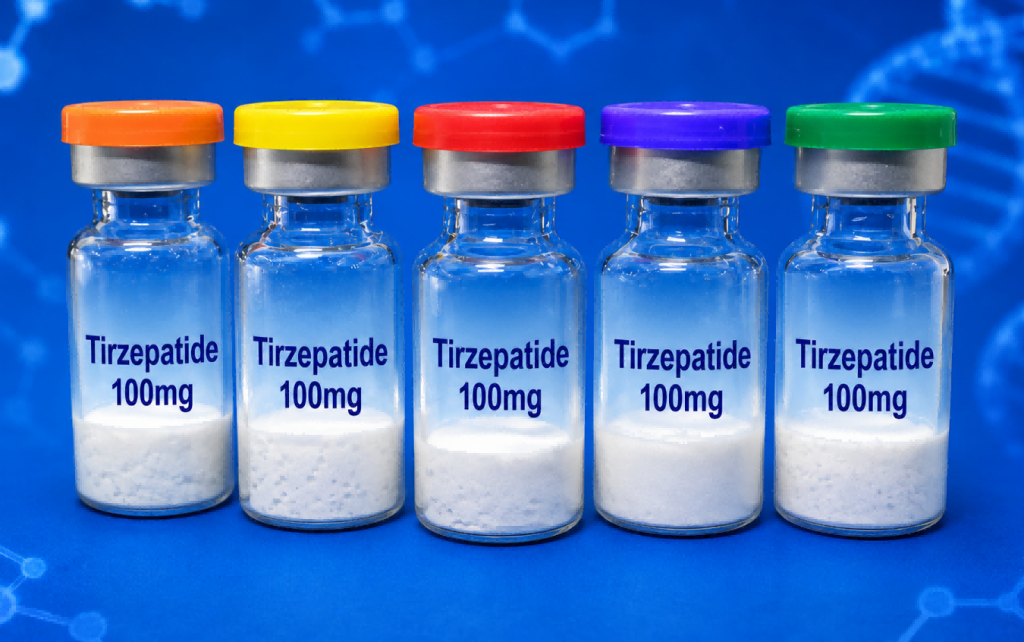
Tirzepatide has become an important molecule in modern incretin and metabolic research. Also known by its development code LY3298176, Tirzepatide is a synthetic peptide designed to interact with both glucose-dependent insulinotropic polypeptide (GIP) and glucagon-like peptide-1 (GLP-1) receptors.
This dual-receptor profile has made the Tirzepatide research peptide particularly relevant to laboratories studying incretin signaling, receptor pharmacology and metabolic pathways.
What Makes Tirzepatide Different?
Unlike compounds that selectively target the GLP-1 receptor, Tirzepatide combines GIP and GLP-1 receptor agonism within a single peptide molecule.
Tirzepatide is a 39-amino-acid synthetic peptide derived from a GIP-based sequence and incorporates structural modifications designed to influence its pharmacological properties.
Common identifiers include:
- Product: Tirzepatide
- Development code: LY3298176
- CAS number: 2023788-19-2
- Molecular formula: C225H348N48O68
- Molecular weight: approximately 4813 g/mol
- Research category: Dual GIP/GLP-1 receptor agonist
These characteristics have made Tirzepatide an established reference molecule for incretin research and metabolic pathway studies.

Why Is Tirzepatide Important in Research?
The scientific interest surrounding Tirzepatide extends beyond a single biological pathway.
Published studies have investigated Tirzepatide in areas involving GIP and GLP-1 receptor signaling, glucose-dependent pathways, insulin sensitivity, appetite regulation, body-weight regulation and broader metabolic biology.
Clinical research has reported substantial effects on glycemic control and body weight. At the same time, gastrointestinal adverse events—including nausea, diarrhea and vomiting—have also been documented.
For laboratory researchers, these findings continue to generate questions surrounding dual-receptor signaling and how combined GIP/GLP-1 activity differs from selective GLP-1 receptor activation.
What Should Researchers Look for When Sourcing Tirzepatide?
For research applications, the name on a vial is only part of the equation.
Reliable Tirzepatide peptide sourcing should focus on analytical identity, purity and batch traceability. Depending on the intended research application, laboratories may evaluate documentation such as:
HPLC analysis — used to assess peptide purity and related components.
Mass spectrometry (MS) — useful for confirming molecular identity.
Certificate of Analysis (COA) — provides batch-specific analytical information.
Batch traceability — helps laboratories connect supplied material with its manufacturing and quality documentation.
Lyophilized format — commonly used for research peptide supply and laboratory handling.
These quality attributes can be particularly important when comparing a Tirzepatide supplier or peptide manufacturer, because reproducible research begins with well-characterized material.

Tirzepatide Research Peptide from Sunone
Sunone (Hong Kong) Biopharmaceutical International Technology Co., Limited supplies Tirzepatide research peptide for qualified laboratory, biotechnology and R&D applications.
Our Tirzepatide is supplied in lyophilized form with batch-related analytical documentation available for qualified buyers.
Researchers and biotechnology companies can view specifications, available formats and product information on our dedicated Tirzepatide product page:
For laboratories evaluating Tirzepatide peptide suppliers, OEM/ODM requirements or larger-volume research sourcing, product specifications and analytical documentation should be reviewed before procurement.
Final Thoughts
Tirzepatide represents an important development in dual GIP/GLP-1 receptor agonist research.
Its distinctive receptor profile has expanded scientific interest in incretin signaling and metabolic pathway research, while also highlighting the importance of rigorous analytical characterization when sourcing research peptides.
As research around Tirzepatide, GIP, GLP-1 and next-generation multi-receptor peptides continues to develop, reliable peptide identity, purity and batch documentation will remain essential considerations for laboratories and biotechnology organizations.
This content is provided for scientific and educational purposes only. SUNONE research peptide is for qualified labrtorynt, diagnois, druc tor mmatct or veteimant, use.research only, Not for human consumption, clinical treame. Purchasers are responsible for complying with applicable laws and regulations in their jurisdiction.
Leave a Reply