
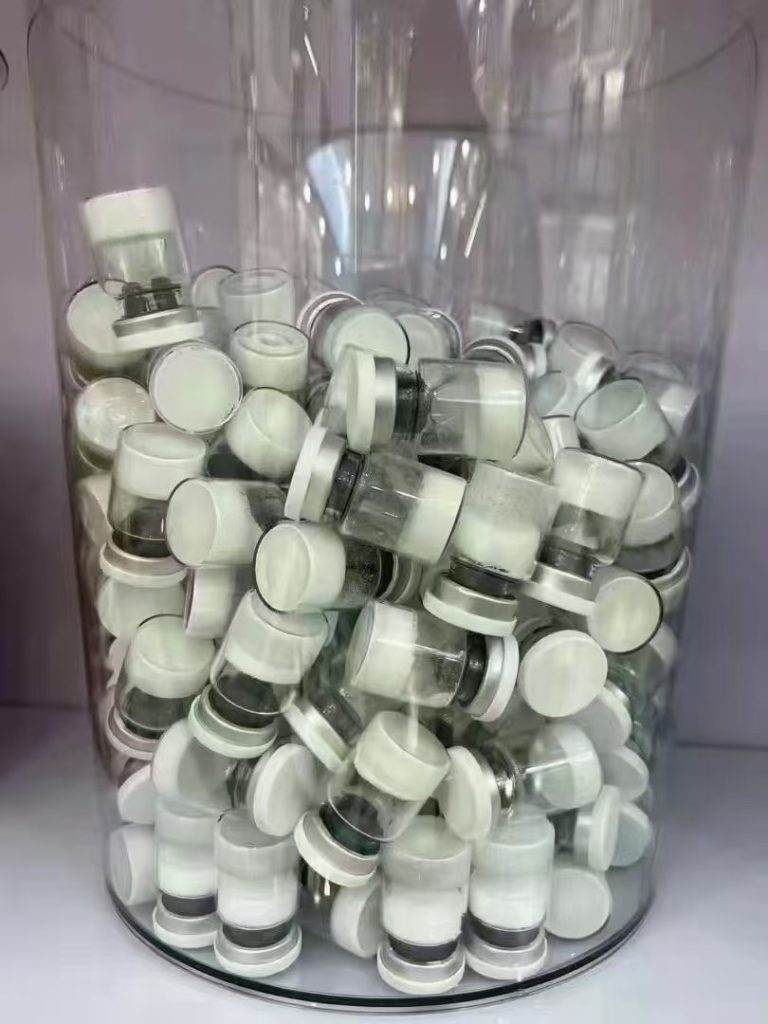
KPV is one of the smallest peptides attracting growing research interest.
Its sequence contains only three amino acids:
Lys-Pro-Val.
That simplicity can be misleading.
KPV, also known as MSH (11-13), is the C-terminal tripeptide associated with alpha-melanocyte-stimulating hormone research. Experimental studies have investigated KPV in inflammatory signaling, epithelial biology and intestinal research models.
But an important distinction is often lost in online discussions:
Most of the frequently cited KPV evidence is preclinical—not established human clinical evidence.
What Is KPV?
KPV is a short synthetic tripeptide consisting of lysine, proline and valine.
Key molecular identifiers include:
- Name: KPV
- Synonyms: Lys-Pro-Val, Lysyl-Prolyl-Valine, MSH (11-13)
- CAS: 67727-97-3
- Molecular formula: C16H30N4O4
- Molecular weight: approximately 342.43 g/mol
- Sequence: Lys-Pro-Val
- Research category: Inflammatory signaling and epithelial biology research
Because it contains only three amino acids, KPV is structurally much smaller than many commonly studied research peptides.
Small size, however, does not make its biology simple.
Why Does PepT1 Appear in KPV Research?
One of the most frequently cited KPV studies investigated the peptide transporter PepT1.
In intestinal epithelial and immune-cell experiments, researchers found that KPV uptake was associated with PepT1 and that KPV influenced inflammatory signaling involving NF-κB, MAP kinase pathways and pro-inflammatory cytokines.
Related effects were also investigated in mouse models of intestinal inflammation.
This explains why search terms such as:
KPV PepT1, KPV NF-kB, KPV intestinal inflammation and KPV epithelial cells
frequently appear together in scientific searches.
These studies provide useful mechanistic hypotheses.
They do not, however, establish that KPV treats inflammatory disease in humans.

Preclinical Evidence Is Not Human Clinical Evidence
This distinction is especially important for KPV.
Cell-culture studies and animal models have investigated KPV in inflammatory and intestinal research.
That evidence helps researchers formulate hypotheses about peptide transport, signaling and epithelial responses.
But controlled laboratory findings cannot automatically be converted into statements about clinical efficacy or safety.
Current regulatory reviews have also highlighted the limited human evidence available for KPV.
For scientific buyers, the more accurate description is therefore:
KPV is an experimental research peptide with interesting preclinical biology and substantial unanswered questions about human translation.
Is KPV Simply an MC1R Peptide?
Not necessarily.
KPV originates from the C-terminal region of alpha-MSH, so melanocortin biology frequently appears in KPV literature.
However, experimental findings suggest that not every observed KPV effect can be explained through one simple melanocortin-receptor pathway.
Different studies have examined PepT1 transport, NF-κB signaling, inflammatory mediators and melanocortin-related mechanisms.
This makes KPV mechanism of action a more complex research question than the phrase “alpha-MSH fragment” might suggest.
What Do Online KPV Reviews Tell Us?
Public experiences are highly mixed.
Some users report perceived changes in skin, gastrointestinal or inflammatory symptoms.
Others report no noticeable effect, while some describe unwanted reactions.
These testimonials can help researchers understand public search interest, but they cannot establish:
- molecular identity,
- purity,
- pharmacological activity,
- human safety,
- efficacy, or
- experimental reproducibility.
For professional laboratory procurement, analytical evidence is more useful than anecdotal reviews.
What Should Researchers Check When Sourcing KPV?
Exact Chemical Identity
KPV should be identified specifically as Lys-Pro-Val, CAS 67727-97-3.
Researchers should also verify the applicable termini, salt form and batch specification because KPV free base and KPV acetate should not automatically be treated as analytically identical materials.
HPLC Purity
KPV HPLC analysis provides information about chromatographic purity and related components.
A batch-specific chromatogram provides more useful procurement information than a generic percentage printed on a product page.
Molecular Identity
Purity and identity are separate analytical questions.
Mass-spectrometry or other appropriate analytical methods can provide additional evidence that the supplied material corresponds to the expected KPV molecule.
Batch-Specific COA
A KPV Certificate of Analysis (COA) should connect the analytical results to the lot actually supplied.
Lot number, purity data and applicable identity testing improve traceability across laboratory studies.

Sunone KPV Research Peptide
Sunone (Hong Kong) Biopharmaceutical International Technology Co., Limited supplies KPV for qualified laboratory, analytical and manufacturing applications.
Current Sunone KPV product information includes:
- CAS 67727-97-3
- Sequence Lys-Pro-Val
- Molecular formula C16H30N4O4
- Molecular weight approximately 342.43 g/mol
- Research-grade lyophilized powder
- 5 mg and 10 mg formats
- Batch-specific Certificate of Analysis
- Safety Data Sheet
- Product specification documentation
- Storage at 2–8°C, protected from light
View the Sunone KPV research peptide product page for current technical specifications, analytical documentation and B2B sourcing information.
For biotechnology companies comparing a KPV peptide supplier or peptide manufacturer, exact molecular identity, salt form, chromatographic purity and lot-specific analytical documentation provide a stronger procurement framework than consumer testimonials.
Final Perspective
KPV demonstrates an important principle in peptide research:
A small molecule can still raise large scientific questions.
The three-amino-acid sequence Lys-Pro-Val has produced interesting findings in cellular and animal research involving PepT1, NF-κB, epithelial biology and inflammatory pathways.
At the same time, the gap between preclinical findings and validated human evidence remains important.
For reproducible KPV research, laboratories should therefore ask:
Which molecular form is being studied?
Is identity analytically supported?
Does the purity result belong to the actual batch?
And is the biological claim supported by the same type of experimental evidence being discussed?
Those questions provide a stronger foundation for responsible KPV research.
This content is provided for scientific and educational purposes only. SUNONE research peptide is for qualified labrtorynt, diagnois, druc tor mmatct or veteimant, use.research only, Not for human consumption, clinical treame. Purchasers are responsible for complying with applicable laws and regulations in their jurisdiction.
Leave a Reply