
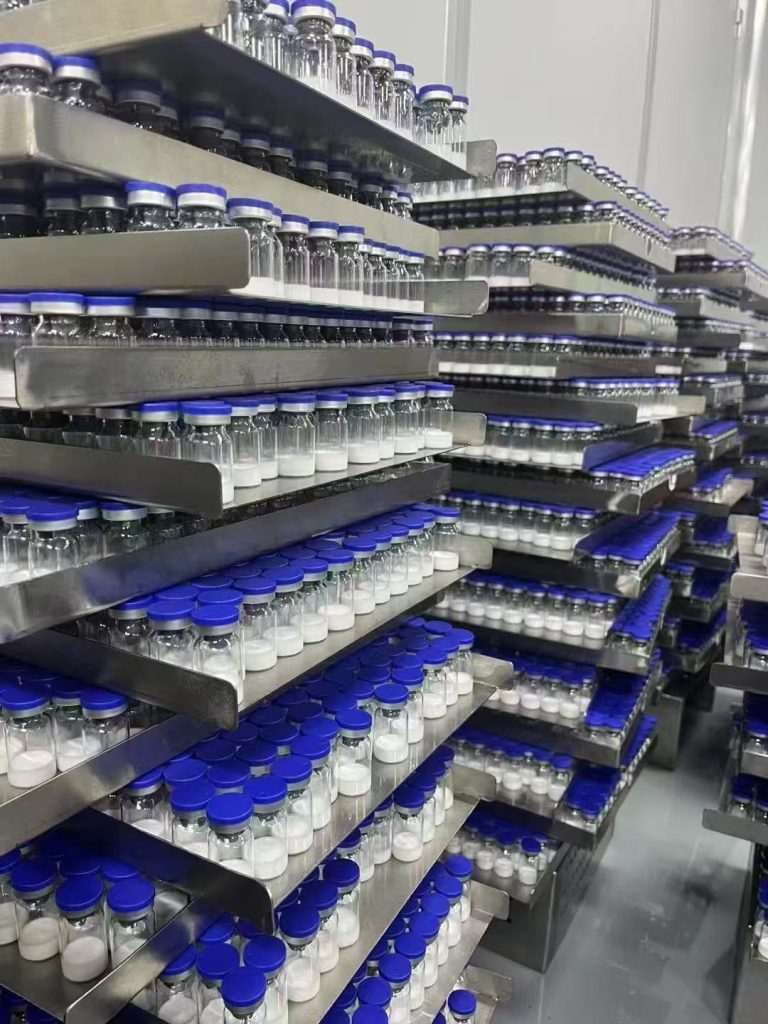
Melanotan II is commonly associated with pigmentation research.
Scientifically, however, that description is incomplete.
Melanotan II (MT-2) is a cyclic analog of alpha-melanocyte-stimulating hormone (α-MSH) that interacts with multiple melanocortin receptor pathways.
That multi-receptor profile helps explain why MT-2 research extends beyond melanogenesis and why laboratories should distinguish it carefully from Melanotan I and other melanocortin peptides.
What Is Melanotan II?
Melanotan II, also written as Melanotan 2, MT-2 or MT-II, is a synthetic cyclic melanocortin peptide.
Key molecular identifiers include:
- CAS: 121062-08-6
- Molecular formula: C50H69N15O9
- Molecular weight: approximately 1024.18 g/mol
- Research category: α-MSH analog / melanocortin receptor agonist
- Typical form: Lyophilized peptide
Its cyclic structure distinguishes MT-2 from native α-MSH and contributes to its value as a research molecule for studying melanocortin signaling.
Why Is MT-2 More Than an MC1R Research Peptide?
MC1R is strongly associated with melanogenesis and pigmentation, so it receives much of the attention surrounding Melanotan II.
But MT-2 is not simply an MC1R-selective research molecule.
Experimental literature describes Melanotan II as a non-selective melanocortin receptor agonist.
Research has therefore investigated pathways involving melanocortin receptors including MC1R, MC3R and MC4R, among others.
This provides an important lesson for experimental design:
observing a biological response to MT-2 does not automatically mean that only MC1R is responsible.
The receptor context of the experimental model matters.

Melanotan II vs Melanotan I
Melanotan I and Melanotan II are frequently grouped together online.
They should not be treated as interchangeable molecules.
Both are related to α-MSH research, but their structures and receptor profiles differ.
Melanotan I is closely associated with the development of afamelanotide, whereas Melanotan II is a distinct cyclic peptide with a broader melanocortin receptor research profile.
For laboratories, the distinction should be maintained in:
- literature reviews,
- receptor assays,
- analytical methods,
- reference standards, and
- procurement documentation.
Melanotan II and PT-141 Are Also Different
Another common search is Melanotan II vs PT-141.
PT-141, also known as Bremelanotide, emerged from melanocortin peptide research but is a separate molecular entity.
The existence of related melanocortin compounds does not make their analytical identities interchangeable.
A COA, HPLC chromatogram or mass-spectrum reference intended for one peptide should not automatically be used to characterize another.
What Do Online Melanotan II Reviews Tell Us?
Public reviews of Melanotan II are mixed.
Some users describe noticeable pigmentation changes. Others report nausea, flushing, fatigue, appetite changes or darkening of existing freckles and moles.
There are also reports of little or no perceived effect.
These anecdotes may help explain online search interest, but they cannot establish:
- molecular identity,
- peptide purity,
- receptor selectivity,
- safety,
- biological potency, or
- batch consistency.
For professional research procurement, consumer testimonials cannot replace analytical documentation.
What Should Researchers Check When Sourcing MT-2?
1. Exact Molecular Identity
The supplied material should correspond specifically to Melanotan II / MT-2, CAS 121062-08-6.
Similar names within the melanocortin peptide family should not be treated as equivalent.
2. HPLC Purity
Melanotan II HPLC analysis can provide information about chromatographic purity and peptide-related components.
Where possible, researchers should evaluate data associated with the actual production batch.
3. Mass-Spectrometry Identity
A high HPLC purity percentage does not independently prove that the principal peak is the expected MT-2 molecule.
LC-MS or mass-spectrometry data can provide additional evidence supporting molecular identity.
4. Batch-Specific COA
A Melanotan II Certificate of Analysis (COA) should connect analytical results to the supplied production lot.
Batch traceability becomes particularly important when experimental results are compared across different lots.

Sunone Melanotan II Research Peptide
Sunone (Hong Kong) Biopharmaceutical International Technology Co., Limited supplies Melanotan II for qualified laboratory, analytical and biopharmaceutical manufacturing applications.
Current Sunone product information includes:
- Melanotan II / Melanotan 2 / MT-2
- CAS 121062-08-6
- Molecular formula C50H69N15O9
- Molecular weight approximately 1024.18 g/mol
- ≥99% HPLC specification
- Lyophilized peptide
- 5 mg and 10 mg formats
- Certificate of Analysis
- Safety Data Sheet
- Product specification documentation
- Batch analytical documentation where applicable
View the Sunone Melanotan II MT-2 research peptide product page for current specifications, analytical documentation and B2B sourcing information.
For biotechnology companies comparing a Melanotan II supplier, MT-2 peptide manufacturer or melanocortin research peptide supplier, exact molecular identity, chromatographic purity, mass confirmation and lot traceability provide a stronger procurement framework than online testimonials.
Final Perspective
Melanotan II demonstrates why receptor biology matters in peptide research.
Calling MT-2 simply a “pigmentation peptide” overlooks its broader melanocortin receptor profile.
For reproducible research, laboratories should therefore ask:
Which melanocortin pathway is relevant to the experimental model?
Is the exact MT-2 molecule identified?
Does HPLC support chromatographic purity?
Does mass spectrometry support molecular identity?
And does the COA correspond to the supplied batch?
Those questions provide a stronger foundation for Melanotan II research than relying on pigmentation claims alone.
This content is provided for scientific and educational purposes only. SUNONE research peptide is for qualified labrtorynt, diagnois, druc tor mmatct or veteimant, use.research only, Not for human consumption, clinical treame. Purchasers are responsible for complying with applicable laws and regulations in their jurisdiction.
Leave a Reply