
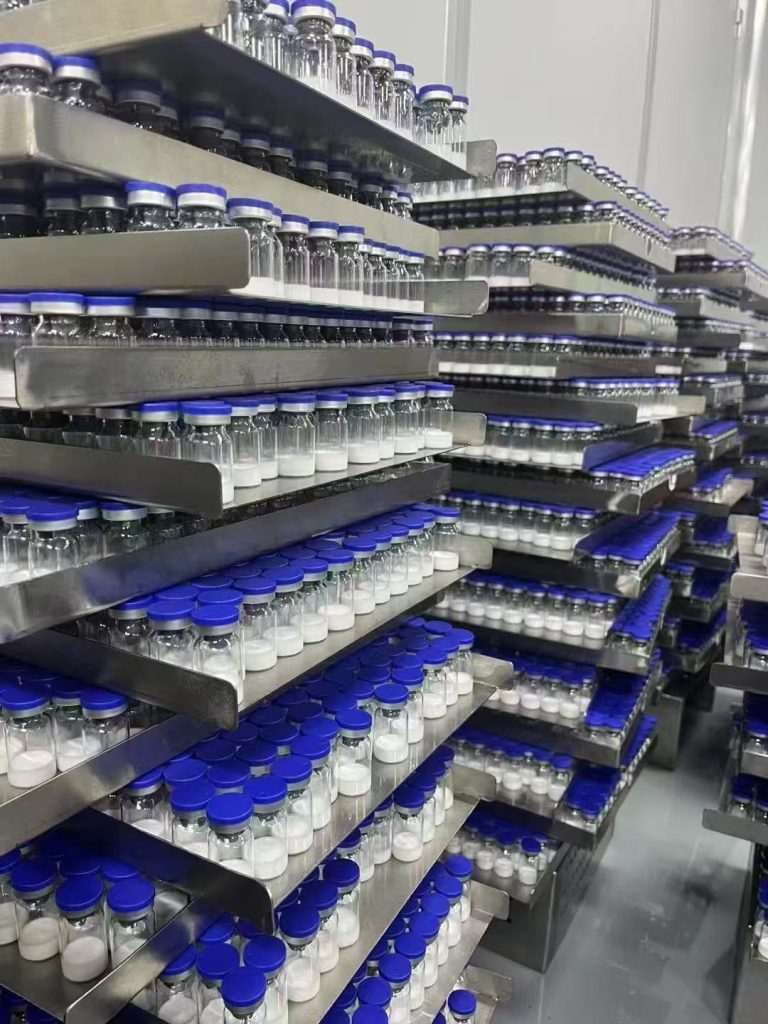
Semaglutide is widely described as a GLP-1 receptor agonist.
For peptide researchers, however, that description leaves out one of the most interesting parts of the molecule:
Semaglutide is an engineered GLP-1 analogue whose long-acting behavior depends on specific structural modifications.
Understanding those modifications can also help laboratories evaluate Semaglutide research material more critically.
What Is Semaglutide?
Semaglutide is a synthetic GLP-1 analogue used in research involving GLP-1 receptor signaling, incretin biology and metabolic pathways.
Important molecular identifiers include:
CAS: 910463-68-2
Molecular formula: C187H291N45O59
Molecular weight: approximately 4113.6 g/mol
Peptide length: 31 amino-acid residues
Research category: GLP-1 receptor agonist / GLP-1 analogue
But the molecular formula alone does not explain why Semaglutide differs from native GLP-1.
Why Aib8 Matters
Native GLP-1 is rapidly degraded by the enzyme DPP-4.
In Semaglutide, the alanine at position 8 is replaced by the non-standard amino acid 2-aminoisobutyric acid, or Aib.
This modification is commonly discussed in relation to improved resistance to DPP-4-mediated degradation.
For analytical research, Aib8 is therefore part of the molecule’s identity rather than a minor sequence detail.
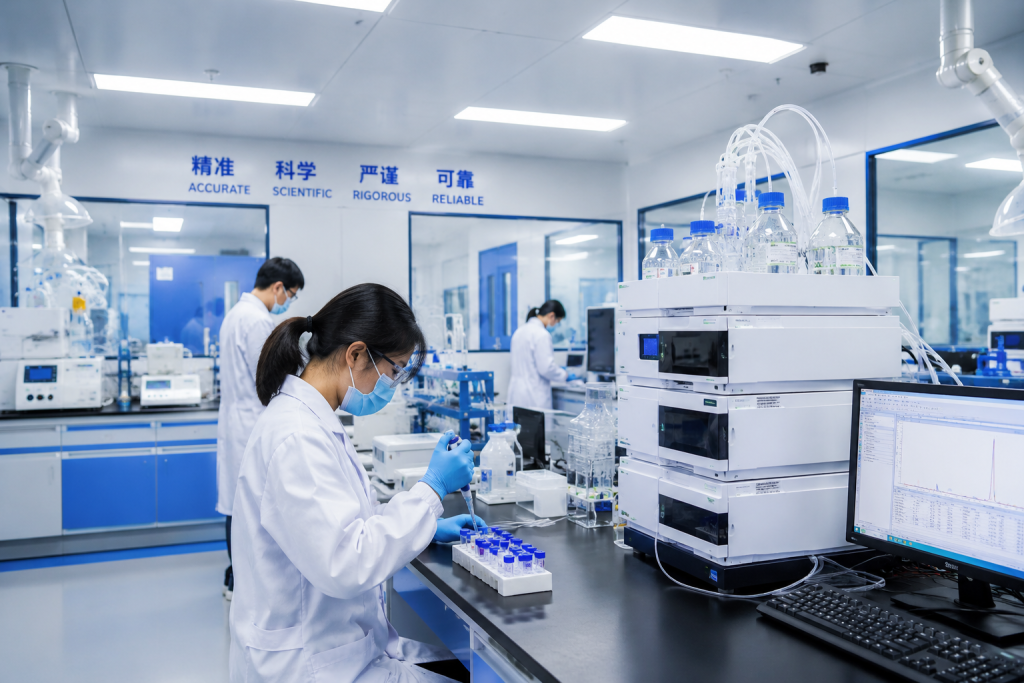
Why Lys26 and the C18 Side Chain Matter
Semaglutide is also modified at Lys26 with a linker connected to a C18 fatty diacid.
This hydrophobic side chain promotes reversible interaction with serum albumin.
Albumin binding is an important part of the molecular design because it changes the pharmacokinetic behavior of the peptide compared with native GLP-1.
This is one reason Semaglutide should not be treated analytically as simply another short unmodified GLP-1 sequence.
What Is the Role of Arg34?
Another structural modification occurs at position 34.
The native lysine is replaced with arginine.
This substitution helps make Lys26 the defined acylation site during manufacture.
That means three structural features are especially important when discussing Semaglutide identity:
Aib8, Arg34 and the Lys26-linked C18 fatty-diacid modification.
Semaglutide vs Liraglutide
Semaglutide and Liraglutide are both acylated GLP-1 analogues, but they are not identical molecules.
Liraglutide uses a different fatty-acid modification and has different pharmacokinetic characteristics.
Semaglutide incorporates the Aib8 substitution and a C18 diacid-linked structure designed for stronger albumin association.
For laboratories, this means results or analytical expectations for Liraglutide should not automatically be applied to Semaglutide.
Why HPLC Purity Does Not Equal Complete Identity
A commonly searched specification is:
Semaglutide HPLC purity.
HPLC is an important method for evaluating chromatographic purity and related substances.
However, a high HPLC percentage alone does not prove every structural feature of the target molecule.
A sample may require complementary analytical information to answer questions such as:
Does the molecular mass support Semaglutide?
Is the intended modified peptide present?
Are significant related substances detectable?
Does the supplied material correspond to the declared batch?
For this reason, purity and identity should be treated as related but different analytical concepts.
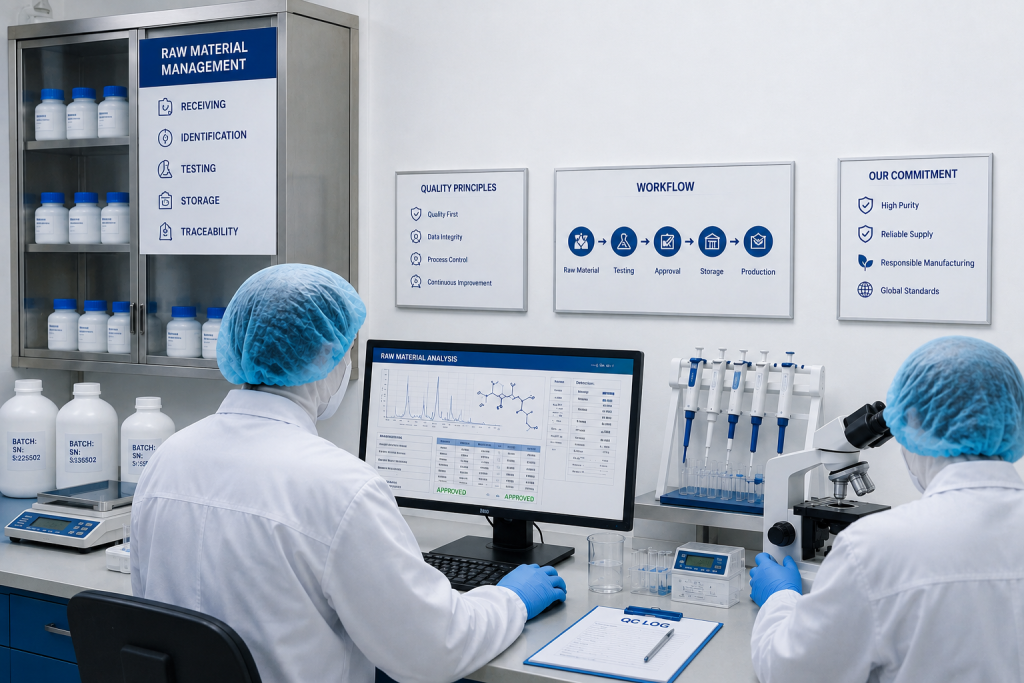
HPLC and LC-MS Answer Different Questions
HPLC can help characterize purity and impurity profiles.
Mass spectrometry can provide complementary evidence for molecular identity.
For modified peptides such as Semaglutide, this distinction becomes especially useful because the molecule contains both amino-acid substitutions and a lipid-derived side chain.
Professional research procurement therefore benefits from looking beyond a single purity number.
Why Batch-Specific COA Documentation Matters
A generic statement such as “99% Semaglutide” does not provide full batch traceability.
A useful Certificate of Analysis should correspond to the actual production lot being supplied.
Researchers may review:
- product identity,
- lot or batch number,
- HPLC result,
- analytical method,
- identity testing where applicable,
- storage specification,
- and batch release information.
For reproducible research, the COA should match the supplied material rather than being a generic example certificate.
What Do Online Semaglutide Reviews Actually Mean?
Public Semaglutide reviews are highly visible online.
Positive prescription-drug reviews commonly describe appetite reduction, body-weight changes or improvements in metabolic markers.
Negative experiences commonly involve gastrointestinal symptoms such as nausea, vomiting, constipation and diarrhea.
However, these reviews largely concern regulated pharmaceutical products such as Ozempic, Wegovy and Rybelsus.
They are not reviews of Sunone Semaglutide research material.
Clinical drug experiences should therefore not be used as evidence of efficacy or safety for a research-grade peptide batch.
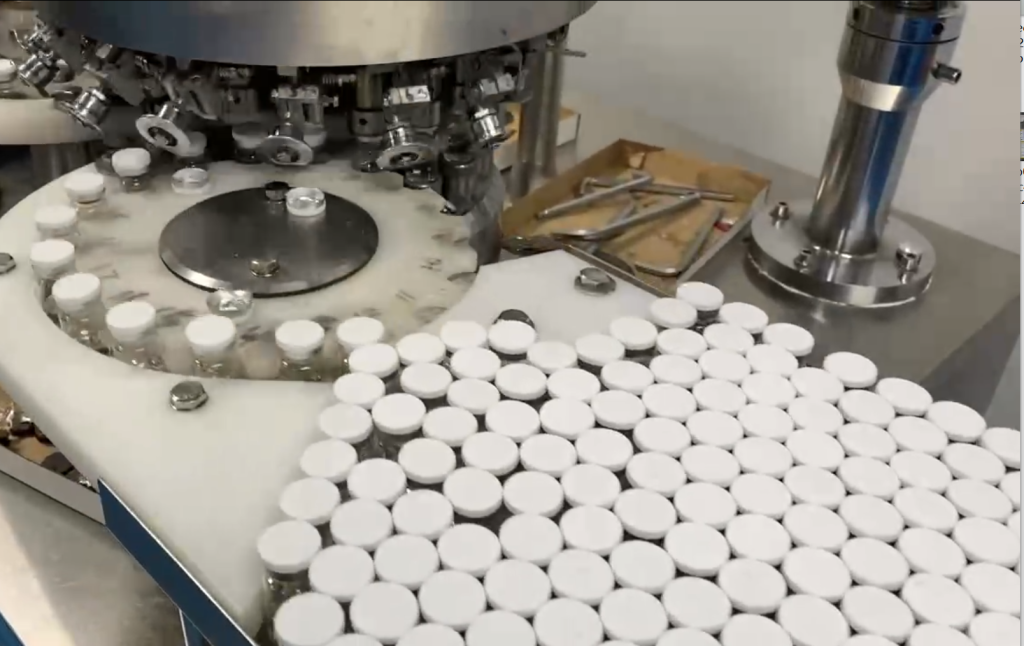
Sunone Semaglutide Research Peptide
Sunone (Hong Kong) Biopharmaceutical International Technology Co., Limited supplies Semaglutide for qualified laboratory, analytical and biopharmaceutical research and manufacturing applications.
Current product information includes:
Semaglutide
GLP-1 receptor agonist / GLP-1 analogue
CAS 910463-68-2
Molecular formula C187H291N45O59
Molecular weight approximately 4113.58 g/mol
≥99.2% HPLC Certified research specification
Lyophilized powder
Multiple research-pack configurations
Certificate of Analysis
Safety Data Sheet
Specification Sheet
Batch documentation
View the Sunone Semaglutide research peptide product page for current specifications, documentation and B2B sourcing information.
For biotechnology companies comparing a Semaglutide supplier, Semaglutide manufacturer or bulk GLP-1 peptide supplier, exact molecular identity, HPLC purity, mass confirmation and batch traceability provide more useful procurement criteria than consumer testimonials.
Final Perspective
Semaglutide demonstrates how peptide engineering can dramatically change the properties of a native hormone sequence.
Its identity depends not only on being “a GLP-1 analogue,” but also on specific structural features including:
Aib8 substitution, Arg34 substitution and Lys26-linked C18 acylation.
For research procurement, that leads to five useful questions:
Is the expected Semaglutide molecule correctly identified?
How was chromatographic purity measured?
Is molecular identity supported by appropriate analytical data?
Does the specification describe the correct chemical form?
Does the COA correspond to the supplied batch?
These questions provide a stronger foundation for Semaglutide research than relying on a product name or purity percentage alone.
This content is provided for scientific and educational purposes only. SUNONE research peptide is for qualified labrtorynt, diagnois, druc tor mmatct or veteimant, use.research only, Not for human consumption, clinical treame. Purchasers are responsible for complying with applicable laws and regulations in their jurisdiction.
Leave a Reply