
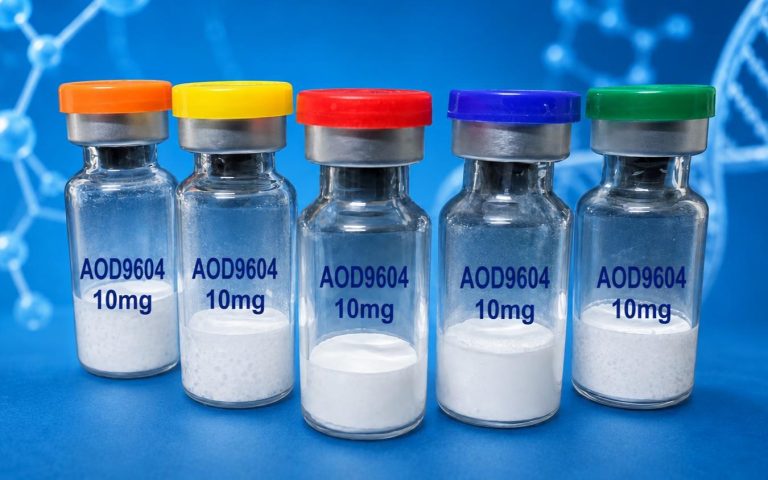
AOD-9604 Peptide: Molecular Profile, Research Background and Quality Considerations
What Is AOD-9604? AOD-9604, also commonly searched as AOD9604 or AOD 9604, is a synthetic peptide associated with…

Semaglutide Research Peptide: What Researchers Should Know About Purity and Quality
Semaglutide has become one of the most widely studied GLP-1 receptor agonists in metabolic research. As interest continues…

Tesamorelin Research: Why Visceral Fat Loss Is Not the Same as Weight Loss
Search for Tesamorelin peptide online and you will often see it described simply as a “fat-loss peptide.” Scientifically,…

HGH Fragment 176-191 vs AOD-9604: Why Molecular Identity Matters in Peptide Research
Search for HGH Fragment 176-191 and another name quickly appears: AOD-9604. They are often discussed as though they…
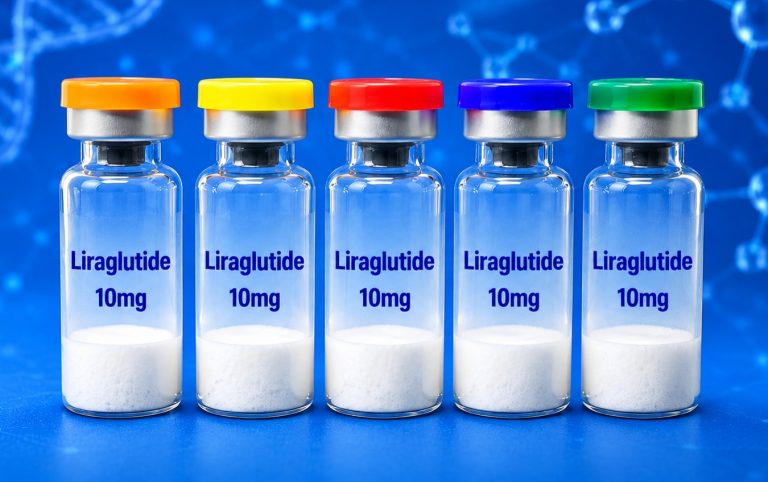
Liraglutide Research: Why Does This GLP-1 Analog Carry a Fatty-Acid Chain?
Liraglutide, also known as NN2211, is often introduced simply as a GLP-1 analog. But one of the most…
Semaglutide Research: Why Does This GLP-1 Analogue Last Longer Than Native GLP-1?
Semaglutide is usually discussed in terms of what it does. For peptide researchers, another question may be more…

KLOW Peptide Research: Can Four Individual Peptide Studies Explain One Blend?
KLOW peptide, also known as a GHK-Cu + BPC-157 + TB-500 + KPV blend, brings four widely discussed…

Selank Peptide Research: Why Do Seven Amino Acids Matter?
Selank peptide is often discussed online in relation to stress, anxiety and cognitive research. But from a peptide-science…
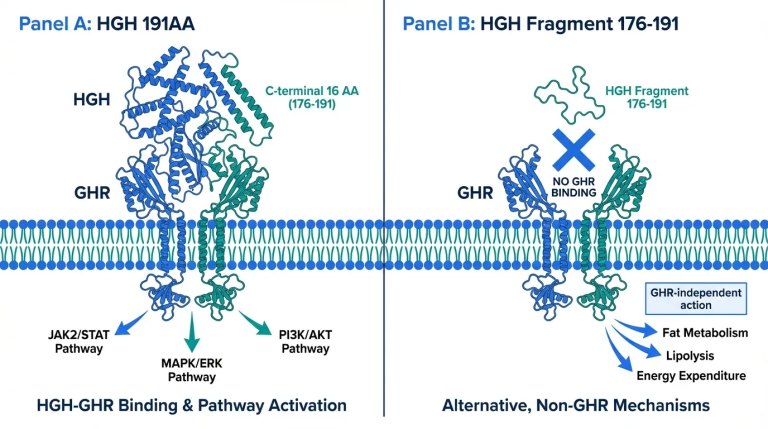
HGH Fragment 176-191 vs HGH: Why the Name Can Be Misleading
Search for HGH Fragment 176-191 and one question quickly appears: Is HGH Fragment 176-191 simply a smaller version…

Retatrutide Research: Why Target Three Metabolic Receptors Instead of One?
Modern peptide research is increasingly moving from single-receptor signaling toward multi-receptor design. Retatrutide (LY3437943) is a particularly interesting…